


You treated them. For three weeks you stayed on top of it — cream every night, socks on afterward. The pain stopped, the skin closed over, and you stopped thinking about your feet. Then one morning you step out of the shower and there it is again. Same heel, same spot, the same thin split that catches on the bath mat.
The frustrating part is not the crack. It is the second crack — because the second one tells you something the first did not. The first looked like an accident: a dry winter, new shoes, too much time barefoot. A crack in exactly the same place means something is producing it, and nobody has told you what.
This article explains why they come back, what your own health has to do with it, how to keep your heels from cracking again, and the honest answer most pages avoid: whether this ever stops for good.
“Healed” is not the same as finished
In foot care, clinicians have largely stopped calling a closed wound cured. Writing in the New England Journal of Medicine, three of the field's leading researchers reported that after a diabetic foot ulcer heals, “roughly 40% of patients have a recurrence within 1 year,” and 65% within five. Their conclusion: “it may be more useful to think of patients who achieved wound closure as being in remission rather than being healed.” (Armstrong, Boulton & Bus, NEJM 2017)
Cracked heels are not foot ulcers, and the comparison stops there. But the logic transfers exactly, and it is missing from nearly everything written about heel fissures.
When your heel closes over, the crack is gone. Whatever made the crack is still there.
So when you stop treating — reasonably, because the problem looks solved — you are ending treatment on something in remission. The skin thickens again, dries again, loses its give, and splits in the same place. Neither the cream nor you failed. The plan had the wrong endpoint.
The callus underneath — why the crack returns to the same place
Look at your heel and you will probably see two things: a crack, and a rim of hard, pale, thickened skin around it. Most people treat the crack. The thickened skin is the problem.
That thickening has a name — hyperkeratosis — and it is not a defect. The American Academy of Family Physicians describes it as “a normal physiologic response of the skin to chronic excessive pressure or friction.” (AAFP on mechanical hyperkeratosis). Your heel carries your weight thousands of times a day, so it lays down extra layers of outer skin — as a hand does on a shovel handle. Those layers build into a hard, inflexible plate.
The trouble is what that plate does mechanically. Normal heel skin flexes as you step; a thick keratin plate does not. Every step loads a rigid slab sitting on soft tissue, and the stress concentrates at its edges. Eventually it splits along the line where pressure runs highest — which is why the crack returns to the same millimeter of heel every time.
A quick way to tell whether the callus is your driver: press the skin on either side of the crack. If it feels firm and unyielding rather than soft, the callus is the thing to treat.
Guidelines take this seriously. The International Working Group on the Diabetic Foot classes excess callus as a pre-ulcerative lesion needing treatment, noting that “removal of callus reduces plantar pressure, an important risk factor for ulceration,” and lists “treating fissures” alongside it (IWGDF 2023 prevention guideline). For anyone with diabetes, reduced sensation or poor circulation, a recurring fissure is an opening in the body's outer barrier, somewhere hard to see and slow to heal.
The AAFP also notes these lesions “will usually disappear following the removal of the causative mechanical forces.” Nothing you spread on the surface removes the load, and the callus is some of the least permeable skin on your body — which is why petroleum jelly alone tends to plateau on cracked heels.
Why the usual routine stops working
If the cream helped and then seemed to quit, one of these is usually why.
You stopped when the pain stopped
Pain fades well before the skin rebuilds, and the callus keeps forming while your heel feels fine. Treating to the point of comfort and stopping there is how you end up on a six-week cycle.
You applied it to dry, hardened skin
Thick, dry keratin repels a water-based cream the way a bone-dry sponge repels a splash. Damp skin absorbs; hard dry skin does not. Applying right after a shower or bath costs nothing and changes how much actually gets in.
Soaking dried your feet out
A long soak softens hard skin while your feet are in the water and then leaves them drier than before, because plain water carries off some of the skin's own surface lipids. Follow a soak immediately with treatment, or skip it.
A thicker cream is not a stronger one
A heavy ointment sits on top of hard skin and traps moisture underneath. That relieves tightness and does nothing to the hard skin itself, which is why the relief feels real for a few days and then stops improving.
You treated the skin and left the load alone
If the pressure that built the callus has not changed — the same shoes, the same hours standing, the same barefoot time on tile — it rebuilds no matter how good the cream is. Backless and hard-soled shoes are the worst offenders: the heel spreads sideways with every step and nothing holds it in. This is also why hard skin rebuilds after it has been reduced.
What a cream has to do here — and why most do half of it
Breaking this cycle takes two jobs at once. A rich moisturizer hydrates the surface and leaves the hard skin intact. A strong exfoliant thins the callus and strips what little lipid the skin has left. Neither one, on its own, stops the cycle from restarting.
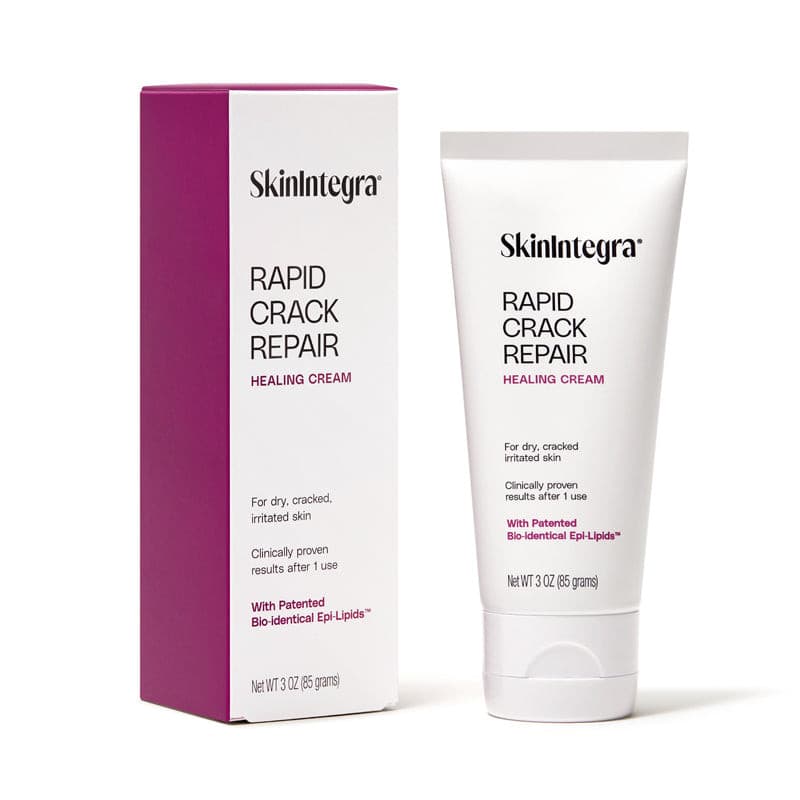
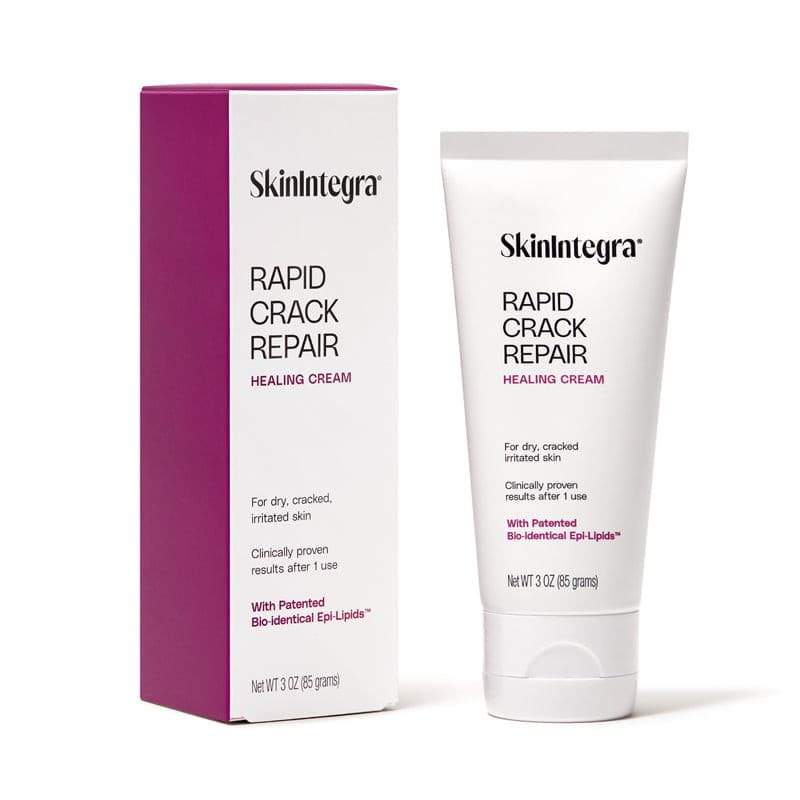
SkinIntegra® Rapid Crack Repair Cream was built for this presentation. Its differentiator is Bio Identical Oils — a patented blend of five whole plant oils, including Sacha Inchi and Sea Buckthorn, chosen because their composition matches the lipids in healthy human skin. That matters because a recurring crack is a barrier problem: heel skin that has lost its own lipids cannot hold water, cannot flex, and cannot stop thickening. Replacing the missing lipid, rather than sealing over it, addresses the deficiency producing the callus.
The second half gets those oils where they need to go. The cream carries 25% urea with lactic acid. Urea behaves differently depending on concentration: dermatology reviews place 2–10% in the moisturizing range, while 10–30% acts as both a moisturizer and a keratolytic — an ingredient that exfoliates chemically rather than physically, loosening the bonds that hold hardened skin together so the layer thins gradually instead of being filed away. At 25% it works on the plate while it hydrates, so the oils can work into the skin barrier rather than sitting on top of the hardened surface layer.
The formula is fragrance-free, paraben-free, alcohol-free, petrolatum-free and hypoallergenic, and it carries the APMA Seal of Approval from the American Podiatric Medical Association.

What causes cracked heels to keep coming back
Recurring cracked heels are a symptom, not a diagnosis. In adults over 55 there is usually a driver underneath, and the driver decides what you do differently. Sometimes there is no systemic cause at all and the answer is purely mechanical — which is the most fixable case, and worth ruling in first.
Diabetes, especially with neuropathy
Nerve changes dull the sensation that would warn you a callus is building, so it grows unchecked — and a heel you cannot feel is a heel you cannot protect. Autonomic changes also cut sweating in the feet — why diabetic feet stay dry no matter what you put on them.
Hypothyroidism
Low thyroid function slows skin turnover and reduces sweating, and both can persist even when your blood work looks well controlled. If your heels crack despite good numbers, you are not imagining it — why heels still crack even with thyroid treatment.
Menopause and perimenopause
Falling estrogen reduces sebum production and dermal thickness — a lasting change in how much lipid your skin makes, which is why heels that never troubled you start splitting in your fifties. See cracked heels during menopause.
Psoriasis
On the heel, psoriasis drives skin cells to reproduce far faster than they shed. The plaque is the disease process itself, so it returns because the disease is chronic — see how to heal psoriasis fissures and prevent flare-ups.
Lymphedema or venous insufficiency
Both keep sustained pressure and low-grade inflammation on the skin, so the barrier never fully recovers and hyperkeratosis builds in cycles. See itchy, cracked lymphedema skin and the skin risk behind venous insufficiency.
A vitamin deficiency — probably not
The most-searched explanation and one of the least likely. Severe zinc, omega-3 or vitamin B3 deficiencies can affect skin integrity, but they are uncommon in well-fed adults and rarely appear as isolated heel cracks. Work through the drivers above first — are your cracked heels a sign of vitamin deficiency?
How to keep your heels from cracking
Four steps, in this order. The order matters more than any individual product choice.
1. Soften the hard skin before you try to hydrate it
Moisture cannot get through a thick, hardened layer to the skin barrier underneath, so softening comes first — a keratolytic, meaning chemical exfoliation rather than filing. A cream in the 10–30% urea range does both jobs. At 40% you are into debriding territory, which suits a very thick callus but is not always the right starting point — see when 40% urea works and when it does not, and how urea compares with lactic acid and ammonium lactate.
2. Then rebuild the barrier
Once the hard layer softens, the lipids can reach the skin barrier where they are needed. Apply to damp skin twice a day, working the cream into the rim of hard skin around the crack rather than only into the crack. IWGDF guidance lists emollients on dry skin, with careful drying, as standard self-care for anyone at risk of foot ulceration — more on why barrier repair is the part that lasts.
3. Take the load off
Closed-back shoes with a cushioned heel, gel heel cups if you stand for long stretches, and no bare feet on tile or hardwood. Sandals and warm weather bring their own complications. This step decides whether you are back here in six weeks.
4. Then keep going
The unglamorous step that makes the difference: keep applying after the crack closes — not at treatment intensity forever, but as maintenance, and most people find once a day holds it. You are managing a tendency, not finishing a course. That is the whole answer to keeping your heels from cracking again.
And what to skip
Do not file, shave, grate or peel the callus off at home — those tools take protective skin with the callus. The AAFP warns that over-the-counter salicylic acid products “should be avoided because they may damage surrounding normal tissues,” and on a foot with reduced sensation, debriding tools and chemical peels carry real risk. See what safe callus care looks like instead, and why salicylic acid is the wrong tool on diabetic skin.
And do not try to seal a crack shut. Superglue and liquid bandage products come up constantly and go wrong for several reasons at once — see why gluing a cracked callus shut backfires.
When to stop self-treating and see someone

Some heels need a clinician, not a better routine. Make an appointment if you see any of these:
- Bleeding that does not stop quickly, or a crack deep enough to gape open
- Discharge, odor, or fluid weeping from the crack, or redness spreading outward, warmth or swelling
- No improvement at all after two weeks of consistent treatment
- Numbness or reduced sensation in your feet, whatever the crack itself looks like
And if you have diabetes, treat any open crack on your foot as a reason to be seen rather than to wait. Reduced sensation and slower healing change the stakes — see what to do about cracked heels that bleed.
Frequently asked questions
Why do my heels keep cracking no matter what I use?
Because the cream works on the crack, not the two things producing it: the callus around it, and the pressure or condition building that callus. A product that only moisturizes cannot soften the callus, and nothing applied to the skin removes the load underneath.
How do I keep my heels from cracking once they have healed?
Keep treating after the crack closes, at lower intensity — once a day is usually enough — and pair it with closed-back cushioned shoes and less barefoot time on hard floors. Stopping altogether restarts the cycle.
Can cracked heels be fixed permanently?
Honestly, no — and any page telling you otherwise is setting you up for the disappointment you have already had. What you can do is stop the cycle, and then keep it stopped with light ongoing care. If the cause is mechanical and you fix the footwear, you may get close to permanent. If it is diabetes, hypothyroidism, psoriasis or menopause, that cause is not going away, so the skin care does not either.
Why does the hard skin on my feet keep coming back?
Because it is doing its job. Thickened skin is a protective response to repeated pressure, so while the pressure continues, your body rebuilds the callus. Removing it without changing the load resets the clock.
How long does it take to heal cracked heels?
Expect pain to settle within a few days and the crack to close in one to three weeks with consistent twice-daily treatment. The hard skin takes several weeks longer, and that is what decides whether it returns. Judge progress by the rim softening, not the crack closing.
Are cracked heels a sign of a health condition?
They can be. Diabetes, hypothyroidism, psoriasis, lymphedema and venous insufficiency all affect heel skin in ways that produce recurrence, and menopause changes how much lipid the skin makes. Recurring cracks with no obvious mechanical cause are worth raising with your doctor.
Should I file or shave the callus off myself?
No. Files, graters and blades remove protective skin along with the callus and can open the skin without you feeling it. If the callus needs reducing, a podiatrist can debride it safely. Soften it with a keratolytic cream instead — one that exfoliates chemically rather than by abrasion — and let it thin gradually.
Which cream keeps cracked heels from coming back?
Look for two things: a keratolytic — a chemical exfoliant — strong enough to work on hard skin, with urea in the 10 to 30 percent range doing both jobs, and a real lipid component to rebuild the barrier rather than just an occlusive sealing the surface. Then keep using it after the crack closes.


