

Advice to soak your feet in vinegar travels well — the two details that decide whether it helps rarely travel with it. Whether the reason is fungus or hard heels, here is what an acid soak does to the skin on a diabetic foot, and what that skin actually needs.

A split in the thickened skin on the ball of your foot is a break in the outer barrier, in the place that takes your full weight. Why the forefoot splits differently from the heel, why the pain matters more than the discomfort, when a dark mark means stop, and why gluing it shut goes wrong.

Cracked heels that keep returning are not a treatment failure — they are a sign that the callus and the cause underneath were never addressed. Here is why the cycle repeats, what your own condition has to do with it, and how to keep your heels from cracking again.

Clear fluid leaking from a swollen leg has a name: lymphorrhea. Why it happens, why it needs a clinician this week, and how to protect the skin around the leak so the next one does not open.

Your thyroid levels are under control, but your heels still crack and split? Here's why hypothyroidism keeps your heels dry after treatment — and what it actually takes to repair the skin barrier.

Peeling skin on your fingers that won't respond to lotion is rarely just dry skin — and the answer isn't more moisture. Learn what's actually depleting your skin barrier and what restores it.

Many people with diabetes moisturize faithfully and still wake up to the same tight, dry, cracked feet every morning. This is not a failure of effort. It is a mismatch between the problem and the tool. Standard moisturizers and even urea creams address the surface — but the real cause of diabetic dry skin runs deeper. This guide explains why it happens, why the standard advice falls short, and what helps.

For people with diabetes, a small crack in the skin is not a minor irritation — it is a potential entry point for bacteria, and neuropathy means many patients won't feel it happening. This guide explains why daily cleansing deserves more attention than ordinary hygiene, how to choose a cleanser for fragile diabetic skin, and why barrier care is the step that has to follow it.

Itchy, discolored skin on your lower legs isn't just a circulation problem — it's a warning sign with a clinical name and a serious escalation path. This guide explains what venous insufficiency does to your skin, why stasis dermatitis can progress to cellulitis and venous leg ulcers, and what daily skin care can and cannot do about it.

People with diabetes and peripheral neuropathy often cannot feel a heel crack deepening — and that silence is the danger. This guide explains the two mechanisms behind neuropathic heel cracks, loss of protective sensation and anhidrosis, why standard moisturizers fall short for this particular skin deficit, and what daily skin care and professional monitoring should look like.

A break in the skin on a diabetic foot needs the same response whether it started as a cut, a crack, or skin giving way under a callus. What to do in the first ten minutes — and when to call.

You notice a small flap of dry skin lifting beside your fingernail, and you pick at it because it is right there. Peeling at the nail fold is the stage before splitting, and splitting is the stage before bleeding. This guide covers what is happening to the skin at the base of your nails, which causes are worth acting on, the warning signs that need a clinician, and what daily care can and cannot do.

40% urea cream is one of the most recommended treatments for thick, cracked skin — but it doesn't work the same way for everyone. Here's what determines whether it's the right approach for your skin.

A crack on the heel that lingers for weeks, sometimes reopening just as it seems to be closing. Slow healing in diabetes has far more to do with biology than with effort — reduced circulation, persistent inflammation, nerve damage, and skin that was already dry and stiff before it split. This guide covers all four, how long is too long, and what actually helps.

Social media promises baby-soft feet from a $6 set of booties. On a foot with diabetes, the acids that deliver that can burn skin you may not feel burning — and a small chemical burn on a neuropathic foot is not a small problem. This guide covers how foot peel acids work, why reduced sensation and slow healing change the risk, and what safer callus care actually looks like.

Itchy, cracked skin from lymphedema is more than a nuisance—it’s a warning sign. When swelling, dryness, and fragile skin combine, even a small scratch can become a pathway to cellulitis. This guide explains why it happens, what to avoid, and how to protect and soothe your skin with gentle, effective care.

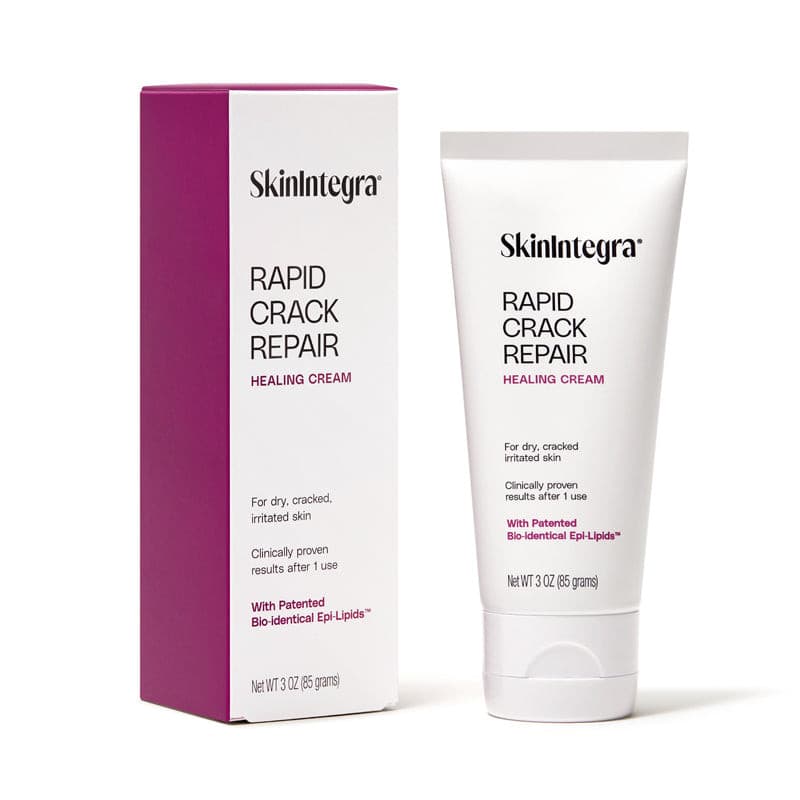
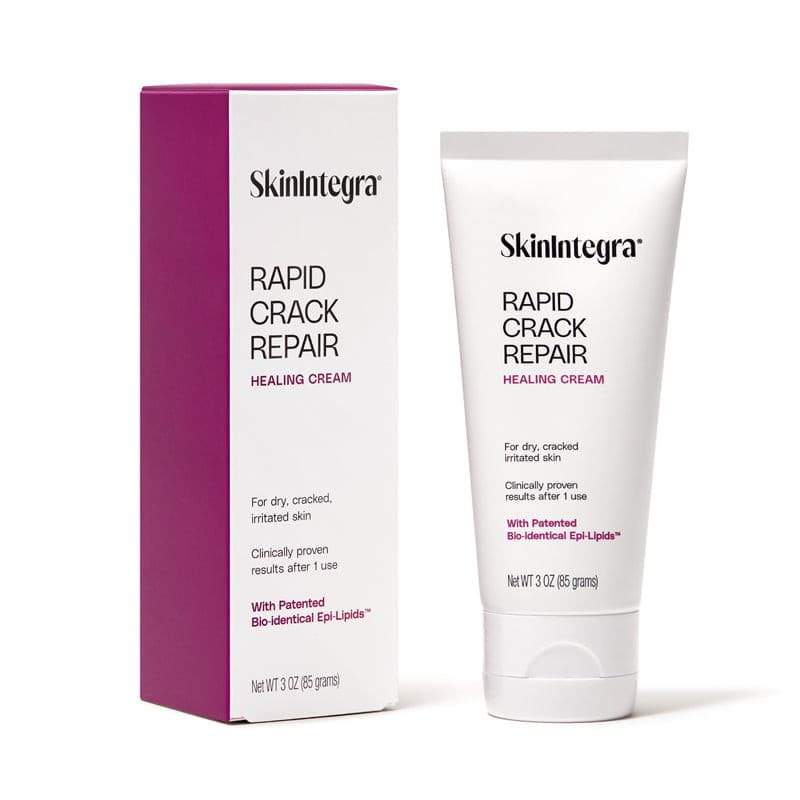
Callus shavers and cheese‑grater foot files might look like a quick fix, but for people with diabetes they can cause tiny cuts, invite infection and make calluses grow back thicker. This guide unpacks the hidden risks of DIY callus removal, explains why diabetic feet need extra caution and offers safer options—like professional debridement, gentle urea‑based creams and SkinIntegra Rapid Crack Repair Cream—to keep your feet healthy.

Your doctor said no. The product label says consult a physician. But the wellness article you just read says Epsom salt can help with circulation. For people with diabetes, the conflicting advice is real — and so is the risk. Epsom salt foot soaks weaken the skin barrier and raise infection risk in diabetic feet, regardless of whether neuropathy is present. This guide explains the clinical mechanism, addresses the contradictions, and covers what actually protects diabetic feet instead.

You’ve been putting Vaseline on your heels for months. They keep cracking. Here’s the reason—and why diabetic skin needs more than an occlusive to stay intact.

Wondering how long your diabetic foot ulcer will take to heal? Most ulcers heal in 6-20 weeks, but the timeline depends on depth, circulation, and care. Learn what to expect at each healing stage, what slows healing down, and how to look after the skin around the wound.

Maybe you noticed one nail thickened a few months ago and put it down to age. Or the changes accumulated slowly until you started to wonder what they meant. For people with diabetes, toenail changes — brittleness, thickening, discoloration, skin cracking around the edges — are signals worth acting on early. This guide explains every cause, what the warning signs of escalation look like, and what daily nail care actually needs to do to protect the skin around the nail.

Cracked heels can lead to infection — especially for people with diabetes. Learn the signs, what common treatments like mupirocin and silver actually do, and how to look after the skin that keeps splitting.

After menopause, cracked heels can become more common — and more painful. Learn what is behind the dryness, what daily care changes, and what it does not.

On a diabetic foot, cracked skin starts in a barrier that is short of lipids. What that means in practice, when a crack needs a podiatrist rather than a cream, and what daily skin care can do about it.

Your stitches are out and nobody told you what to do about the skin. Here is when to start, how to tell the skin is ready, and a routine that works in a shoe.

You moisturize, and your hands still crack. Why washing does this, what actually helps, and when it has stopped being a skin care problem.

For years, many people with diabetes have been told to avoid pedicures — and have quietly stopped going, while their feet got harder to manage. The answer to whether you can get a pedicure isn’t simply yes or no. It’s yes, if you know what to ask for. This guide explains what actually makes a pedicure risky for diabetic feet, what makes one safe, and what to do between visits to protect your skin every day.

You’ve been using the antifungal. It helps for a while — then the itch comes back, the skin stays rough, and you’re back where you started. For people with diabetes, clearing athlete’s foot takes more than an antifungal cream. This guide explains why, how urea cream works alongside antifungal treatment, and what the correct sequence is — including how long to wait between applications.

Is urea or lactic acid better for cracked heels? Compare their benefits, risks, and best concentrations—especially for diabetic or sensitive feet.

A guide to the natural remedies people try for cracked heels and dry feet — what each one does, and which ones are not suitable if you have diabetes.

Hot weather, open footwear and barefoot hours outdoors all pull moisture out of heel skin. Here is what actually protects your heels through the summer — and what to skip.

You’ve been moisturizing. Your feet are still peeling — no itch, no wound, nothing that looks serious. For people with diabetes, that quiet uncertainty is worth paying attention to. Peeling skin on diabetic feet has several distinct causes, and the absence of symptoms is not always reassuring. Here is what each one looks like, what the no-itch presentation means, and what to do about it.

You’ve tried the lotions. The itch keeps coming back — sometimes on your legs, sometimes everywhere, sometimes with no visible cause at all. For people with diabetes, persistent itchy skin has several distinct causes, and the right response depends on which one you are dealing with. This guide covers all of them: the barrier breakdown, the neuropathic itch, the fungal infections standard creams cannot fix — and what the skin barrier actually needs.

You grip something every day — a steering wheel, a garden tool, a jar lid — and the skin answers by thickening. Then one day the hard patch splits at the edge. Here is why hand calluses keep coming back, how to soften them safely, and what to leave alone if you have diabetes or less feeling in your hands.

You finally get into bed. Then your feet start. The itching that was barely noticeable during the day becomes impossible to ignore the moment the distractions disappear — and for people with diabetes, that timing is not a coincidence. Nighttime foot itching is one of the earliest signs that nerves and skin barrier are under stress. This guide explains the three mechanisms behind it, which ones a podiatrist needs to see, and how to look after the dry skin that comes with them.

Thick, cracked skin on your palms that splits every time you grip something — and keeps coming back. Here is what causes psoriasis on the hands, when to see a dermatologist, and how to care for the dry, cracking skin around the patches.

You picked up a callus pad at the drugstore. The warning is there, in small print, if you know to look. Here’s what it says, why it matters for diabetic feet, and what to use instead.

You’ve tried the creams and the pumice stone. The cracks keep coming back. If you’re starting to wonder whether the answer is in what you’re eating, it’s a reasonable instinct. This guide covers which vitamin and mineral deficiencies are most directly linked to cracked heels, how to recognize them, and why nutritional support alone often isn’t enough — and what the skin barrier needs alongside it to actually repair.

Diabetic foot calluses can lead to serious complications if not managed properly. Learn how to treat and prevent them safely, what to do after debridement, and what to look for in a cream between podiatry visits.

You keep moisturizing. The cracks keep coming back — splitting open mid-task, painful enough to stop you in your tracks, resistant to everything you’ve tried. Standard advice says apply more cream. For many people, that’s not the whole answer. This guide covers why cracked fingertips hurt so much, every cause, why some cases resist standard care, and what the skin needs when cracks keep coming back.

A heel pressure sore can start as a red patch that won’t fade, or a heel that has turned dark and hard. How to recognize each stage, take the pressure off, care for the skin around it, and know when to get help.

Psoriasis on the heels is not dry skin, and treating it like dry skin is why it keeps splitting. How to tell it apart from athlete’s foot, what to do daily without seeding a new plaque, and when topical treatment is no longer the right answer.

A heel crack that bleeds has reached the living skin underneath, and it reopens because your heel pad spreads under every step while the hardened rim around the crack cannot. What to clean it with, what should never go into it, and when to stop treating it at home.