


For many people with hypothyroidism, cracked heels settle into an exhausting rhythm. The skin finally begins to close over, and then it splits open again. Petroleum jelly and overnight socks help for a night or two. A richer cream buys a little more time. Yet the cracks keep returning, often deep enough to make each step painful. It becomes natural to wonder whether the cause is a vitamin deficiency or something deeper that treatment has missed.

If that pattern sounds familiar, you're not imagining it, and you haven't done anything wrong. Cracked heels that return after thyroid treatment have a specific, addressable cause — one that thyroid medication alone does not resolve.
This article explains what happens to the skin on your feet when an underactive thyroid slows down, why restoring your hormone levels does not automatically undo the damage, and what an effective hypothyroidism cracked heels treatment needs to do.
Why Your Heels Still Crack After Your Thyroid Is “Under Control”
Here is the part almost no one explains. Your thyroid medication restores the hormone your body was missing. It does an excellent job of easing the fatigue, the cold, and the other whole-body symptoms. But circulating hormone levels and the condition of the skin on your heels are two different things.
Thyroid hormone is one of the signals that keeps your skin making its own lipids, holding moisture, and renewing itself on schedule. During the months or years when your levels ran low, that skin quietly fell behind: it lost lipids from the barrier, thickened into hard callus, and dried out from the inside. Bringing your hormone levels back to normal stops the process from getting worse, but it does not reach back in time and restore what was already lost. The shortfall sits in the skin barrier itself, and the barrier has to be addressed directly. That gap between “my thyroid is treated” and “my heels are still cracking” is exactly where most people get stuck.
What Hypothyroidism Actually Does to the Skin on Your Feet
An underactive thyroid changes the skin on your feet in two ways that matter for cracked heels:
- It lowers the lipids your skin makes for itself. Your skin cells package up the fats that waterproof the outer layer and release them as they reach the surface, and thyroid hormone is one of the signals that keeps that running. When levels drop, less gets made. Sweating falls too, which matters on a heel because the sole has no oil glands — sweat is its only other supply. The barrier ends up short on the very lipids that hold water in, and that is a missing part of the skin, not simple dehydration.
- It slows skin cell turnover. Healthy skin sheds and renews on a steady cycle. When that cycle slows, dead cells build into thick, rigid callus at high-pressure spots — and the heel takes more pressure than almost anywhere on the body. Stiff, dry skin under your body weight does one thing: it splits.
Put those two together and the picture makes sense. Your heels are dry because the barrier lost its lipids, and they are cracking because the skin has grown too thick and stiff to move without tearing. Treating the thyroid slows the cause. It does not, on its own, undo either result. That is also why cracked heels keep coming back to the same spot long after the first one closed.
Why Petroleum Jelly, Socks, and Drugstore Creams Only Go So Far

Almost everyone with hypothyroid heels arrives at the same home routine: coat the heels in petroleum jelly, pull on socks, and hope. It helps a little, and then the cracks come back. There is a reason.
Petroleum jelly is an occlusive. It sits on top of the skin and slows water from escaping, which is genuinely useful overnight, but it adds nothing back to the barrier. It seals a leaking surface without replenishing it. Humectant creams go one step further. Ingredients like glycerin and urea pull water into the skin, and urea in particular is a natural moisturizing factor that supports hydration, so these creams are effective as far as they go. The problem is that water needs somewhere to stay. Without the lipids that hypothyroidism depleted, the moisture you draw in simply leaks back out, and within days the dryness returns.
Even high-strength urea treatments run into this limit. A 40% urea cream can soften stubborn callus, but it does not replenish the lipids the barrier is missing — see when 40% urea works and when it does not. It is the same pattern behind a familiar complaint: that a cream seems to stop working the moment you stop using it. It is also the reason skin can stay dry even with moisturizer. Hydration alone addresses the symptom. Replenishing the missing lipids addresses the cause.
What an Effective Routine Has to Do: Replenish the Lost Lipids
If the barrier is short on lipids, the answer is to replenish the kind it lost, not just more water. Occlusives seal the surface. Humectants pull water in. Neither replenishes the lipids that low thyroid activity depleted, so the dryness returns and the heel cracks again.
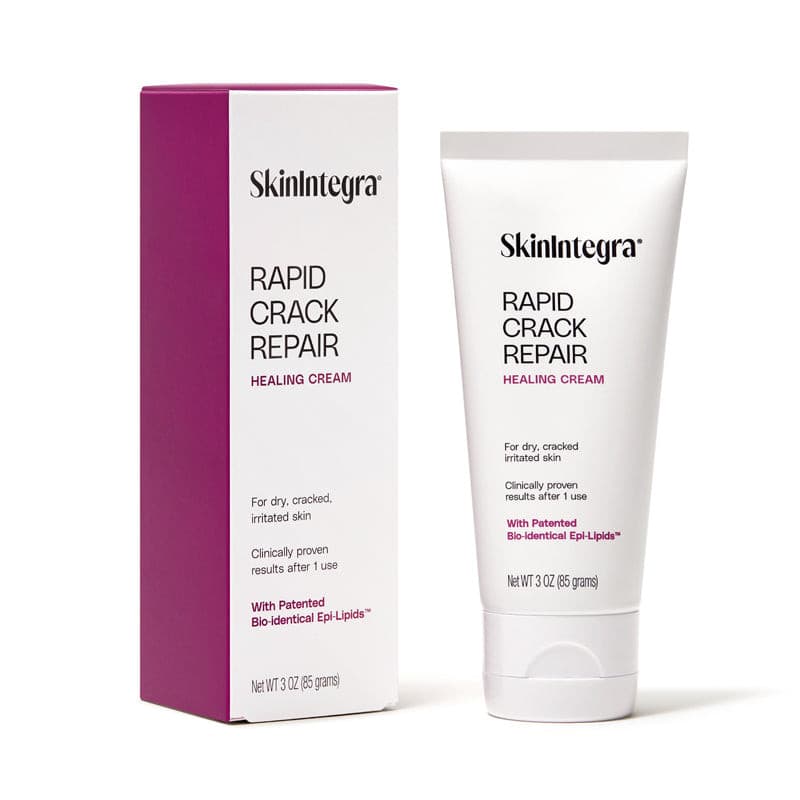
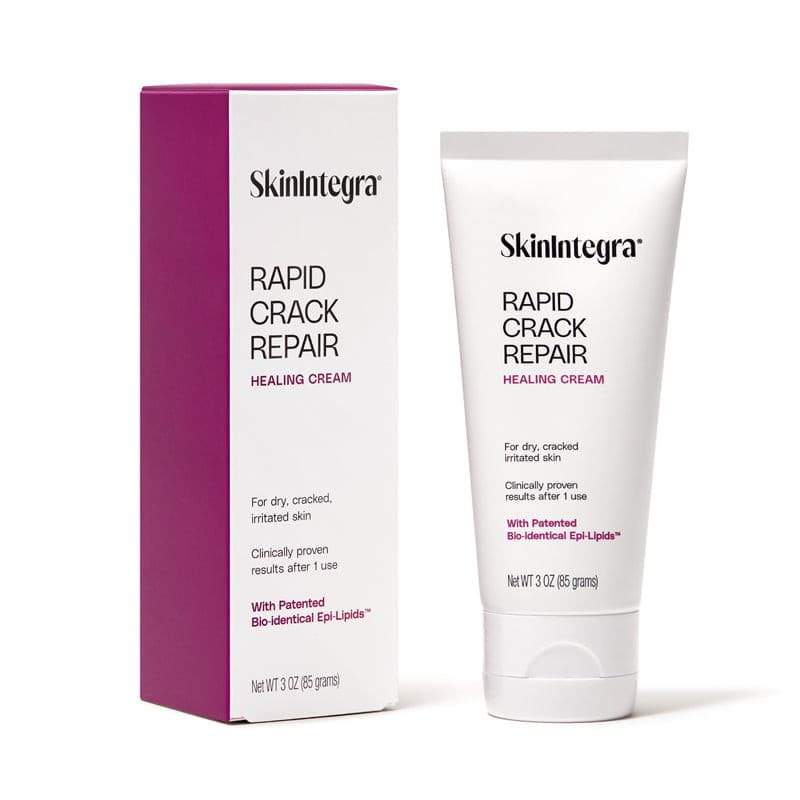
SkinIntegra Rapid Crack Repair Cream was developed for exactly this gap. It is not a stronger exfoliant. It replenishes what is missing.
At its core is Bio-Identical Oils™ — a patented blend of five plant-derived oils (Sacha Inchi, Sea Buckthorn, Rice Bran, Sesame Seed and Jojoba Seed) matched in balance and composition to the skin's own lipids. We profiled what a healthy skin barrier is made of, then selected oils to match it. That is what Bio-Identical Oils™ do.
It also contains 25% urea with lactic acid — a concentration that softens and loosens hardened skin and is widely used on dry, sensitive and diabetic skin, with the lactic acid adding hydration and gentle exfoliation. Unlike 40% urea, which works aggressively and can leave skin feeling dry, SkinIntegra absorbs quickly and leaves skin feeling immediately moisturized.
It is formulated without salicylic acid, and is fragrance-free, paraben-free, alcohol-free, petrolatum-free and dye-free.
What the clinical evidence shows
In a randomized, double-blind study published in the Journal of the American Podiatric Medical Association, 48 adults with deeply cracked skin on the feet used Rapid Crack Repair or 40% urea twice daily for 28 days. Assessed by podiatrists at two and four weeks, Rapid Crack Repair matched 40% urea on dryness and cracking at a lower urea concentration, and was well tolerated over extended use. In our own small pilot study, participants with diabetic skin reported visible improvement in the appearance of dryness and cracking within 24 hours.
SkinIntegra Rapid Crack Repair Cream carries the Seal of Approval from the American Podiatric Medical Association (APMA).
For skin that stays dry and cracked, or that looks better for a few days and then looks the same again, the missing piece is usually not more exfoliation. It is replenishing what the barrier is short of.

As with any barrier care, consistent daily use is what maintains the result — this is not a one-time fix, but a routine that keeps the skin supple once it has settled.
If You're Managing Diabetes Too, the Stakes Are Higher
Thyroid conditions and diabetes overlap far more often than most people realize. Thyroid dysfunction occurs considerably more often in people with diabetes than in the general population, and the risk is highest in autoimmune (Type 1) diabetes. If you are managing both, cracked heels stop being just a comfort problem and become a genuine clinical one.
Both conditions slow wound healing, so a crack that would close on its own in someone else can linger. Diabetes-related neuropathy can dull the pain that would normally warn you a crack is deepening, which means a heel crack can quietly progress. And a deep, open crack is a direct route for bacteria, raising the risk of infection and, in the worst case, cellulitis or a non-healing wound.
This is why barrier care is not optional for this group. If this is you, it is worth understanding why barrier repair matters so much for diabetic foot skin, and why keeping the heels intact is worth the daily effort.
How to Care for Cracked Heels From Hypothyroidism, Step by Step
A hypothyroidism cracked heels routine works best when it does three things at once: soften the thickened skin, replenish the missing lipids, and hold moisture in. Consistency matters more than intensity. Here is a simple routine that follows that logic.
- Soak briefly and gently. Use lukewarm, not hot, water for 2 to 3 minutes to soften the skin. Skip long, hot soaks and harsh soaps, which strip away oils from the skin barrier.
- Reduce thickened skin gently. Once a week or so, use a pumice stone on damp heels to ease down the built-up callus, working gradually over several weeks rather than removing hard skin all at once. Avoid blades and coarse metal graters, which can nick the skin and open the door to infection — here is what safe callus care looks like instead. If you have diabetes, neuropathy, or poor circulation, be especially gentle — or ask a podiatrist to reduce the callus for you — since infection-prone skin needs extra care.
- Replenish the lost lipids. While the skin is still slightly damp, work a barrier cream into the heels, one that replenishes the missing oils rather than only adding water. This is the step most routines leave out.
- Cover it overnight. Cotton socks over the cream hold everything against the skin while you sleep — the genuinely useful half of the old petroleum-jelly-and-socks routine.
- Be consistent. This is the hardest part to keep up, and it is the one that matters most. Barrier care is cumulative: daily use is what turns temporary softness into lasting change.
Keep treating your thyroid alongside this routine. The skin care addresses what the low-thyroid years took from the barrier; the medication keeps the cause from returning.
When to See a Podiatrist or Doctor

Home care handles most hypothyroid heel cracking, but some signs mean it's time to see a podiatrist or your doctor:
- A crack that bleeds
- Redness spreading around a crack, or warmth and swelling
- Pus or odor
- Cracks that show no improvement after a few weeks of consistent care
If you have diabetes, neuropathy, or poor circulation, do not wait — have any deep or bleeding heel crack looked at promptly, because the infection risk is higher and the warning signs can be harder to feel. And if your skin symptoms persist even though your labs look good, it is reasonable to ask your doctor to review your thyroid levels; “in range” is not always the same as optimal for everyone.
Frequently Asked Questions
What helps cracked heels from hypothyroidism?
Work on two fronts at once. Keep your thyroid well managed with your doctor, and care for the skin barrier directly: soften the callus with gentle soaking, apply a cream that replenishes the barrier's lost lipids rather than only adding water, cover with cotton socks overnight, and keep it up every day. Hypothyroid heels crack because the barrier is short on lipids and the skin has thickened, so an effective routine has to restore what is missing, not just hydrate the surface.
What vitamin should I take for cracked heels?
It's a common assumption that cracked heels signal a vitamin deficiency, and while deficiencies in certain nutrients can affect skin, most hypothyroid heel cracking is a barrier and lipid problem rather than a simple vitamin shortfall. Before adding supplements, it's worth understanding whether cracked heels really point to a vitamin deficiency, and asking your doctor to test rather than guessing. Replenishing the skin barrier usually does more for cracked heels than any single vitamin.
What do thyroid feet look like?
“Thyroid feet” typically look dry, rough, and thickened, with a yellowish, calloused build-up on the heels that can split into deep cracks. Some people also notice cold feet, brittle nails, or mild swelling. The combination of dryness and hard, cracked heels is the classic hypothyroid pattern, and it comes from the barrier making fewer of its own lipids plus slowed skin cell turnover.
What hormone imbalance causes cracked heels?
An underactive thyroid (hypothyroidism) is the hormone imbalance most classically linked to dry, cracked heels, because low thyroid hormone reduces the lipids the skin makes for itself and slows cell renewal. Falling estrogen can play a similar role, which is why hormone-driven cracked heels also show up around menopause. In both cases the mechanism is the same: fewer lipids in the barrier, drier and more fragile heel skin.
How do you improve thyroid feet?
You improve thyroid feet by combining the inside and the outside. Work with your doctor to keep your thyroid levels well controlled, then look after the skin barrier from the outside with a cream that replenishes its lipids, gentle callus care, and daily consistency. There is no overnight fix, but the skin usually looks and feels better with steady care, and the hard skin takes several weeks longer than the surface does.
The Takeaway
If your heels keep cracking even though your thyroid is treated, nothing is wrong with you and nothing is wrong with your medication. Your labs and your skin barrier are simply two different jobs. The medication handles the hormone; the barrier needs its lipids replenished and the callus gently reduced, done consistently. Give the skin what the low-thyroid years took from it, and the dry, cracked appearance that kept coming back finally has a reason to improve.


