


If your feet have been getting noticeably drier since your diabetes diagnosis — or if you’re seeing cracking, flaking, or thickened skin that won’t respond to ordinary moisturizer — this is not a coincidence and it is not cosmetic. Dry feet are one of the earliest visible signs that diabetes is affecting your skin barrier. Nerve damage reduces sweat production, poor circulation limits the nutrients reaching skin cells, and high blood sugar impairs the skin’s ability to retain moisture — often before other complications become noticeable.
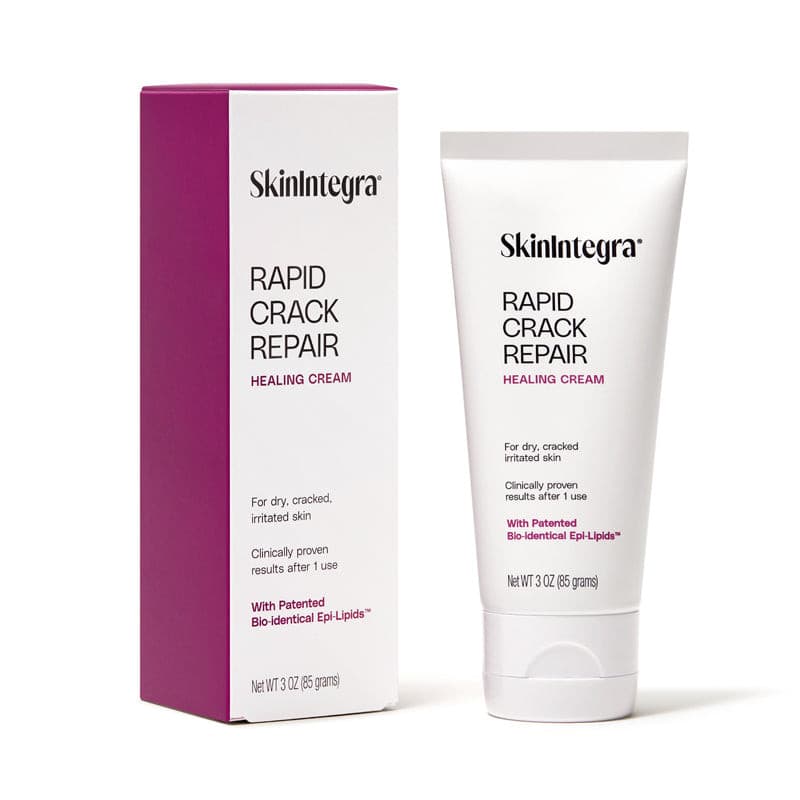
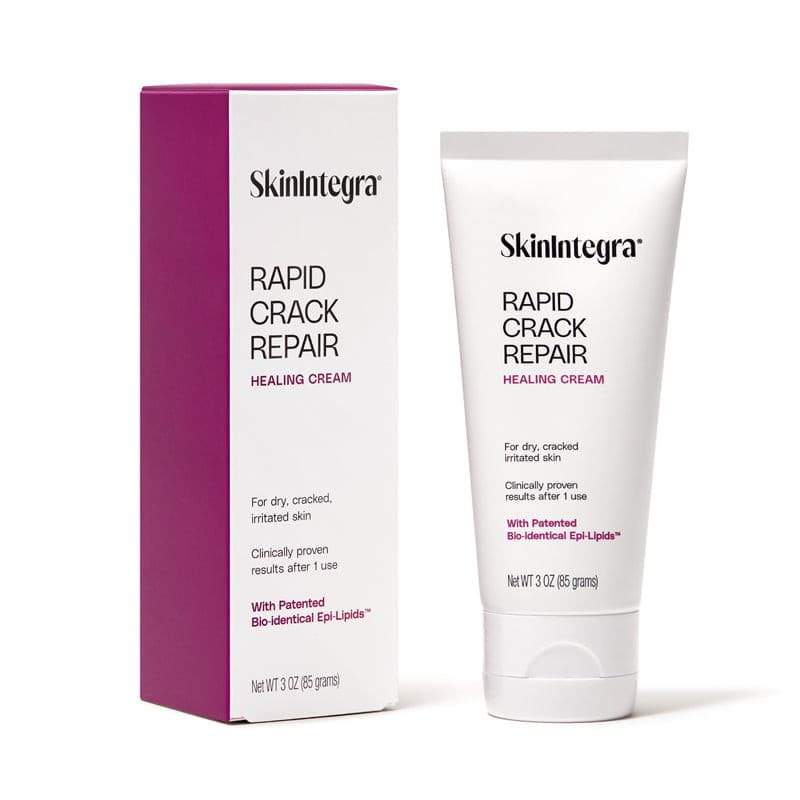
This guide explains what’s happening at each stage, what early-stage dry diabetic feet look like, and how to treat them safely. If you already know what you’re dealing with and want a clinically tested option, SkinIntegra® Rapid Crack Repair Cream targets diabetic skin barrier repair specifically — in a clinical trial conducted exclusively with people with diabetes, 100% of participants showed measurable skin improvement within 24 hours.
Why Diabetes Causes Dry Feet
Diabetic foot dryness is not simply about not drinking enough water or using the wrong lotion. It is driven by three specific mechanisms that standard moisturizers do not address:
-
Autonomic neuropathy: nerve damage reduces sweat gland activity, leaving skin chronically under-moisturized regardless of fluid intake.
-
Reduced circulation: narrowed blood vessels slow delivery of the lipids, ceramides, and natural moisturizing factors the skin needs to maintain its barrier.
-
Hyperglycemia barrier depletion: high blood sugar impairs the skin’s ability to synthesize and retain urea, lactic acid, and fatty acids — the building blocks of the skin’s protective layer.
The result is skin that dries from the inside out. Surface moisturizers provide temporary relief but cannot replenish the depleted barrier components that diabetes strips away.
What Dry Diabetic Feet Look Like — Early to Advanced

Recognizing the stages early gives you time to intervene before cracking deepens into fissures or infection risk rises.
Early stage
-
Skin feels tight or rough, especially on heels and soles
-
Visible dryness or fine flaking after showering
-
Itching or mild irritation without redness
-
Skin appears dull or slightly ashy
At this stage the barrier is compromised but intact. Consistent barrier-repair moisturizing can restore it before structural damage occurs.
Moderate stage
-
Visible cracking at the heels or balls of feet
-
Thickened skin or callus build-up at pressure points
-
Persistent dryness despite regular moisturizing with standard lotions
-
Skin may feel numb or have reduced sensation due to neuropathy
Advanced stage — seek medical attention
-
Deep fissures that bleed or are painful
-
Open cracks that do not close within a few days
-
Signs of infection: warmth, redness spreading from a crack, swelling, or discharge
-
Ulceration or darkened skin
People with diabetes heal more slowly and are more susceptible to infection at every stage. The threshold for seeking podiatric care is lower than for the general population.
Daily Foot Care for Diabetic Skin
A consistent daily routine addresses the mechanisms driving dryness — not just the surface symptoms.
-
Wash gently with lukewarm (not hot) water and a mild, fragrance-free cleanser. Avoid soaking, which strips residual barrier lipids.
-
Dry thoroughly especially between the toes where retained moisture creates a fungal infection environment.
-
Moisturize immediately after drying while skin is still slightly damp. This is when barrier-repair ingredients penetrate most effectively.
-
Inspect daily for cracks, color changes, blisters, or any break in the skin. Neuropathy means you may not feel injuries that are already developing.
-
Wear properly fitted shoes with cushioning. Avoid walking barefoot even indoors.
For more on what the daily inspection should cover, see the Mayo Clinic’s guide on daily diabetic foot care.
Morning
Apply barrier-repair cream before putting on socks and shoes. This is not optional for diabetic skin — footwear creates hours of friction and pressure that neuropathy may prevent you from feeling. Applying cream first means the barrier is reinforced before the mechanical stress of the day begins, not after damage has already accumulated.
Evening
Wash, dry thoroughly, and reapply barrier-repair cream before bed. Evening application is the most clinically valuable window: skin undergoes its repair cycle overnight, trans-epidermal water loss (TEWL) is lower during rest, and barrier ingredients penetrate more deeply without the mechanical disruption of daytime activity. This is also the time for daily inspection — in good light, check heels, soles, and between toes for any crack, blister, color change, or area of broken skin.
Weekly
Check callus build-up at heels and pressure points and flag any changes to your podiatrist. Do not attempt to file, cut, or remove calluses at home — in diabetic skin, calluses can conceal underlying pressure ulcers that physical removal would expose to infection. Physical foot files and pumice stones are contraindicated. Urea-based barrier creams soften thickened skin gradually and safely without this risk.
If callus build-up is already your main problem rather than general dryness, the care rules are more specific — read our guide to managing diabetic foot calluses, and what to do when a callus cracks open on the ball of the foot.
Why Standard Moisturizers Are Not Enough
Most moisturizers work by forming a surface film that slows water evaporation. For healthy skin, this is sufficient. For diabetic skin, it addresses none of the underlying problems:
-
They do not replenish the depleted ceramides and fatty acids that form the skin’s structural barrier
-
They do not replace the natural moisturizing factors (urea and lactic acid) that diabetes depletes
-
Many contain fragrances, alcohols, or petroleum-based ingredients that irritate already-compromised skin
What diabetic skin specifically needs is a barrier-repair formulation — one that mimics the skin’s own composition rather than sitting on top of it.
Clinically Tested Treatment for Dry Diabetic Feet

SkinIntegra® Rapid Crack Repair Cream comes from Erika Tazberik, a former Johnson & Johnson formulation chemist, who built it after her husband — a person with diabetes — developed serious foot complications that standard creams failed to address. She started from the specific deficiencies diabetes creates rather than adapting a general skincare base.
That starting point is Bio Identical Oils™ — a patented blend of five whole plant oils, including Sacha Inchi and Sea Buckthorn, chosen because their composition matches the lipids healthy skin makes for itself. This is the part standard moisturizers skip: rather than laying a film over the skin, it supplies the barrier lipids that neuropathy and poor circulation stop the skin from delivering on its own.
On that foundation sits 25% urea with lactic acid. At 25%, urea acts keratolytically — it loosens the protein bonds holding thickened skin together — while replenishing the natural moisturizing factors diabetes depletes. The concentration lands high enough to soften callused skin and low enough to avoid the irritation risk that comes with 40% urea products.
In an independent clinical study, Rapid Crack Repair delivered significantly faster improvement in dryness and cracking than high-strength Urea-40, assessed by blinded podiatrist investigators at two and four weeks, with less irritation. In a separate clinical trial conducted exclusively with people with diabetes, 100% of participants showed measurable skin improvement within 24 hours.
The formula is fragrance-free, paraben-free, alcohol-free, petrolatum-free, and hypoallergenic — none of the common irritants that delay healing in sensitive diabetic skin. It carries the Seal of Approval from the American Podiatric Medical Association (APMA).
Shop SkinIntegra Rapid Crack Repair Cream →
Clinical note: Higher urea concentration is not better for diabetic skin. SkinIntegra’s 25% formula outperformed 40% urea in clinical testing. See: Is 40% urea too strong for diabetic skin?
Preventing Diabetic Foot Complications
Dry skin managed early rarely becomes a serious complication. The risk rises sharply when cracks deepen or go unnoticed due to neuropathy. Key preventive measures:
-
Control blood sugar consistently — HbA1c levels directly affect the skin’s ability to synthesize ceramides and retain natural moisturizing factors. This is the single most impactful lever on skin barrier integrity, more than any topical product alone.
-
Use a barrier-repair cream daily — not only when symptoms appear
-
Wear cushioned, properly fitted footwear — avoid open-backed shoes that create heel friction
-
Avoid smoking — nicotine causes vasoconstriction that directly reduces dermal blood flow to the feet, compounding the circulatory deficit that diabetes already creates.
-
Stay active — even moderate walking (20–30 minutes daily) measurably increases microvascular perfusion to the feet, improving the nutrient and lipid delivery that diabetic skin depends on.
-
Prioritize omega-3 fatty acids and zinc in your diet — omega-3s are direct substrates for the barrier lipids the skin synthesizes, and zinc plays a central role in keratinocyte repair.
-
Avoid salicylic acid-based callus removers and Epsom salt soaks — both further compromise the barrier
See: Why salicylic acid is unsafe for diabetic skin | Epsom salt foot soaks and diabetes — friend or foe?
When to See a Podiatrist
For people with diabetes, the threshold for seeking professional care is lower than for the general population. Contact a podiatrist or healthcare provider if you notice:
-
Cracking that has not improved after 7–10 days of consistent barrier-repair treatment
-
Any open wound, blister, or area of broken skin that is not closing
-
Signs of infection — spreading redness, warmth, swelling, or discharge
-
Numbness, tingling, or loss of sensation in the feet
-
Discoloration — darkened patches, blue-purple tones, or pallor
-
Any ulcer or sore that does not begin improving within a few days
Annual comprehensive foot exams are recommended for all people with diabetes. High-risk patients — those with previous ulcers, significant neuropathy, or peripheral artery disease — should be seen more frequently.
See also: Safe pedicure for diabetic feet | Preventing diabetic foot ulcers
Frequently Asked Questions
How do you get rid of dry feet from diabetes?
Daily use of a barrier-repair cream containing urea (10–25%), ceramides, and barrier lipids is the most effective approach. Standard moisturizers are not sufficient because they do not replenish the structural lipids and natural moisturizing factors that diabetes depletes. Blood sugar control also directly improves the skin’s ability to retain moisture. For advanced cracking or any sign of infection, see a podiatrist.
What does dry diabetic skin look like?
Early-stage dry diabetic feet appear dull or ashy, with fine flaking especially on the heels and soles. As it progresses, visible cracking develops at pressure points, skin thickens into calluses, and fissures can deepen to the point of bleeding. Neuropathy may mean these changes are painless even at advanced stages — which is why daily visual inspection matters.
What is the best moisturizer for diabetic feet?
Look for a formulation with urea at 10–25% concentration plus barrier lipids that match what skin makes for itself — the specific components diabetes depletes. Avoid products with fragrance, alcohol, or petroleum bases. SkinIntegra® Rapid Crack Repair Cream was clinically tested specifically on people with diabetes and carries the APMA Seal of Approval.
What are the 5 stages of diabetic foot?
The Wagner classification describes diabetic foot from Stage 0 (no open lesion, but high-risk skin such as dry, cracked, or callused) through Stage 5 (extensive gangrene). Most people with diabetes who experience dry or cracked feet are at Stage 0 — the most treatable stage, where consistent skin barrier care can prevent progression entirely.
Why shouldn’t diabetic patients soak their feet?
Prolonged soaking softens and weakens the skin barrier, increasing the risk of cracking and infection entry. Hot water can cause burns in patients with reduced sensation from neuropathy. The ADA and most podiatry guidelines recommend washing rather than soaking. This applies to Epsom salt soaks as well, which further dry out diabetic skin.
Can dry diabetic feet lead to serious complications?
Yes. Dry, cracked skin creates entry points for bacteria and fungal infections. In diabetic patients, reduced circulation means infections progress faster and heal more slowly. Untreated cracks can deepen to fissures, then ulcers — a leading cause of hospitalization and amputation in people with diabetes. Early intervention at the dry skin stage prevents this progression.


