


If you've been diagnosed with a diabetic foot ulcer, one of the first questions you likely asked your doctor was: "How long until this heals?"

It's a question rooted in anxiety, hope, and the practical need to plan your life around wound care appointments, mobility limitations, and the fear of complications. The answer isn't simple, but understanding what affects healing time can give you both realistic expectations and a clearer path forward.
Most diabetic foot ulcers take 6 to 20 weeks to heal, depending on the ulcer's depth, your circulation, blood sugar control, and how well you follow your treatment plan. Some shallow ulcers close within weeks, while deeper wounds complicated by infection or poor blood flow can take months or require advanced interventions.
Understanding Ulcer Severity: The Wagner Classification
Not all diabetic foot ulcers are the same. Medical professionals use the Wagner Classification system to grade ulcer severity from 0 to 5. This grading helps predict healing time and determine the intensity of treatment needed.
Grade 0 (Pre-Ulcerative Lesion)
High-risk skin with calluses, blisters, or redness but no open wound. This is the stage where pressure offloading, keeping callus down and daily attention to the skin do the most good, and where skin may never go on to break at all. If you already have a break in the skin, our guide on what to do in the first hour covers the immediate steps.
Grade 1 (Superficial Ulcer)
A shallow, open sore that doesn't extend through the full thickness of skin.
-
Typical healing time: 6-8 weeks
-
Treatment: Daily wound cleaning, moisture-balanced dressings, offloading pressure, strict blood sugar control
Grade 2 (Deep Ulcer)
Extends to ligaments, tendons, or joint capsules but no bone involvement or abscess.
-
Typical healing time: 12-16 weeks
-
Treatment: Debridement, advanced wound dressings, sometimes antibiotics, offloading boots
Grade 3 (Deep Ulcer with Bone Involvement or Abscess)
Osteomyelitis (bone infection) or deep abscess present.
-
Typical healing time: 16-20+ weeks
-
Treatment: Aggressive debridement, IV antibiotics, possible hospitalization
Grade 4 & 5 (Gangrene)
Tissue death (gangrene) in part of the foot (Grade 4) or the entire foot (Grade 5). These cases often require surgical intervention, including amputation. Healing timelines are unpredictable and depend on surgical outcomes and rehabilitation.
The Healing Process: What to Expect Week by Week
Diabetic foot ulcers heal in predictable stages, though the timeline varies by individual. Here's what typically happens:
Week 1-2: Inflammation and Debridement Phase
Your body's immune system responds to the wound. You may notice redness, warmth, and mild swelling around the ulcer—these are normal signs of healing, not necessarily infection (though infection must be ruled out).
During this phase, your podiatrist will likely debride (remove) dead tissue to expose healthy tissue underneath. This can make the wound look temporarily worse—larger or deeper—but it's a critical step for proper healing.
Week 3-6: Granulation Tissue Formation
New tissue begins to grow from the bottom of the wound upward. You'll see pink or red "granulation tissue"—this is healthy tissue rich in blood vessels.
The ulcer may start to shrink from the edges inward. This is when maintaining a moist wound environment (using appropriate dressings) becomes crucial. Too dry, and the tissue cracks; too wet, and bacteria thrive.
Week 6+: Re-Epithelialization and Closure
The skin's outer layer (epidermis) begins to grow over the granulation tissue. The wound edges move closer together, and the ulcer becomes shallower.
Complete closure happens when new skin fully covers the wound. Even after closure, the skin remains fragile for weeks and requires ongoing protection.
Common concern: "My ulcer looked smaller last week, but now it looks bigger again—is that normal?" Sometimes, yes. Debridement sessions, minor setbacks from pressure, or drainage can make progress appear non-linear. Trust the process, but always report concerns to your wound care team.
What the Skin Around the Wound Is Short Of
That covers the wound itself. The other half of this is the skin on either side of it — because on a foot with diabetes that skin is usually the reason the ulcer was there in the first place, and a dressing does nothing to change its condition.
Once an ulcer has formed, the skin around it — the periwound area — takes a beating. Drainage keeps it damp, offloading devices press on it, and repeated dressing changes strip it. Maceration, which is skin gone soft and white from staying wet, new cracks alongside the ulcer, and breakdown that widens the wound all start there. Your wound care team will tell you what goes on the ulcer. The intact skin around it is usually the part left to you.
It matters after closure too. Around two in three people who heal a diabetic foot ulcer develop another within five years, and many recur in the same place — healed skin stays thinner, less elastic and less well supplied than the skin around it. That is the case for looking after it long after the dressings have stopped.
So it is worth knowing what that skin is made of, and what it runs short of on a foot with diabetes. There is more in our skin barrier repair guide and in why diabetic feet stay dry.
The outer layer of your skin works like a brick wall. The cells are the bricks, each holding water. Between them sits a mortar your skin makes out of lipids. Lose either and the wall goes stiff, and stiff skin splits under pressure.
On a foot with diabetes that wall is short-handed already. The sole has no oil glands — sweat is its only supply, and it carries more than water: it delivers the natural moisturizing compounds that help the outer layer hold water in. Diabetes reduces sweating in the feet, for some people a little and for others almost entirely, and it cannot be judged by looking. Stiff skin is what splits under a pressure point, and a split is where most of these ulcers began.
Water only stays if something holds it, and the mortar is what does that. On skin that is already dry and cracking, added water leaves about as fast as it arrives.
Moisturizers soften the surface for a while. Urea creams thin the hardened plate. Both help — but neither replenishes the lipids the barrier is short of, and the wall needs water and mortar together, so the skin stiffens again and the crack reopens.
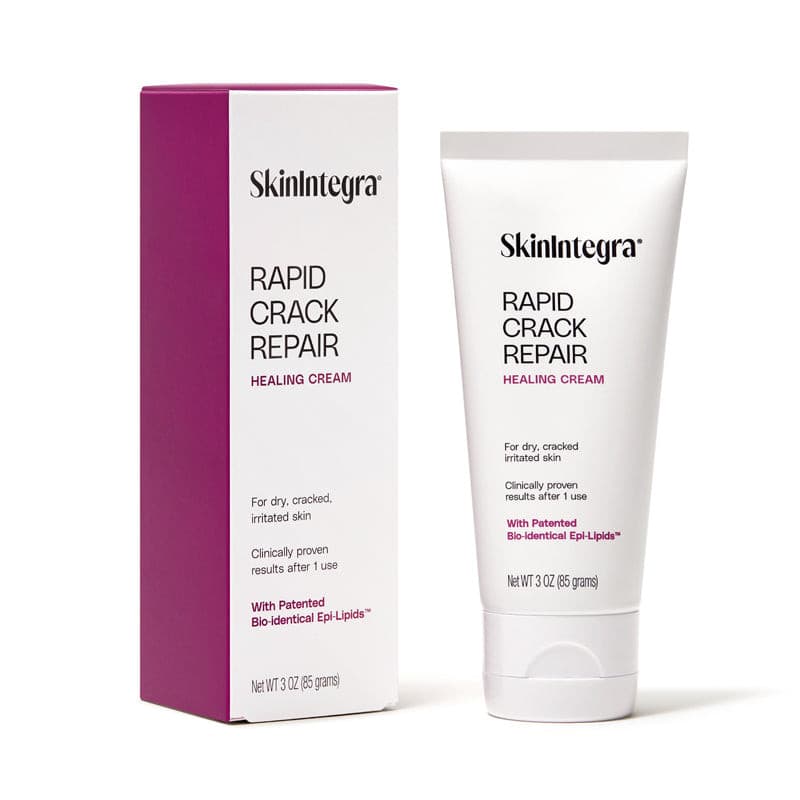
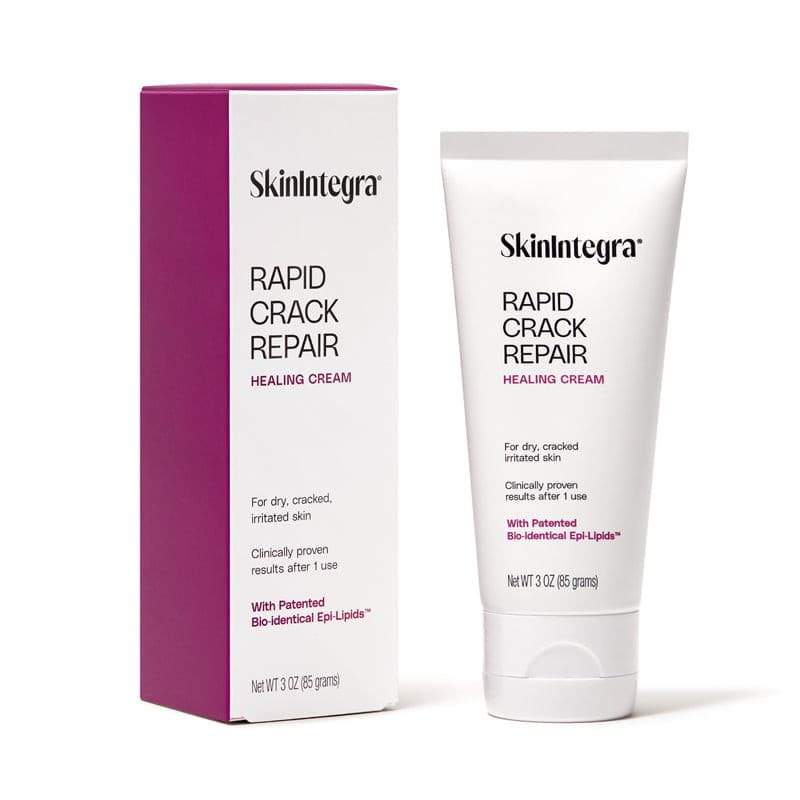
SkinIntegra® Rapid Crack Repair Cream was developed for exactly this gap. It is not a stronger exfoliant. It replenishes what is missing.
At its core is SkinIntegra B.I.O.™ (Bio-Identical Oils) — a patented blend of five plant-derived oils (Sacha Inchi, Sea Buckthorn, Rice Bran, Sesame Seed and Jojoba Seed) matched in balance and composition to the skin’s own lipids. We profiled what a healthy skin barrier is made of, then selected oils to match it. That is what SkinIntegra B.I.O.™ does.
It also contains 25% urea with lactic acid — a concentration that softens and loosens hardened skin and is widely used on dry, sensitive and diabetic skin, with the lactic acid adding hydration and gentle exfoliation. Unlike 40% urea, which works aggressively and can leave skin feeling dry, SkinIntegra absorbs quickly and leaves skin feeling immediately moisturized.
It is formulated without salicylic acid, and is fragrance-free, paraben-free, alcohol-free, petrolatum-free and dye-free.
What the clinical evidence shows
In a head-to-head trial published in the Journal of the American Podiatric Medical Association, 48 adults with deeply cracked feet used either Rapid Crack Repair or a 40% urea cream, twice a day for four weeks.
Rapid Crack Repair did as well as 40% urea — at a lower strength, and well tolerated throughout. Among the 22 adults who used it, 91% showed some improvement within two weeks. By four weeks, podiatrists were seeing less dryness in 82% and less cracking in 73%, and no one had new or worsening redness, burning, stinging or itching.
SkinIntegra Rapid Crack Repair Cream carries the Seal of Approval from the American Podiatric Medical Association (APMA). Medical professionals at major hospitals across the United States also recommend it.
For skin that stays dry and cracked, or that looks better for a few days and then looks the same again, the missing piece is usually not more exfoliation. It is replenishing what the barrier is short of.

Apply twice daily to clean, dry feet, avoiding the spaces between your toes: work it into the hardened area around the crack — the skin on either side is what has to change.
It is a skin care cream, not a wound product. It does not go on an open ulcer, and it is no part of what your wound care team has prescribed for the wound. Follow their dressing protocol for the ulcer itself, and ask them before putting anything new near it.
Shop SkinIntegra Rapid Crack Repair Cream →
Learn why 40% urea may be too strong for diabetic skin
Factors That Slow Healing
Even with proper wound care, certain factors can delay or prevent healing:
Poor Blood Sugar Control
High blood glucose levels impair white blood cell function, reduce blood flow, and create an environment where bacteria thrive. Studies show ulcers in patients with HbA1c >9% take significantly longer to heal. Aim for an HbA1c <7% if possible.
Continued Pressure on the Wound
Walking on an ulcer prevents healing, and pressure is also what opens the skin in the first place — see neuropathy and cracked heels. Offloading (using a special boot, crutches, or wheelchair) is non-negotiable. Even "just a quick trip to the bathroom" without your boot can set healing back by days.
Infection
Signs of infection include increased pain, redness spreading beyond the wound edges, warmth, swelling, pus, or foul odor. Infected ulcers require antibiotics and may need hospitalization.
Never ignore infection symptoms.
Peripheral Artery Disease (PAD)
Poor circulation starves the wound of oxygen and nutrients needed for healing, and it is part of why diabetic skin mends slowly even away from an ulcer. If you have PAD, your vascular surgeon may recommend angioplasty or bypass surgery to improve blood flow before the ulcer can heal.
Smoking
Nicotine constricts blood vessels and reduces oxygen delivery to tissues. Smokers have significantly longer healing times and higher amputation rates. Quitting smoking is one of the most impactful steps you can take.
Nutritional Deficiencies
Protein, vitamin C, zinc, and vitamin D all play critical roles in wound healing. If you're malnourished or on a restricted diet, ask your doctor about supplementation. Learn more about cracked heels and nutritional deficiencies.
When Ulcers Don't Heal: What Happens Next
If your ulcer shows no signs of improvement after 4 weeks of appropriate treatment, or if it's been 12+ weeks without complete closure, it's classified as a chronic non-healing wound.
Don't panic—this doesn't mean amputation is inevitable. It does mean your treatment plan needs to be re-evaluated. Your wound care team may consider:
-
Hyperbaric oxygen therapy (HBOT) – Breathing pure oxygen in a pressurized chamber to increase oxygen delivery to the wound
-
Growth factor therapy – Applying topical growth factors (like Regranex) to stimulate tissue growth
-
Negative pressure wound therapy (NPWT) – A vacuum-assisted dressing that promotes healing
-
Skin grafts or bioengineered skin substitutes – Covering the wound with donor tissue
-
Vascular surgery – Restoring blood flow if PAD is the primary barrier
When to escalate care: If your primary care doctor or general podiatrist isn't specialized in wound care, ask for a referral to a wound care center or limb preservation specialist. These teams have access to advanced therapies not available in standard clinics.
Frequently Asked Questions
Can you die from a diabetic foot ulcer?
Yes, though it's preventable with proper care. Severe infections from untreated ulcers can lead to sepsis (bloodstream infection), which can be fatal. Additionally, ulcers complicated by gangrene may require amputation. About 85% of diabetes-related amputations are preceded by a foot ulcer. This is why early intervention and strict adherence to treatment are critical.
What are the 5 stages of a diabetic foot ulcer?
The Wagner Classification describes 6 grades (0-5), not stages. Grade 0 is pre-ulcerative skin damage, Grade 1 is a superficial ulcer, Grade 2 is a deep ulcer, Grade 3 involves bone or abscess, and Grades 4-5 involve gangrene of part or all of the foot.
What is the best ointment for diabetic foot wounds?
There's no single "best" ointment—treatment depends on the wound type. For the wound itself, your doctor will prescribe specific dressings (hydrocolloid, foam, antimicrobial, etc.).
For the intact skin around the wound, a barrier cream keeps that skin supple — but it is skin care, not wound care, and it does not go on the ulcer. Avoid over-the-counter triple antibiotic ointments unless directed by your doctor—they can cause allergic reactions and aren't designed for chronic wounds.
How do I know if my diabetic foot ulcer is healing?
Good signs include:
-
Pink or red granulation tissue filling the wound bed
-
Wound edges moving closer together (wound getting smaller)
-
Decreased drainage
-
Less pain (though pain isn't always reliable if you have neuropathy)
Bad signs include spreading redness, increased swelling, foul odor, yellow or green discharge, or the wound getting larger. Report these to your doctor immediately.
Should I use Neosporin or Vaseline on my diabetic foot ulcer?
Neither is appropriate for treating a diabetic foot ulcer. Neosporin (triple antibiotic ointment) can cause allergic reactions and isn't effective for chronic wounds. Vaseline (petroleum jelly) doesn't provide antimicrobial protection or active healing properties. Follow your wound care specialist's specific dressing protocol—modern wound care uses advanced moisture-balanced dressings, not drugstore ointments. Learn why Vaseline alone isn't recommended for diabetic feet.
Final Thoughts: Patience, Diligence, and Partnership
Healing a diabetic foot ulcer requires patience. There will be setbacks—a week where the wound looks the same size, a debridement that makes it temporarily larger, or frustration when you can't wear regular shoes for months.
But healing is possible for the vast majority of ulcers when you:
-
Offload pressure religiously
-
Control your blood sugar
-
Follow your wound care team's instructions exactly
-
Look after the intact skin around your ulcer, not only the wound itself
-
Address underlying issues (PAD, infection, nutrition)
And once your ulcer heals, your work isn't done. Recurrence rates are high, but they don't have to define your outcome. Daily skin care, well-fitted footwear, checking your feet every day and keeping blood sugar in range are the four things the recurrence figures are really about, and all four are yours to act on.
Your feet have carried you through life. Now it's time to carry them through healing—and beyond.


