


Urea vs. Lactic Acid & Ammonium Lactate: Which One Is Right for You?
If your podiatrist has recommended either urea cream or ammonium lactate — or both — you're not alone in wanting to understand the difference. These are the two ingredients podiatrists reach for most often for cracked heels and xerosis — the clinical word for skin that has gone persistently dry. They overlap, but they work differently, and they carry different safety considerations for people with diabetes or sensitive skin.
This guide explains what each ingredient does, how they compare clinically, and how to choose the right one based on the severity of your condition and your health history.

What Is Urea and How Does It Work on Cracked Heels?
Urea is one of the oldest and best-studied ingredients in foot care, and on a thickened, cracked heel it is usually the first thing a podiatrist reaches for. What makes it unusual is that it does two different jobs, and which one you get depends almost entirely on how much of it is in the tube.
At 10–20%, urea works as a humectant. It draws water into the outer layer of the skin and holds it there, so the skin sits softer and more flexible. At this strength it does little to the hardened surface itself.
At 20–40%, it starts to loosen that surface. The bonds holding dead cells together give way, so thickened, callused skin sheds more readily and the hard plate over a heel begins to thin.
That second action is why urea is the usual choice for cracked heels in particular. A heel that has split is rarely just dry — it has built a hard, inflexible layer that gives way under the pressure of walking, and softening that layer is most of the job.
For diabetic feet, most clinicians stay in the 20–25% range. Higher concentrations work faster, but they leave less room for error on skin that is already fragile.
What the evidence shows. A 2026 systematic review and meta-analysis in Frontiers in Clinical Diabetes and Healthcare pooled 12 randomised trials covering 603 people with diabetes and dry foot skin. Creams containing urea reduced the severity of dryness more than a plain base cream at four weeks, and the reviewers graded that finding high-certainty — the strongest rating they gave anything. Side effects across the trials were rare and mild. The concentrations studied ranged from 5% to 25% and were not analysed separately, so the finding supports urea rather than any one strength.
What Is Ammonium Lactate and What Does It Do for Feet?
Ammonium lactate is a compound made by combining lactic acid with ammonium hydroxide. The ammonium hydroxide neutralizes the acidity of lactic acid, raising the pH to make it better tolerated for daily use on sensitive skin. It is most commonly available at 12% concentration and is designated for foot xerosis and dry, scaling skin.
Lactic acid is an alpha-hydroxy acid (AHA) that works as both a gentle exfoliant and a humectant. It promotes cell turnover by loosening the bonds between dead skin cells and draws moisture into the skin simultaneously. Because it is pH-buffered in the ammonium lactate form, it is generally milder on sensitive skin than free lactic acid at equivalent concentrations.
For cracked heels, ammonium lactate 12% is most effective when:
-
Dryness is mild to moderate rather than severe or deeply split
-
The patient has sensitive skin that does not tolerate urea well
-
The goal is daily maintenance — keeping heels soft — rather than rapid repair of open cracks
-
A podiatrist recommends it as a gentler first-line option or a long-term follow-up after acute healing
The Cleveland Clinic's patient guide to corns and calluses recommends applying a daily moisturizer containing urea or ammonium lactate to soften callused skin over time — consistent with how podiatrists use both ingredients in practice.
Urea vs. Ammonium Lactate: Head-to-Head Comparison
Both ingredients are used on dry, cracked heels — but they are not interchangeable. Here is how they differ across the things that actually decide which one suits you:
Primary action
-
Urea (20–40%): Draws water in and loosens hardened skin at the same time.
-
Ammonium lactate (12%): Humectant and mild exfoliant — primarily hydrates with light surface exfoliation.
Best use case
-
Urea: Thick calluses and deep cracks, where the hardened layer has to come down.
-
Ammonium lactate: Mild to moderate dryness, maintenance, or when urea causes irritation.
Speed of results
-
Urea: Usually quicker off the mark — softening is often noticeable within the first week at 20–25%.
-
Ammonium lactate: Slower — most people are looking at a few weeks before the difference is obvious.
Diabetic skin safety
-
Urea: Safe at 20–25% for daily use; caution above 30% on fragile or broken skin.
-
Ammonium lactate: Rarely causes trouble at 12%; avoid on open or bleeding skin.
Risk on open or bleeding skin
-
Both: Avoid applying either directly into an open crack — urea can sting and slow things down, and the acidity of ammonium lactate can irritate exposed skin.
The American Academy of Dermatology's guide to dry, cracked heels recommends looking for a moisturizing cream that contains 10–25% urea and applying it immediately after bathing for best results.
So which should you choose? Honestly, the research does not crown a winner. A systematic review in the Journal of Foot and Ankle Research examined the trials behind every common moisturising ingredient for dry foot skin and found urea the most studied by a wide margin — but concluded that the quality of the evidence “precludes recommendation of any active ingredient over another.” The 2026 analysis above is the strongest result available, and it compares urea-containing creams against plain base creams, not against ammonium lactate.
What that leaves is the rule podiatrists actually work by: match the strength to the state of the skin. Thick callus and deep splits usually call for urea. Mild dryness, sensitive skin, or maintenance once things have settled is where ammonium lactate earns its place. If one irritates, the other is a reasonable alternative rather than a step down.
There is also a second thing neither ingredient is built to do, and it is why cracked heels so often come back.
The outer layer of your skin works like a brick wall. The cells are the bricks, each holding water. Between them sits a mortar your skin makes out of lipids. Lose either and the wall goes stiff, and stiff skin splits under pressure.
On the sole there are no oil glands at all. The mortar there comes from the skin cells themselves, and sweat delivers the natural moisturizing compounds that help the bricks hold their water. Where diabetic nerve damage reduces how much the feet sweat, the skin loses both at once.
Water only stays if something holds it, and the mortar is what does that. On skin that is already dry and cracking, added water leaves about as fast as it arrives.
Which is the part neither of these two ingredients reaches.
Moisturizers soften the surface for a while. Urea creams thin the hardened plate. Both help — but neither replenishes the lipids the barrier is short of, and the wall needs water and mortar together, so the skin stiffens again and the crack reopens.
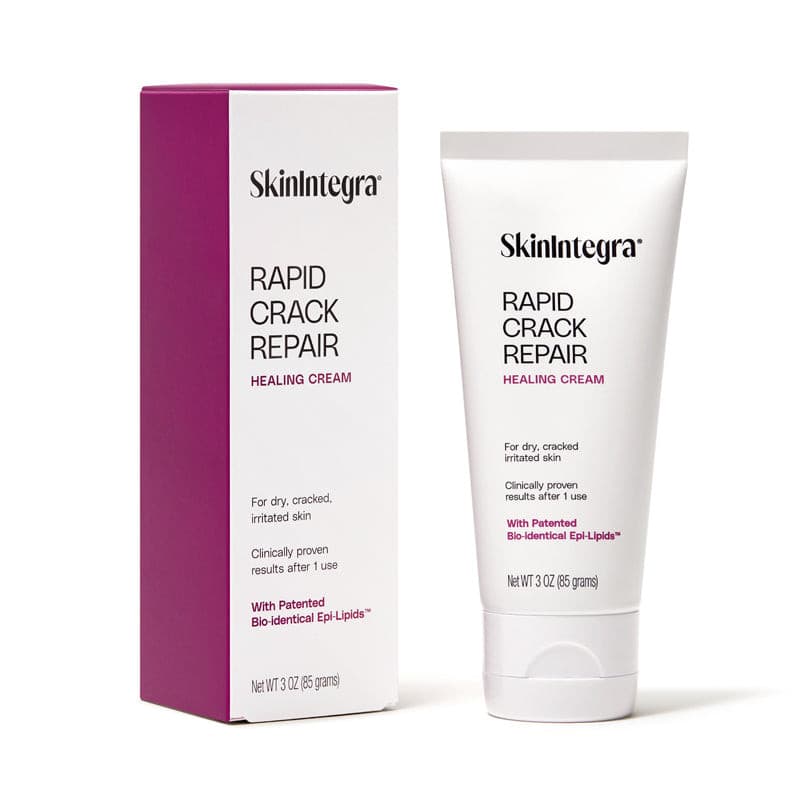
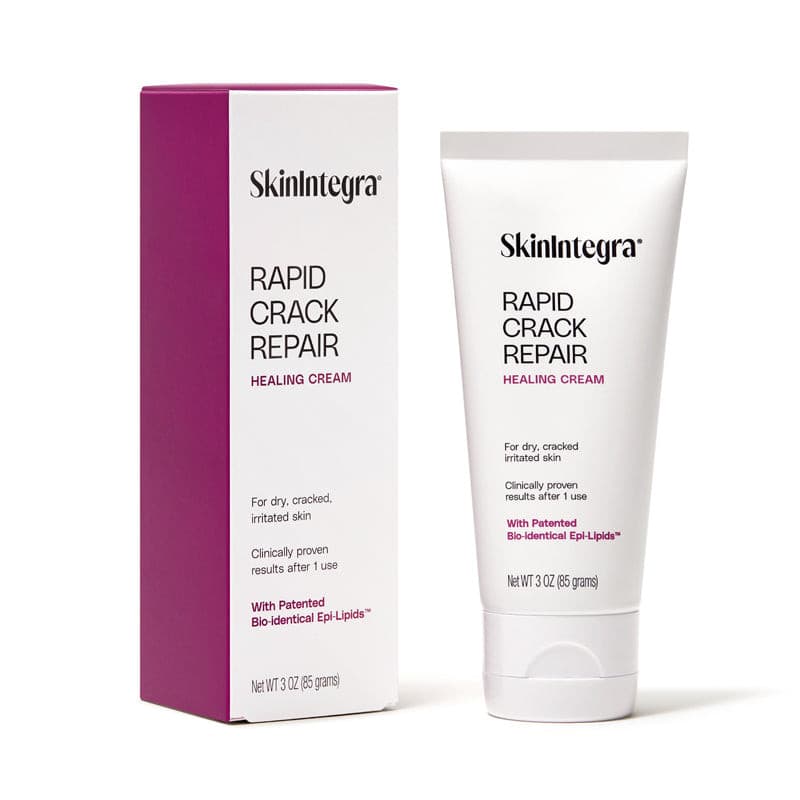
SkinIntegra® Rapid Crack Repair Cream was developed for exactly this gap. It is not a stronger exfoliant. It replenishes what is missing.
At its core is SkinIntegra B.I.O.™ (Bio-Identical Oils) — a patented blend of five plant-derived oils (Sacha Inchi, Sea Buckthorn, Rice Bran, Sesame Seed and Jojoba Seed) matched in balance and composition to the skin’s own lipids. We profiled what a healthy skin barrier is made of, then selected oils to match it. That is what SkinIntegra B.I.O.™ does.
It also contains 25% urea with lactic acid — a concentration that softens and loosens hardened skin and is widely used on dry, sensitive and diabetic skin, with the lactic acid adding hydration and gentle exfoliation. Unlike 40% urea, which works aggressively and can leave skin feeling dry, SkinIntegra absorbs quickly and leaves skin feeling immediately moisturized.
It is formulated without salicylic acid, and is fragrance-free, paraben-free, alcohol-free, petrolatum-free and dye-free.
What the clinical evidence shows
In a head-to-head trial published in the Journal of the American Podiatric Medical Association, 48 adults with deeply cracked feet used either Rapid Crack Repair or a 40% urea cream, twice a day for four weeks.
Rapid Crack Repair did as well as 40% urea — at a lower strength, and well tolerated throughout. Among the 22 adults who used it, 91% showed some improvement within two weeks. By four weeks, podiatrists were seeing less dryness in 82% and less cracking in 73%, and no one had new or worsening redness, burning, stinging or itching.
SkinIntegra Rapid Crack Repair Cream carries the Seal of Approval from the American Podiatric Medical Association (APMA). Medical professionals at major hospitals across the United States also recommend it.
For skin that stays dry and cracked, or that looks better for a few days and then looks the same again, the missing piece is usually not more exfoliation. It is replenishing what the barrier is short of.
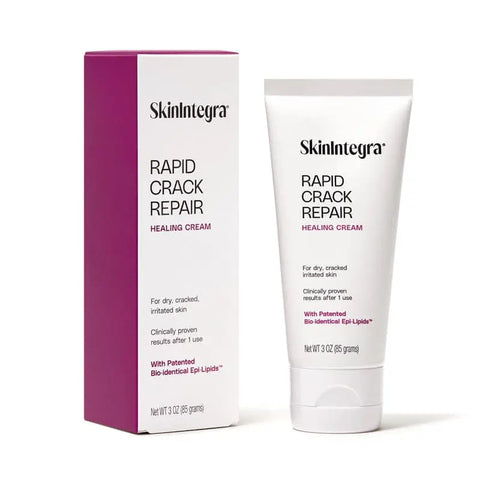
Use it once or twice a day, and work it into the hardened area around the crack — the skin on either side is what has to change.
It is a skin care cream, not a wound product. It does not go into an open crack.
Shop SkinIntegra Rapid Crack Repair Cream →
Is Urea Cream Safe for Diabetic Feet? What About Ammonium Lactate?
This is one of the most common questions from patients — and the answer is nuanced.
Urea and Diabetic Feet
Urea is safe for diabetic feet when used at appropriate concentrations. The key guidance from diabetic foot care clinicians:
-
10–25% urea: Safe for daily use on diabetic skin. Provides effective hydration and moderate exfoliation without compromising barrier integrity.
-
30–40% urea: Appropriate for short-term use to bring down thick callus, ideally under podiatric supervision. Not for open cracks or broken skin.
-
Above 40%: A professional-use or debridement context. High risk of over-exfoliation and irritation on diabetic skin — not appropriate for home use.
The risk with high-concentration urea in diabetic patients is not that urea itself is harmful — it is that peripheral neuropathy reduces the ability to feel early irritation, meaning skin damage can progress unnoticed. Conservative concentration choices matter.
The American Diabetes Association's guide to foot creams specifically recommends urea at 10–25% as a key ingredient in foot creams for people with diabetes alongside glycerin for softening dry skin safely.
If the thickened skin on your feet has built into distinct, raised calluses rather than general dryness, the safe-care rules change — pressure offloading matters as much as the cream. Our guide to managing diabetic foot calluses covers what to do and what to avoid.
Ammonium Lactate and Diabetic Feet
Ammonium lactate 12% rarely causes problems for people with diabetes and is a common podiatric recommendation for mild to moderate dryness. Its gentler exfoliation profile and lower irritation risk make it a suitable long-term maintenance option. However, it should still be avoided on open or bleeding skin, and patients with neuropathy should monitor for any signs of irritation that they might not feel immediately.
For more on safe urea concentrations for fragile skin, see our article: Is 40% Urea Too Strong for Diabetic Skin?
What Is the Difference Between Lactic Acid and Ammonium Lactate?
This question comes up often because podiatrists and product labels sometimes use the terms differently.
Ammonium lactate is lactic acid neutralized with ammonium hydroxide to raise its pH. This improves tolerability for sensitive skin in daily use but slightly reduces exfoliating potency compared to free lactic acid at the same concentration.
Lactic acid used directly — as in pharmaceutical formulations and advanced skincare — delivers its AHA action at a lower pH. This can mean stronger exfoliation but also greater irritation potential on broken or sensitive skin.
For foot care specifically, the distinction matters less than concentration and overall formulation. What matters most is whether the ingredient is delivered at a sufficient concentration to address callused heel skin, and whether it is paired with barrier-supporting ingredients that prevent over-drying.
Related Articles
→ Is 40% Urea Too Strong for Diabetic Skin? Risks, Side Effects, and Safer Options
→ How to Heal Bleeding Cracked Heels Safely and Effectively
→ Why Skin Barrier Repair Is Essential in Diabetic Foot Care
→ How to Manage Diabetic Foot Calluses Safely
→ Understanding Dry Diabetic Feet
Frequently Asked Questions
Is urea or ammonium lactate better for cracked heels?
For severe cracked heels with thick callus or deep splits, urea at 20–40% is the more usual choice, because it does more to soften and loosen hardened skin. Ammonium lactate 12% suits mild to moderate dryness, maintenance use, or anyone who finds urea irritating. Published trials are not strong enough to rank one above the other outright, so the choice comes down to how thick and how fragile the skin is.
What does ammonium lactate do for feet?
Ammonium lactate hydrates and gently exfoliates the skin. It is lactic acid buffered with ammonium hydroxide to reduce irritation. On feet, it softens dry skin, reduces flakiness, and helps keep hard skin from building up as quickly. Podiatrists commonly recommend it for daily maintenance, particularly once the skin has settled.
Is urea cream safe for diabetic feet?
Yes, at appropriate concentrations. Urea in the 10–25% range is safe for daily use on diabetic skin and is recommended by the American Diabetes Association as a key ingredient in foot creams for people with diabetes. Concentrations above 30% should be used cautiously and ideally with podiatric guidance, since diabetic neuropathy can reduce the ability to detect early irritation.
Can I use urea and lactic acid together?
Yes, and they are commonly formulated together. They work on the hardened surface in different ways — urea softens and loosens it, while lactic acid encourages the surface to turn over and helps the skin hold water. Published trials have not established that the pairing beats either ingredient used alone, so treat a combined product as a convenience rather than a guaranteed upgrade.
How long does urea cream take to work on cracked heels?
With a 20–25% urea cream used regularly, softening is often noticeable within the first week. Deeper, long-standing cracks take considerably longer, and how long depends on how thick the hardened skin is and how much pressure the heel takes each day. Ammonium lactate 12% generally works more gradually. If there is no change at all after a couple of weeks of consistent care, that is worth raising with a podiatrist rather than pushing to a stronger product.
Is ammonium lactate the same as lactic acid?
Not exactly. Ammonium lactate is lactic acid pH-buffered with ammonium hydroxide. This makes it gentler and more tolerable for daily use but slightly reduces its exfoliating strength compared to free lactic acid at the same concentration. Both deliver the core benefits of lactic acid — the difference is in potency and skin tolerability.
What concentration of urea cream is best for cracked heels?
For most people, 20–25% urea provides the best balance of effectiveness and tolerability. For people with diabetes or sensitive skin, 20–25% is the recommended starting range. For thick, heavily callused heels in patients without diabetes, 30–40% may be used short-term under podiatric supervision.
Is urea cream safe for keratosis pilaris?
Yes. Urea is one of the most effective OTC treatments for keratosis pilaris (KP). A 10–20% urea cream used daily helps soften and exfoliate the keratin plugs that cause KP bumps. Lactic acid and ammonium lactate are also effective for KP and are often used together with urea or alternated.


