


You were about to use it. Your podiatrist had mentioned keeping calluses under control, the pads were right there in the foot care aisle, and the product had good reviews.
Then something made you flip the box over. And there it was, in small print near the bottom: “Do not use it if you have diabetes.”
A reasonable question follows: why? The product dissolves thickened skin. That’s exactly what a callus is. So what is it about diabetes specifically that puts salicylic acid on the do-not-use list?
The answer involves two things that change how diabetic skin responds to chemical treatment — and understanding them explains not just why salicylic acid is contraindicated, but why callus management in general requires a different approach when diabetes is part of the picture.
What Salicylic Acid Actually Does

Salicylic acid is a keratolytic — an agent that breaks down keratin, the structural protein that makes up the outer layers of skin. It’s found in products for acne, warts, corns, and calluses because it dissolves the bonds holding thickened skin cells together, allowing them to shed.
In callus pads and corn removers, concentrations typically range from 17% to 40%. At these levels, the acid is aggressive enough to penetrate multiple layers of skin.
For people with normal sensation and circulation, that penetration is self-limiting. Discomfort or a mild burning sensation signals that the product has done its work and should be removed.
In diabetic feet, both of those feedback mechanisms — sensation and circulation — are frequently impaired. That’s where the risk enters.
Why Diabetes Changes the Risk Entirely
Neuropathy removes the warning signal
Peripheral neuropathy — nerve damage affecting sensation in the feet — is one of the most common complications of diabetes, affecting an estimated 50% of people with the condition over time. It reduces or eliminates the ability to feel pain, pressure, heat, and chemical irritation in the feet.
Salicylic acid applied to a callus on a neuropathic foot can continue breaking down tissue well beyond the callus layer — without producing any sensation of burning or discomfort.
By the time the damage is visible, it may already extend into healthy skin beneath the callus, creating an open wound the person had no awareness was forming.
For more on how neuropathy affects diabetic skin, see our article on neuropathy and cracked heels in diabetic feet.
Impaired circulation slows healing and raises infection risk
Diabetes also reduces circulation to the feet and lower legs. Reduced blood flow means that even a small wound — including a chemical burn from a callus remover — heals significantly more slowly than it would in someone without diabetes.
Wounds that take days to close in non-diabetic skin can take weeks or months in diabetic feet.
During that extended healing window, open skin on the foot is an entry point for bacterial infection. And because neuropathy can mask the pain of a developing infection, a person may not realize a wound is worsening until the infection is advanced.
Even minor wounds to diabetic feet require prompt attention — precisely because this combination of slow healing and reduced sensation allows small problems to become serious ones quickly.
Calluses in diabetic feet can hide what’s beneath them
There is a third dimension to the risk that is specific to diabetic calluses.
Calluses form as a protective response to repeated pressure and friction. In diabetic feet, reduced sensation means that pressure is not redistributed — the foot continues bearing weight in the same pattern, and calluses can grow thicker than they would in a foot with normal sensation.
Thick calluses concentrate plantar pressure in the tissue beneath them. Over time, that concentrated pressure can cause tissue breakdown directly under the callus — a pre-ulcerative lesion or early ulcer that forms beneath an intact surface.
Applying a keratolytic agent to a callus that is concealing a sub-callus wound is not a treatment. It is the removal of the skin layer that is preventing a contaminated wound from direct exposure.
This is one reason podiatrists treat diabetic calluses through clinical debridement — controlled removal with proper tools and examination of what lies beneath — rather than chemical dissolution at home. See our article on safe callus care for diabetic feet for more on this.
The Warning Is on the Label — But Easy to Miss
Most salicylic acid callus and corn products carry a contraindication for diabetes and poor circulation. It is there in the fine print, usually in a block of safety warnings that most people don’t read before using an OTC product.
The problem is compounded by the way these products are marketed. A search for “diabetic callus remover treatment” on major retail platforms surfaces salicylic acid products in the top sponsored positions.
One leading medicated pad product carries its contraindication only in the safety information section that few users reach. Another urea cream marketed specifically for callused skin combines urea with 2% salicylic acid — without any prominent diabetes warning on the product listing.
The gap between what the market serves up and what is actually safe is real. And it falls on the person with diabetes to navigate it without necessarily knowing what to look for.
What Is Safe for Diabetic Callus Management
The goal of callus management in diabetic feet is not aggressive removal — it is keeping skin supple enough that calluses are less likely to form severely, and ensuring that any thickening is monitored for the sub-surface changes that neuropathy can mask.
Inspect your feet daily
Before applying any foot cream, examine both feet in good light — heels, soles, between the toes, and around the nail edges.
Look for new areas of thickening, color change, warmth, or any break in the skin. Neuropathy means that pain may not signal a developing problem; visual inspection takes its place.
See our article on why diabetic feet stay dry for more on the mechanism behind dry, callus-prone diabetic skin.
Moisturize daily with the right ingredients
Urea at concentrations of 10–25% is the clinically supported approach to callus prevention in diabetic feet. At these concentrations, urea works as a humectant — drawing water into the stratum corneum, restoring pliability to rigid, thickened skin, and gently softening callus tissue over time.
The distinction from salicylic acid matters: urea hydrates and softens. Salicylic acid dissolves and strips. The former supports the skin barrier; the latter removes it.
Look for a cream that combines urea with skin barrier lipids — ceramides and fatty acids that restore the barrier structure that neuropathy depletes — rather than one that relies on urea alone.
Wear protective footwear
Well-fitted shoes with adequate toe-box width and cushioning redistribute plantar pressure and reduce the friction that drives callus formation. This is a mechanical intervention that works upstream of any topical treatment.
See a podiatrist for thick or changing calluses

When calluses are already thick, growing, or accompanied by any skin change, the appropriate next step is podiatric debridement — not home treatment of any kind.
A podiatrist can safely reduce callus tissue, examine what lies beneath, and identify any pre-ulcerative changes before they progress. The American Podiatric Medical Association recommends that people with diabetes have at least an annual foot examination, with more frequent visits when active skin changes are present.
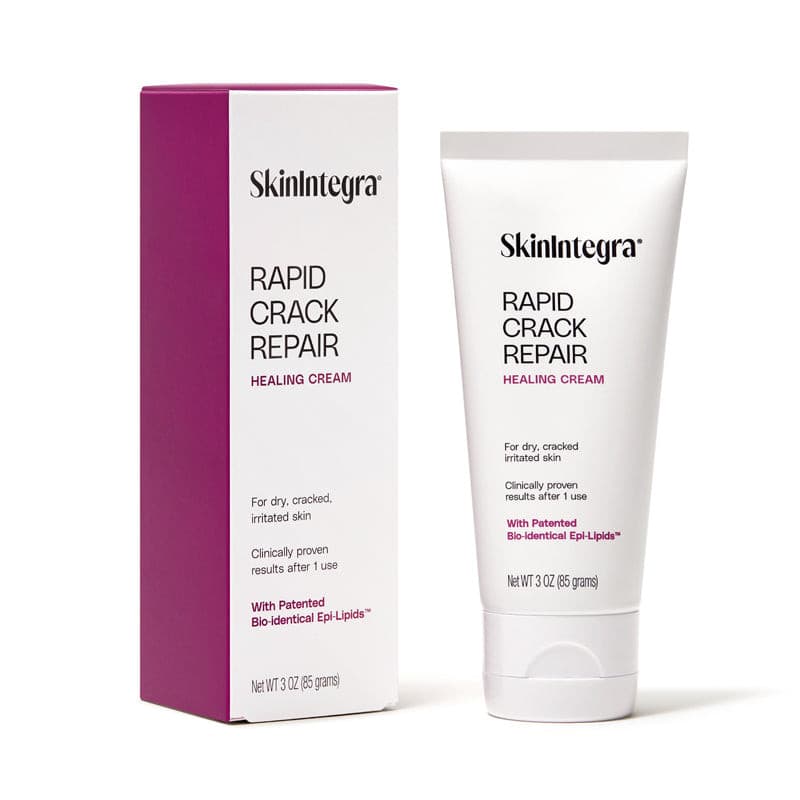
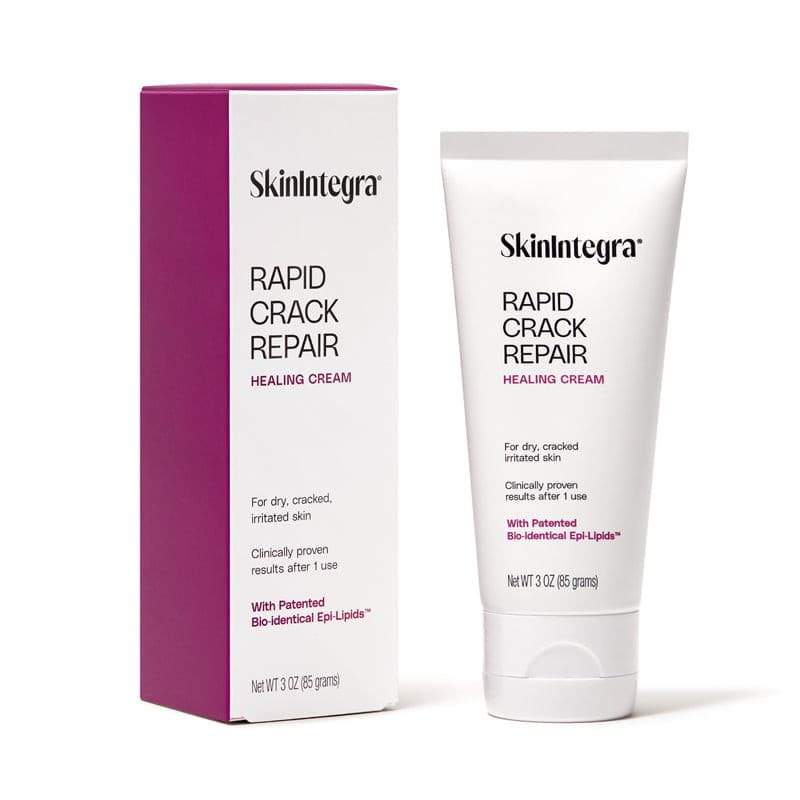
SkinIntegra Rapid Crack Repair Cream: Daily Protection Against Callus Build-Up
For people with diabetes, calluses don’t just happen because of friction. They happen because neuropathy has reduced sebum production, leaving the skin barrier lipid-depleted, rigid, and unable to flex under the pressure of walking. Skin that can’t flex thickens instead. That thickening is the callus.
Keeping the barrier supplied with the lipids and hydration it needs — consistently, every day — is what interrupts that cycle before it starts.

SkinIntegra Rapid Crack Repair Cream was formulated for exactly this: maintaining the skin barrier in diabetic feet that neuropathy has compromised. Applied daily, it addresses the three mechanisms that drive callus formation in diabetic skin:
-
Bio Identical Oils — a patented blend of five plant-derived oils — Sacha Inchi, Sea Buckthorn, Rice Bran, Sesame Seed, and Jojoba Seed — selected to mirror the lipid composition of human sebum. They restore the barrier’s lipid matrix, keeping skin supple and flexible enough to help resist the thickening response that produces calluses.
-
25% urea — draws water into the stratum corneum, restoring pliability to skin that has already started to thicken. Gentle enough for daily use on sensitive diabetic skin; effective enough to soften established callus tissue over time — without the chemical disruption risk of keratolytic acids like salicylic acid.
-
Lactic acid — supports hydration and mild exfoliation, helping barrier ingredients reach the stratum corneum effectively.
The formula absorbs without greasy residue, making twice-daily use easy to sustain — which matters, because consistent daily application is what prevents the gradual lipid depletion that leads to rigid, callus-prone skin.
Clinical evidence
In an independent double-blind clinical trial, it outperformed 40% urea cream on both efficacy and tolerability — with significantly less irritation and faster visible results.
In a separate trial, 100% subjects showed visible improvement in dry and cracked skin within 24 hours.
SkinIntegra earned the Seal of Approval from the American Podiatric Medical Association (APMA) and is fragrance-free, dye-free, and formulated for daily use on even the most sensitive diabetic skin.
Frequently Asked Questions
Can people with diabetes use salicylic acid on their feet?
No. Salicylic acid is contraindicated for people with diabetes. It dissolves skin tissue without the person feeling it — neuropathy removes that feedback. The resulting wound heals slowly due to impaired circulation and creates a prolonged infection entry point. Most salicylic acid callus products carry this warning on their packaging, though it is often in small print.
Why can’t people with diabetes use wart remover?
Wart removers typically contain salicylic acid at concentrations of 17–40%. The same contraindication applies: neuropathy means chemical burns from the acid can progress undetected, impaired circulation means the resulting wound heals slowly, and infection risk is elevated throughout that healing window.
Warts on diabetic feet should be assessed and treated by a podiatrist rather than with OTC keratolytic products.
What can people with diabetes use to remove calluses?
The safest approach combines two things: daily barrier repair with a urea-based cream (10–25% urea) to keep skin supple and reduce callus hardening, and professional podiatric debridement when calluses are thick or growing.
Physical tools like pumice stones and cheese-grater foot files are also contraindicated for diabetic feet — they create micro-abrasions on skin that heals slowly and is vulnerable to infection.
Is 40% urea safe for diabetic calluses?
Urea at 40% has legitimate clinical uses but is aggressive enough to cause irritation on sensitive or already-compromised diabetic skin. The evidence base for diabetic foot care supports 10–25% urea as effective for callus prevention and softening, with a significantly better tolerability profile.
In independent clinical testing, SkinIntegra with 25% urea outperformed 40% urea cream on both results and skin tolerability.
When should a person with diabetes see a podiatrist for a callus?
Promptly — the threshold is lower than for the general population. See a podiatrist if a callus is growing rapidly, becoming painful, or is accompanied by any warmth, color change, or break in the skin.
If you have not had a foot examination in the past year, a callus is a good reason to schedule one. Early examination of a callus concealing a pre-ulcerative lesion can prevent a pathway to ulceration that is much harder to reverse once it’s established.
The Takeaway
The small-print warning on salicylic acid callus pads is not a formality. It reflects a specific, well-documented risk: in diabetic feet, the nerve damage and circulation impairment that make the condition medically serious also make keratolytic chemical treatment dangerous in ways a person without those complications would not experience.
Callus management for people with diabetes works best as prevention — keeping skin supple through daily barrier repair, wearing well-fitted footwear to reduce pressure, and having calluses assessed clinically rather than dissolved at home.
The right approach is not salicylic acid. It is barrier repair: restoring the lipid structure that neuropathy depletes, hydrating the tissue that becomes rigid and prone to cracking, and maintaining the skin in a condition where calluses are less likely to form severely in the first place.


