


Urea vs. Ammonium Lactate for Cracked Heels: Which One Is Right for You?
If your podiatrist has recommended either urea cream or ammonium lactate — or both — you're not alone in wanting to understand the difference. These are the two most commonly prescribed topical treatments for cracked heels and xerosis, and while they share some overlap, they work differently, perform differently, and carry different safety considerations for people with diabetes or sensitive skin.
This guide explains what each ingredient does, how they compare clinically, and how to choose the right one based on the severity of your condition and your health history.
What Is Urea and How Does It Work on Cracked Heels?
Urea is a molecule your skin produces naturally as part of its Natural Moisturizing Factor (NMF) — the set of substances that keep the outer skin layer hydrated, flexible, and protective. In people with dry skin or diabetes, urea levels in the skin are often depleted, which is one reason the skin becomes stiff, thickened, and prone to cracking.
When used in topical creams, urea performs two distinct functions depending on concentration:
-
Humectant (10–20%): Draws moisture into the skin, improving softness and flexibility without exfoliating.
-
Keratolytic (20–40%): Loosens the protein bonds between dead skin cells, helping thickened, callused skin shed more easily and allowing moisture to penetrate deeper.
For cracked heels — which typically involve thickened, callused skin — concentrations of 20–40% are most commonly recommended. The higher the concentration, the more aggressive the exfoliation. For diabetic feet, most clinicians recommend staying in the 20–25% range to avoid over-exfoliation on already fragile skin.
Clinical note: A randomized controlled trial published in the Journal of Dermatological Treatment found that 25% urea cream significantly improved skin hydration and reduced heel fissures compared to placebo over four weeks. For diabetic patients, a study in the Journal of Foot and Ankle Research confirmed urea-based creams improved skin barrier function without increasing infection risk at appropriate concentrations.
What Is Ammonium Lactate and What Does It Do for Feet?
Ammonium lactate is a compound made by combining lactic acid with ammonium hydroxide. The ammonium hydroxide neutralizes the acidity of lactic acid, raising the pH to make it better tolerated for daily use on sensitive skin. It is most commonly available at 12% concentration and is designated for foot xerosis and dry, scaling skin.
Lactic acid is an alpha-hydroxy acid (AHA) that works as both a gentle exfoliant and a humectant. It promotes cell turnover by loosening the bonds between dead skin cells and draws moisture into the skin simultaneously. Because it is pH-buffered in the ammonium lactate form, it is generally milder on sensitive skin than free lactic acid at equivalent concentrations.
For cracked heels, ammonium lactate 12% is most effective when:
-
Dryness is mild to moderate rather than severe or deeply fissured
-
The patient has sensitive skin that does not tolerate urea well
-
The goal is daily maintenance — keeping heels soft — rather than rapid repair of active fissures
-
A podiatrist recommends it as a gentler first-line option or a long-term follow-up after acute healing
The Cleveland Clinic's patient guide to corns and calluses recommends applying a daily moisturizer containing urea or ammonium lactate to soften callused skin over time — consistent with how podiatrists use both ingredients in practice.
Urea vs. Ammonium Lactate: Head-to-Head Comparison
Both ingredients treat dry, cracked heels — but they are not interchangeable. Here is how they differ across the factors that matter most for clinical decisions:
Primary action
-
Urea (20–40%): Humectant and keratolytic — hydrates and exfoliates simultaneously.
-
Ammonium lactate (12%): Humectant and mild exfoliant — primarily hydrates with light surface exfoliation.
Best use case
-
Urea: Severe fissures, thick calluses, deep cracks requiring active repair.
-
Ammonium lactate: Mild to moderate dryness, maintenance, or when urea causes irritation.
Speed of results
-
Urea: Faster — visible softening typically within 3–7 days at 20–25%.
-
Ammonium lactate: Slower — improvement generally takes 2–4 weeks of consistent use.
Diabetic skin safety
-
Urea: Safe at 20–25% for daily use; caution above 30% on fragile or broken skin.
-
Ammonium lactate: Generally well tolerated; avoid on open or bleeding fissures.
Risk on open or bleeding skin
-
Both: Avoid applying directly into open fissures — urea can sting and delay healing, and the acidic pH of ammonium lactate can irritate exposed tissue.
The American Academy of Dermatology's guide to dry, cracked heels recommends looking for a moisturizing cream that contains 10–25% urea and applying it immediately after bathing for best results.
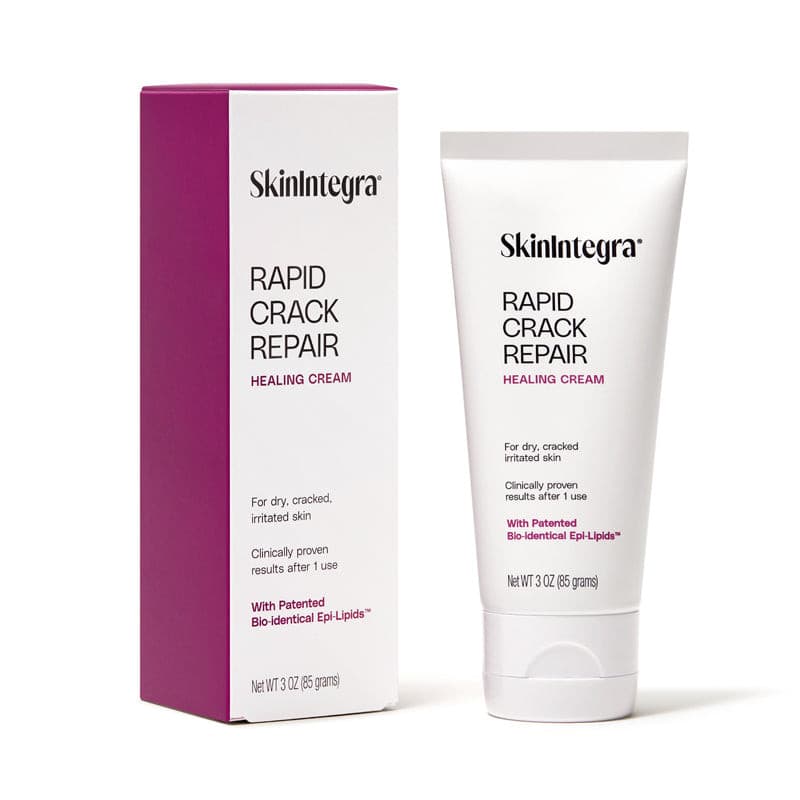
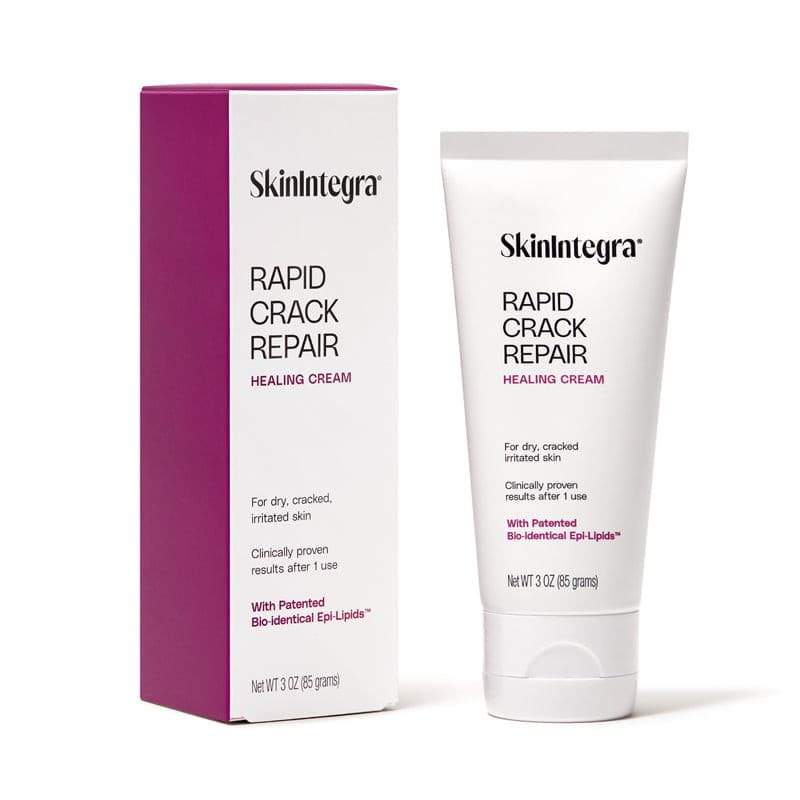
For people with diabetes or severely cracked heels who want the benefits of both without having to layer products, SkinIntegra Rapid Crack Repair Cream was formulated specifically for this — combining 25% urea and lactic acid in a single barrier-repair formula designed for fragile skin.
Why Does Urea Work So Well on Cracked Heels?
Understanding the mechanism helps explain why urea consistently outperforms most alternatives for severe heel fissures. Cracked heels are not simply dry skin — they involve structural changes in the stratum corneum, the outermost skin layer. The skin has lost both its moisture-binding capacity and its ability to shed dead cells at a normal rate, producing hard, thickened skin that eventually splits under pressure.
Urea addresses both problems at once. At 25–40%, it penetrates the stratum corneum, disrupts the cross-linked protein matrix holding dead cells together, and releases them — while simultaneously binding water to the softer skin beneath. No other single OTC ingredient does both with the same depth and clinical evidence behind it.
This dual action is why podiatrists favor urea for active heel fissures over alternatives like ammonium lactate (milder exfoliation, less effective on dense callus) or plain moisturizers (hydration only, no keratolytic effect). For patients who need fast, measurable improvement in deep cracks, urea is the clinical standard.
Is Urea Cream Safe for Diabetic Feet? What About Ammonium Lactate?
This is one of the most common questions from patients — and the answer is nuanced.
Urea and Diabetic Feet
Urea is safe for diabetic feet when used at appropriate concentrations. The key guidance from diabetic foot care clinicians:
-
10–25% urea: Safe for daily use on diabetic skin. Provides effective hydration and moderate exfoliation without compromising barrier integrity.
-
30–40% urea: Appropriate for short-term use to address thick callus, ideally under podiatric supervision. Not recommended for open fissures or broken skin.
-
Above 40%: A professional-use or debridement context. High risk of over-exfoliation and irritation on diabetic skin — not appropriate for home use.
The risk with high-concentration urea in diabetic patients is not that urea itself is harmful — it is that peripheral neuropathy reduces the ability to feel early irritation, meaning skin damage can progress unnoticed. Conservative concentration choices matter.
The American Diabetes Association's guide to foot creams specifically recommends urea at 10–25% as a key ingredient in foot creams for people with diabetes alongside glycerin for softening dry skin safely.
Ammonium Lactate and Diabetic Feet
Ammonium lactate 12% is generally well tolerated by diabetic patients and is a common podiatric recommendation for mild to moderate xerosis. Its gentler exfoliation profile and lower irritation risk make it a suitable long-term maintenance option. However, it should still be avoided on open or bleeding skin, and patients with neuropathy should monitor for any signs of irritation that they might not feel immediately.
For more on safe urea concentrations for fragile skin, see our article: Is 40% Urea Too Strong for Diabetic Skin?
What Is the Difference Between Lactic Acid and Ammonium Lactate?
This question comes up often because podiatrists and product labels sometimes use the terms differently.
Ammonium lactate is lactic acid neutralized with ammonium hydroxide to raise its pH. This improves tolerability for sensitive skin in daily use but slightly reduces exfoliating potency compared to free lactic acid at the same concentration.
Lactic acid used directly — as in pharmaceutical formulations and advanced skincare — delivers its AHA action at a lower pH. This can mean stronger exfoliation but also greater irritation potential on broken or sensitive skin.
For foot care specifically, the distinction matters less than concentration and overall formulation. What matters most is whether the ingredient is delivered at a sufficient concentration to address callused heel skin, and whether it is paired with barrier-supporting ingredients that prevent over-drying.
Why Combining Urea and Lactic Acid Outperforms Either Alone
Clinical dermatology has increasingly moved toward combination formulas for xerosis and heel fissures — and there is a sound rationale. Urea and lactic acid act through complementary but distinct pathways:
-
Urea penetrates deeply into the stratum corneum, softening the protein matrix and drawing moisture inward.
-
Lactic acid works at the surface layer, promoting faster cell turnover and improving the skin's own moisture-retention capacity.
Used together, they produce faster and more complete healing than either ingredient alone — particularly for severe or chronic heel fissures. This is the basis for why SkinIntegra's formula was designed around both.
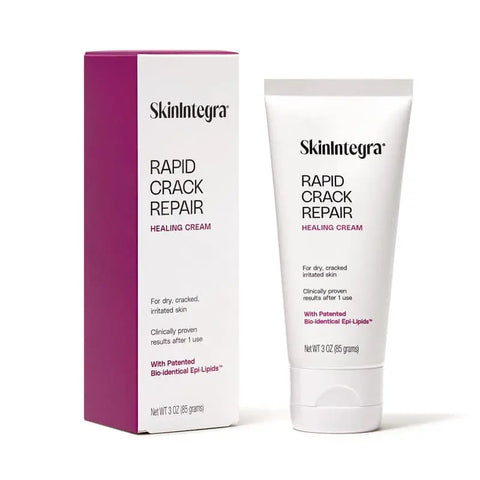
SkinIntegra Rapid Crack Repair Cream combines 25% urea and lactic acid in a patented formulation that also includes hyaluronic acid, ceramides, essential fatty acids, and plant oils to restore the skin barrier — not just exfoliate it. In an independent clinical study conducted by the Western University of Health Sciences College of Podiatric Medicine, patients using SkinIntegra achieved effective healing with strong tolerability, while patients using 40% urea alone experienced higher rates of irritation over the same treatment period.
The formula is fragrance- and dye-free, accepted by the American Podiatric Medical Association (APMA), and recommended by podiatrists post-debridement for diabetic and sensitive skin.
Shop SkinIntegra Rapid Crack Repair Cream →
Related Articles
→ Is 40% Urea Too Strong for Diabetic Skin? Risks, Side Effects, and Safer Options
→ How to Heal Bleeding Cracked Heels Safely and Effectively
→ Why Skin Barrier Repair Is Essential in Diabetic Foot Care
→ How to Manage Diabetic Calluses Safely
→ Understanding Dry Diabetic Feet
FAQ: Urea vs. Ammonium Lactate for Cracked Heels
Is urea or ammonium lactate better for cracked heels?
For severe cracked heels with thick callus or deep fissures, urea (20–40%) is generally more effective because of its stronger keratolytic action. Ammonium lactate 12% is better for mild to moderate dryness, maintenance use, or patients who experience irritation with urea.
What does ammonium lactate do for feet?
Ammonium lactate hydrates and gently exfoliates the skin. It is lactic acid buffered with ammonium hydroxide to reduce irritation. On feet, it softens dry skin, reduces flakiness, and helps prevent callus build-up over time. It is widely recommended by podiatrists for daily foot maintenance, particularly after active healing is complete.
Is urea cream safe for diabetic feet?
Yes, at appropriate concentrations. Urea in the 10–25% range is safe for daily use on diabetic skin and is recommended by the American Diabetes Association as a key ingredient in foot creams for people with diabetes. Concentrations above 30% should be used cautiously and ideally with podiatric guidance, since diabetic neuropathy can reduce the ability to detect early irritation.
Can I use urea and lactic acid together?
Yes — and combining them is clinically supported. Urea and lactic acid act through complementary mechanisms: urea softens and penetrates the protein matrix deep in the stratum corneum, while lactic acid promotes surface cell turnover. Used together in the right formulation, they produce faster and more complete healing than either ingredient alone.
How long does urea cream take to work on cracked heels?
Most patients see noticeable softening within 3–7 days with consistent twice-daily use of a 20–25% urea cream. Severe heel fissures may take 2–4 weeks to fully close. Ammonium lactate 12% typically takes 2–4 weeks to produce visible improvement.
Is ammonium lactate the same as lactic acid?
Not exactly. Ammonium lactate is lactic acid pH-buffered with ammonium hydroxide. This makes it gentler and more tolerable for daily use but slightly reduces its exfoliating strength compared to free lactic acid at the same concentration. Both deliver the core benefits of lactic acid — the difference is in potency and skin tolerability.
What concentration of urea cream is best for cracked heels?
For most people, 20–25% urea provides the best balance of effectiveness and tolerability. For people with diabetes or sensitive skin, 20–25% is the recommended starting range. For thick, heavily callused heels in patients without diabetes, 30–40% may be used short-term under podiatric supervision.
Is urea cream safe for keratosis pilaris?
Yes. Urea is one of the most effective OTC treatments for keratosis pilaris (KP). A 10–20% urea cream used daily helps soften and exfoliate the keratin plugs that cause KP bumps. Lactic acid and ammonium lactate are also effective for KP and are often used together with urea or alternated.


