


It can sneak up on you. With diabetes, the feet change gradually — and by the time a crack makes itself known, it’s often already deep. So you did what made sense: you started applying Vaseline every night, consistent about it. And the heels are still cracking.
For people with diabetes, this is one of the most common—and quietly frustrating—experiences in foot care. The jar is full, the routine is consistent, and the heels keep splitting open anyway. If you’re living this, you haven’t been doing it wrong. The product itself has a fundamental limitation that becomes critical when diabetes is in the picture.
This article explains what Vaseline actually does, why it falls short for diabetic skin specifically, and what research now tells us about the mechanism driving cracked heels in diabetes—one that no occlusive moisturizer can address.
Why Vaseline Has Been Standard Advice

Vaseline’s recommendation in diabetic foot care didn’t happen by accident. Petroleum jelly has a legitimate function: it’s an occlusive agent, meaning it forms a physical barrier on the skin’s surface that slows transepidermal water loss (TEWL). When skin is already dry, sealing in whatever moisture remains can provide short-term relief and protection against friction and environmental damage.
For people with mild, situational dryness, that mechanism is often enough. Vaseline is also safe, non-allergenic, and inexpensive—qualities that make it a reasonable first-line suggestion in a busy clinic, and that’s why it has remained a common recommendation for decades.
But the reason diabetic feet become so dry—chronically, persistently, in ways that ordinary moisturizers simply don’t fix—is not the same mechanism Vaseline addresses. And that gap matters.
What Actually Depletes Diabetic Skin
To understand why Vaseline keeps failing for cracked diabetic heels, you need to understand what’s actually happening beneath the surface.
Diabetes causes autonomic neuropathy, a form of nerve damage that affects the autonomic nervous system—the part of your nervous system that controls involuntary functions, including the activity of your sweat and oil glands. As autonomic neuropathy progresses, the oil glands (sebaceous glands) in the feet slow down and, in many people, eventually stop producing sebum at normal levels.
Sebum is not just about shine or greasiness. It is the skin’s natural lipid delivery system—a complex emulsion of ceramides, fatty acids, cholesterol, and other lipids that continuously replenish the skin’s outer protective layer, the stratum corneum. Without adequate sebum, the stratum corneum loses its lipid matrix. It becomes rigid, brittle, and unable to flex under the mechanical pressure of walking. That is when fissures form.
For a deeper look at the mechanism connecting autonomic neuropathy to dry diabetic feet, see our article on why diabetic feet stay dry. For more on how neuropathy specifically leads to fissures, see our article on neuropathy and cracked heels.
The critical point is this: Vaseline sits on top of the stratum corneum. It can slow water loss from a barrier that is already there. But it cannot supply the lipids the barrier needs to exist in the first place. When autonomic neuropathy has depleted the skin’s oil production, you are not dealing with moisture escaping through an intact barrier—you are dealing with a barrier that is missing its structural components. Sealing the surface does not solve that problem.

What Vaseline Does Well—and Where It Stops
What petroleum jelly does well:
-
Reduces transepidermal water loss by forming an occlusive film on the skin surface
-
Protects intact skin from friction and environmental exposure
-
Is safe, non-irritating, and suitable for fragile or post-procedure skin
-
Provides temporary softening of mildly dry skin
Where petroleum jelly falls short for diabetic skin:
-
Does not supply ceramides, fatty acids, or cholesterol that rebuild the lipid matrix
-
Cannot replace sebum that autonomic neuropathy has stopped producing
-
Does not penetrate or hydrate—adds no moisture to depleted tissue
-
Ineffective for deep fissures, which require active barrier repair to close
-
Greasy texture reduces compliance—many people stop using it consistently
-
Must never be applied between the toes, where it traps moisture and raises fungal risk
The distinction matters because the standard framing of "moisturize your feet" implies that any moisturizer will do. For most people without diabetes, that is broadly true. For people with diabetes whose oil gland function has been compromised by neuropathy, it is not.
What Diabetic Skin Actually Needs
Repairing cracked diabetic heels requires addressing the mechanisms that created the problem—not just managing the surface symptom. That means three things working together:
-
Replenishing skin-identical lipids: The stratum corneum’s lipid matrix is made up of ceramides, cholesterol, and fatty acids in a specific ratio. Restoring these components allows the barrier to reform and hold together under the mechanical stress of walking.
-
Hydrating the barrier: Humectants like urea and lactic acid draw water into the stratum corneum from deeper skin layers, restoring pliability and reducing the rigidity that causes skin to crack under pressure.
-
Softening thickened skin: Years of barrier dysfunction often produce callus build-up as the skin’s protective response. Gentle exfoliating action clears this thickened layer so barrier-repair ingredients can reach the stratum corneum effectively.
Vaseline addresses none of these three mechanisms. That is not a criticism of the product—petroleum jelly works well for what it is designed to do. But it is not designed for the specific problem that causes cracked heels in people with diabetes.
Bio Identical Oils: A Different Approach to Barrier Repair
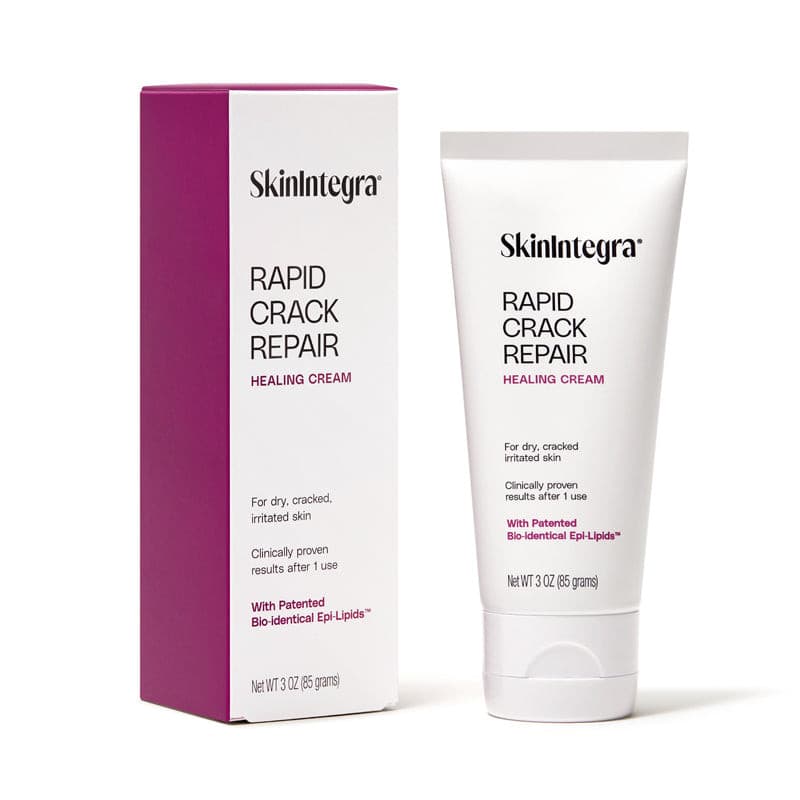
SkinIntegra Rapid Crack Repair Cream takes a different approach to the sebum depletion problem. Instead of occluding the surface, the formula works at the stratum corneum level—delivering Bio Identical Oils, a patented blend of five whole plant oils selected to match the lipid profile that diabetes depletes.

The principle is straightforward: the skin barrier can only be restored with the materials it is actually made from. Generic moisturizers and petrolatum sit on top of the barrier. Bio Identical Oils are chosen to mirror the composition of healthy human sebum—so the lipids can integrate into the stratum corneum’s matrix and begin restoring the structure that autonomic neuropathy has broken down.
The five Bio Identical Oils, and what each one contributes:
-
Sacha Inchi Oil — the highest plant-source of Omega-3 fatty acids, which signal barrier repair at the cellular level
-
Sea Buckthorn Oil — rich in Omega-7, the fatty acid that most closely mirrors healthy sebum composition
-
Rice Bran Oil — supplies antioxidants and fatty acids that support the skin’s protective environment
-
Sesame Seed Oil — contributes linoleic acid, a key component of the stratum corneum’s lipid matrix
-
Jojoba Seed Oil — structurally similar to human sebum; helps the formula absorb without residue
Together, these five oils restore the full lipid environment that diabetes takes away—not just the sebum itself, but the antioxidant and protective components the barrier depends on.
The Bio Identical Oils are combined with 25% urea and lactic acid, which hydrate and gently soften thickened skin, and the entire system is built on a fast-absorbing base that leaves no greasy residue. The result is a routine that people with diabetes actually continue, because it doesn’t feel like a burden to use.
Clinical evidence
In an independent double-blind clinical trial, SkinIntegra outperformed 40% urea cream on both efficacy and tolerability—with significantly less irritation and faster visible results. In a separate clinical trial conducted with subjects with diabetes, 100% of participants showed visible improvement in dry and cracked skin within 24 hours.
SkinIntegra Rapid Crack Repair Cream holds the Seal of Approval from the American Podiatric Medical Association (APMA) and is fragrance-free, dye-free, and formulated for daily use on even the most sensitive diabetic skin.
How to Use SkinIntegra as Part of a Daily Diabetic Foot Routine
The most effective application follows a simple principle: clean skin, slightly damp, twice daily.
-
Morning: Wash feet with lukewarm water and a mild, fragrance-free cleanser. Pat nearly dry. Apply SkinIntegra to heels, soles, and any areas of thickening or cracking. Avoid the spaces between the toes. Put on socks before shoes.
-
Evening: Repeat the wash-and-dry sequence. Reapply SkinIntegra before bed. Evening application is the highest-value window because the skin undergoes its repair cycle during sleep, and barrier ingredients absorb more effectively without daytime mechanical disruption.
-
Daily inspection: Before applying cream, examine both feet—heels, soles, and between toes. Look for any new cracks, color changes, warmth, or swelling. Neuropathy can mask pain, so visual inspection is the safety check that pain can no longer provide.
For broader foot care guidance, see our guide on safe pedicure practices for diabetic feet.
If you’ve been using Vaseline as your sole moisturizer, you don’t need to discard the jar. But it is worth understanding that it addresses a different problem than the one driving cracked diabetic heels.
When to See a Podiatrist

Cracked heels in people with diabetes are not always manageable at home. Seek podiatric care promptly if:
-
A fissure is bleeding or has been bleeding repeatedly
-
Cracked skin shows signs of infection: warmth, redness extending from the crack, swelling, or any discharge.
-
A crack has not improved after 2–3 weeks of consistent barrier-repair treatment. For more on what happens when fissures go untreated, see our article on how long diabetic foot ulcers take to heal.
-
You notice numbness, tingling, or color change in the affected foot
-
You have a callus that is growing rapidly or becoming painful
The threshold for podiatric assessment is lower for people with diabetes than for the general population. Neuropathy means that a developing infection may not feel as painful as it looks—which is exactly why early evaluation matters.
Frequently Asked Questions
Does Vaseline help cracked heels in diabetes?
Vaseline can soften the surface and slow water loss, which gives temporary relief. But it does not address the underlying cause of cracked diabetic heels—autonomic neuropathy depleting the skin’s oil production and stripping the stratum corneum of its lipid matrix. For persistent or recurring fissures, a barrier repair cream that supplies skin-identical lipids is more effective.
Why do my diabetic cracked heels keep coming back even when I moisturize?
Because conventional moisturizers—including petroleum jelly—seal the surface but do not replenish the lipids the skin barrier is missing. When neuropathy has reduced sebum production, the barrier has a structural deficit that occlusives can’t fill. Recurring cracks are a signal that the barrier itself needs repair, not just surface protection.
Is Vaseline safe to use on diabetic feet?
Yes. Vaseline is safe on intact diabetic skin and can help prevent minor dryness from worsening. The important caveats: do not apply between the toes (trapped moisture raises fungal risk), and do not use it as a substitute for barrier repair if fissures are already present.
Why do podiatrists recommend Vaseline for diabetic feet?
Vaseline is safe, affordable, and accessible—qualities that matter in a clinical setting. It works well for protecting intact skin and preventing further water loss. The recommendation often precedes a detailed conversation about barrier repair specifically, and for patients who don’t yet have fissures, it can be appropriate. When cracking is already present and recurring, a more targeted product is needed.
Can I use Vaseline and SkinIntegra together?
You don’t need to. SkinIntegra hydrates, delivers barrier-repair lipids, and locks in moisture in one step. If you’re applying Vaseline on top of a barrier repair cream, the occlusive layer may help retention, but the barrier-repair cream is doing the substantive work.
What does urea in a foot cream do for diabetic skin?
Urea is a natural moisturizing factor (NMF) found in healthy skin. At 25%, it acts as a potent humectant—drawing water into the stratum corneum—while also gently softening thickened and callused skin. For people with diabetes, urea helps restore pliability to the rigid, depleted skin that cracks under walking pressure. It is substantially more effective than Vaseline for this mechanism. For a deeper comparison of urea and lactic acid, see our guide on urea vs. ammonium lactate for cracked heels.
How long before SkinIntegra shows results on cracked diabetic heels?
In clinical testing, subjects showed visible improvement after 24 hours of use. Most people using SkinIntegra consistently (twice daily) report noticeable changes in skin texture and reduced cracking within the first week. Deep, established fissures may take 2–3 weeks to fully close.
Should people with diabetes use a foot cream with petroleum jelly or lipids?
For mild dryness on intact skin, petroleum jelly can be adequate. For people with diabetes who experience recurring cracking—especially if neuropathy is present—a cream that supplies Bio Identical Oils and skin-identical lipids addresses the actual mechanism driving the problem. Petroleum jelly works by sealing; Bio Identical Oils work by restoring.
The Takeaway
Vaseline has earned its place in the medicine cabinet, and the recommendation to use it isn’t wrong. It protects. For many situations, that’s what’s needed.
But cracked heels in people with diabetes are driven by a specific mechanism—autonomic neuropathy reducing sebum production and depleting the lipid matrix of the stratum corneum. That mechanism does not respond to an occlusive. It responds to barrier repair: lipids the skin recognizes, humectants that restore pliability, and a formula the body can actually integrate into the barrier structure.
If you’ve been faithful to Vaseline and your heels keep cracking, this is the likely reason. And it’s the problem SkinIntegra Rapid Crack Repair Cream was designed to address.


