


You notice it while you are doing something else — a small flap of dry skin lifting beside your fingernail. You pick at it, because it is right there. It tears further than you meant it to, and now the side of your nail is raw and it catches on everything.

That flake is a stage, not a blemish. Peeling at the nail fold comes before splitting, and splitting comes before bleeding — and once the skin is open at the base of a nail, you have an entry point in one of the few places on the hand that is built to keep things out. It turns up in healthcare workers whose hands are washed dozens of times a day, in people with diabetes, in eczema and psoriasis, and in anyone whose hands take a daily beating from weather, chemicals, or repeated wetting and drying.
This guide covers what is actually happening to the skin at the base of your nails, which causes are worth acting on, and the warning signs that need a clinician.
Why Cuticles Become Extremely Dry, Crack, Peel, and Bleed
Your cuticles are thin protective seals at the base of your nails that prevent bacteria and fungi from entering the nail fold.
When this seal breaks down from extreme dryness:
-
Deep cracks that bleed and won't close
-
Hangnails that tear and cause more damage
-
Risk of paronychia (nail fold infection)
-
Chronic peeling and inflammation
The severity depends on how compromised your skin barrier has become. Mild dryness becomes extreme cracking when moisture loss accelerates faster than your body can repair.
Peeling Comes First — and It’s the Warning Stage
Peeling and cracking are not the same problem at different sizes. They are two stages of the same failure.
Your outer skin layer holds together with a lipid “glue” between the cells. Strip that glue — hand washing, cold air, acetone — and cells start detaching before they are ready. That is peeling: the barrier shedding in flakes and sheets around the nail fold.
A barrier that thin cannot flex. So the next time the skin is stretched — gripping something, opening a jar, drying your hands — it splits rather than bends. That is the crack. Once it reaches the living tissue underneath, it bleeds.
Which makes peeling the stage worth acting on. It is unsightly rather than painful, so it is easy to ignore or pick at — and picking is what turns peeling skin into hangnails and torn nail folds. Look after the barrier while the skin is only peeling and you generally do not reach the bleeding stage.
When peeling means something else: peeling with redness and itching points to eczema or contact dermatitis rather than simple barrier loss. Peeling with white, spreading scale can be fungal. Both need a clinician, not a moisturizer.
6 Root Causes of Extremely Dry, Cracked Cuticles
1. Frequent Hand Washing and Sanitizer Use
If you wash your hands 15+ times daily, each wash strips natural oils that protect cuticles. Healthcare workers, food service staff, and parents of young children are especially vulnerable.

The damage compounds: Soap dissolves your skin's lipid barrier → Hot water accelerates moisture loss → Repeated exposure prevents recovery → Extreme dryness and cracks develop.
2. Winter Weather and Dry Indoor Air
Cold air holds less moisture, and indoor heating dries it further. Through the winter your hands lose moisture faster than they do in summer, which shows up as visible flaking, rough hardened cuticles, and painful splits.
3. Harsh Chemicals and Nail Products
Acetone nail polish remover literally dissolves skin oils. Add household cleaners, dish soap, and gardening chemicals—even brief exposure can trigger extreme dryness that persists for days.
4. Nail Biting, Picking, and Aggressive Manicures
Biting hangnails creates more tears. Pushing cuticles too hard damages living tissue. Cutting the eponychium (living seal) creates infection entry points.
⚠️ Never cut living cuticle tissue—only gently remove dead skin buildup.
5. Nutritional Deficiencies
Low biotin, vitamin E, omega-3s, zinc, or iron can cause chronic cuticle dryness that won't respond to topical treatments alone. If you have persistent extremely dry cuticles despite good care, ask your doctor about testing. Learn more: Vitamin Deficiencies and Cracked Skin
6. Medical Conditions
Diabetes, eczema, psoriasis, hypothyroidism and Raynaud's disease all affect how well the skin barrier holds up. High blood sugar, chronic inflammation and poor circulation are each associated with drier, more fragile skin at the extremities and with slower healing. Each has its own pattern — see hand eczema, psoriasis on the hands, and hypothyroidism and cracked skin.
Six different causes, one shared endpoint: the skin at the nail fold ends up thinner and stiffer than it should be, and the cycle repeats.
Warning Signs That Need Immediate Attention
Seek medical care if you notice:
-
Warmth, pus, or spreading redness (signs of infection)
-
Deep bleeding cracks that won't close
-
Swelling around multiple nails (possible paronychia)
-
Fever or systemic symptoms (infection spreading)
-
No improvement after 2 weeks of consistent care
For people with diabetes or compromised immunity, see a doctor at the first sign of infection. Delays can lead to serious complications.
5 Ways to Care for Extremely Dry, Cracked Cuticles
1. A Barrier Cream (Most Important)
Not every moisturizer suits extremely dry, cracked cuticles. A cream that only adds water to the surface washes off at the next rinse.
What to look for:
-
Plant oils matched to the skin's own lipids: to replenish what the barrier is short of
-
Urea: softens hardened skin and helps the outer layer hold water — urea and ammonium lactate compared
-
No fragrance and no alcohol: both sting on skin that is already open
Application: Massage into cuticles 2-3 times daily, especially after hand washing and before bed.
2. Overnight Intensive Treatment
For extremely dry, cracked cuticles: Apply thick layer of barrier cream → Cover with cotton gloves → Sleep overnight → Repeat nightly.
Cotton gloves keep the cream where you put it rather than on the sheets.
3. Cuticle Oils for Deep Nourishment
Jojoba, vitamin E, sweet almond, or coconut oil provide concentrated nourishment. Apply before bed for best results.
4. Gentle Chemical Exfoliation
Once bleeding stops, urea or lactic acid products can gently remove dead skin buildup. Never use physical scrubs on cracked cuticles.
5. Professional Medical Manicures
For chronic extremely dry cuticles, seek trained professionals who use sterile tools and understand medical considerations. Learn more: nail care when you have diabetes and safe pedicure for diabetic feet.
What the Skin Around Your Nails Is Short Of
The outer layer of your skin works like a brick wall. The cells are the bricks, each holding water. Between them sits a mortar your skin makes out of lipids. Lose either and the wall goes stiff, and stiff skin splits under pressure.
Cuticles sit on some of the thinnest skin on your body, and it bends every time you grip something, type, or open a jar. Soap and hot water dissolve the mortar out of it faster than the skin replaces it, and sanitizer does the same. Wash fifteen times a day and the wall never gets the chance to set.
Water only stays if something holds it, and the mortar is what does that. On skin that is already dry and cracking, added water leaves about as fast as it arrives.
Moisturizers soften the surface for a while. Urea creams loosen the hardened, flaking skin around the nail. Both help — but neither replenishes the lipids the barrier is short of, and the wall needs water and mortar together, so the skin stiffens again and the crack reopens.
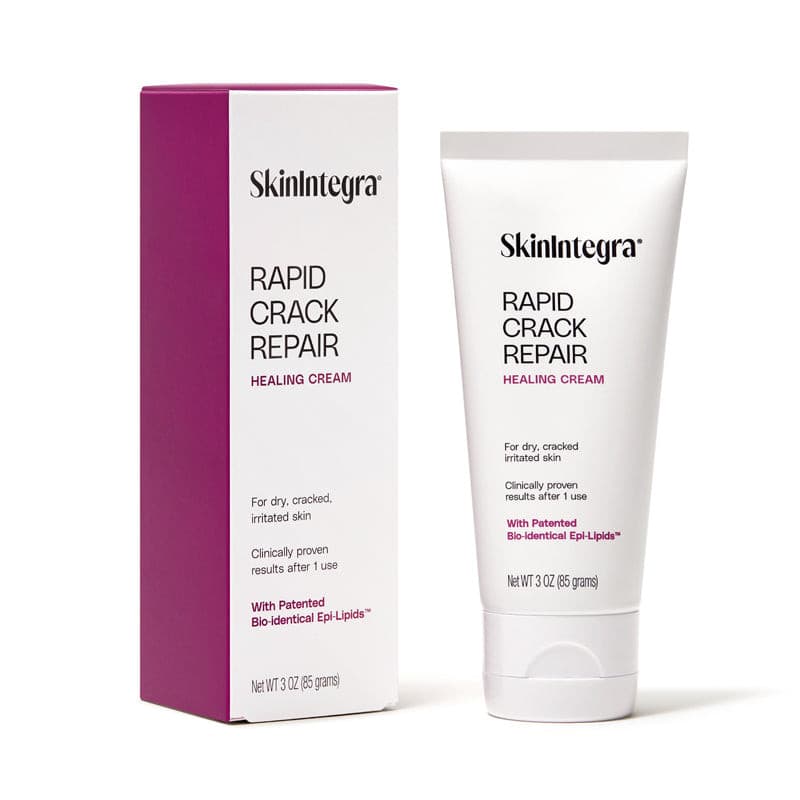
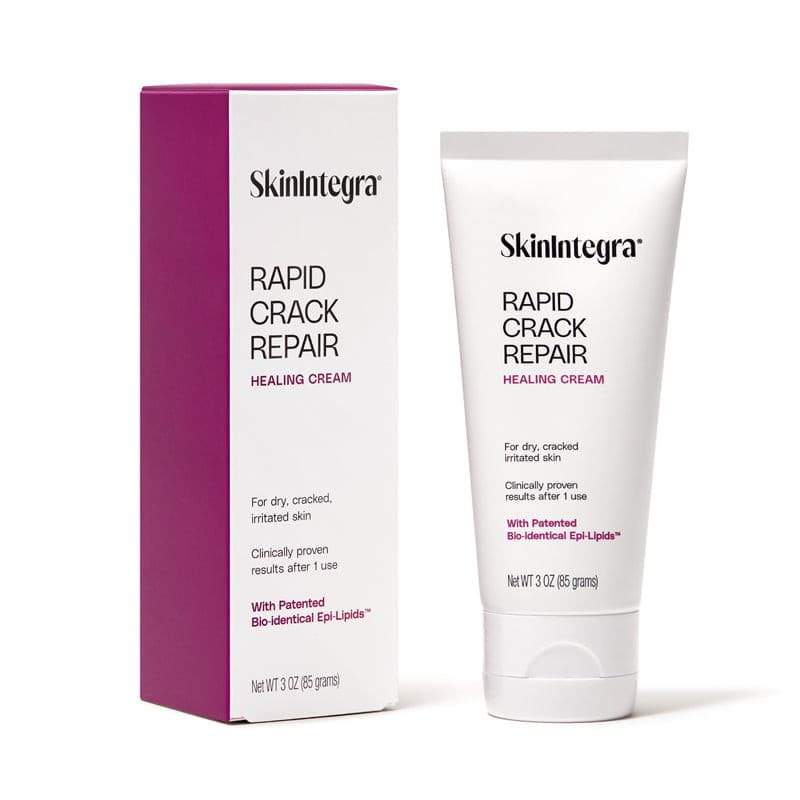
SkinIntegra Rapid Crack Repair Cream was developed for exactly this gap. It is not a stronger exfoliant. It replenishes what is missing.
At its core is SkinIntegra B.I.O.™ (Bio-Identical Oils) — a patented blend of five plant-derived oils (Sacha Inchi, Sea Buckthorn, Rice Bran, Sesame Seed and Jojoba Seed) matched in balance and composition to the skin’s own lipids. We profiled what a healthy skin barrier is made of, then selected oils to match it. That is what SkinIntegra B.I.O.™ does.
It also contains 25% urea with lactic acid — a concentration that softens and loosens hardened skin and is widely used on dry, sensitive and diabetic skin, with the lactic acid adding hydration and gentle exfoliation. Unlike 40% urea, which works aggressively and can leave skin feeling dry, SkinIntegra absorbs quickly and leaves skin feeling immediately moisturized.
It is formulated without salicylic acid, and is fragrance-free, paraben-free, alcohol-free, petrolatum-free and dye-free.
What the clinical evidence shows
In a head-to-head trial published in the Journal of the American Podiatric Medical Association, 48 adults with deeply cracked feet used either Rapid Crack Repair or a 40% urea cream, twice a day for four weeks.
Rapid Crack Repair did as well as 40% urea — at a lower strength, and well tolerated throughout. Among the 22 adults who used it, 91% showed some improvement within two weeks. By four weeks, podiatrists were seeing less dryness in 82% and less cracking in 73%, and no one had new or worsening redness, burning, stinging or itching.
Both studies were run on feet. The shortfall at the nail fold is the same one, which is why the formula carries over — but the trial evidence is foot evidence, and it is worth saying so.
SkinIntegra Rapid Crack Repair Cream carries the Seal of Approval from the American Podiatric Medical Association (APMA). Medical professionals at major hospitals across the United States also recommend it.
For skin that stays dry and cracked, or that looks better for a few days and then looks the same again, the missing piece is usually not more exfoliation. It is replenishing what the barrier is short of.

Apply after hand washing and before bed: work it into the hardened area around the crack — the skin on either side is what has to change.
Shop SkinIntegra Rapid Crack Repair Cream →
Prevention: Stop Extremely Dry Cuticles from Coming Back
Daily habits:
-
Moisturize after every hand wash (keep cream at every sink)
-
Use lukewarm water only (hot water strips oils)
-
Wear gloves for wet work (dishes, cleaning, gardening)
-
Choose gentle, fragrance-free soaps
-
Use a humidifier in winter
-
Never cut cuticles—only push back gently
-
Eat foods rich in biotin, omega-3s, vitamin E, and zinc
Consistency is key. These small changes prevent mild dryness from becoming extremely dry, cracked cuticles.
Frequently Asked Questions
What vitamin deficiency causes extremely dry, cracked cuticles?
Biotin (B7), vitamin E, omega-3 fatty acids, zinc, and iron deficiencies all contribute. If topical treatments don't help, ask your doctor about nutritional testing.
Can diabetes cause extremely dry, cracked cuticles?
Yes. Diabetes is associated with drier, more fragile skin and with slower healing, and the skin at the nail fold is thin to begin with. That makes daily care matter more, not less: moisturize after every hand wash, keep an eye on blood sugar, and check your hands and feet daily. Never cut cuticles — push them back gently instead. See a doctor immediately for warmth, pus, spreading redness, or fever.
How long does it take to heal extremely dry, cracked cuticles?
It depends on how deep the damage goes, and on whether whatever caused it is still happening. Skin that is only peeling tends to settle quickly once daily care is consistent. A deep crack at the nail fold takes longer, and one that keeps reopening usually means the hands are still being washed or exposed faster than the barrier can keep up. A crack showing no improvement after two weeks should be looked at.
Is Vaseline good for extremely dry, cracked cuticles?
Vaseline seals moisture but doesn't provide hydration or repair. It works best OVER a hydrating product. For extremely dry cuticles, use a barrier-repair cream first (like SkinIntegra Rapid Crack Repair Cream), then seal with Vaseline if desired—though modern formulations absorb well without needing an occlusive layer.
Should I cut my cuticles if they're extremely dry and cracked?
Never cut living cuticle tissue. You can gently remove dead skin buildup, but cutting the living eponychium creates infection entry points. Gently push back cuticles after softening in warm water. This is especially critical for people with diabetes or compromised immunity.
When should I see a doctor for extremely dry, cracked cuticles?
Seek medical care if you notice: warmth/pus/spreading redness (infection signs), deep bleeding cracks that won't close, swelling around multiple nails, fever or systemic symptoms, or no improvement after 2 weeks of treatment. People with diabetes should see a doctor at the first sign of infection.
Why are my cuticles peeling?
Peeling means the outer skin layer is shedding faster than it can replace itself — the lipid “glue” holding those cells together has been depleted, usually by frequent hand washing, cold dry air, or a skin condition that leaves the barrier short. It is the stage before cracking: a barrier thin enough to peel is one that will split the next time the skin stretches. Look after it while it is only peeling and you generally avoid the bleeding stage. Peeling with redness and itching points to eczema or contact dermatitis instead, and peeling with white, spreading scale can be fungal — both need a clinician rather than a moisturizer.
Why do my cuticles get so extremely dry and split?
Cuticles become extremely dry when moisture loss outruns replenishment — usually from frequent hand washing, cold weather, harsh chemicals, or an underlying condition. The dry skin turns brittle and splits under ordinary stress. Bleeding follows when a crack reaches the living tissue underneath. More on the same pattern at the fingertips: cracked fingertips.
Can healthcare workers prevent extremely dry, cracked cuticles?
Largely, yes, but it takes steady barrier protection: a cream after every hand wash with one kept at work, gentle cleansers where the protocol allows, nitrile gloves for procedures, a thick layer before bed under cotton gloves, and any nutritional shortfall addressed. There is a fuller routine here: cracked hands, a guide for healthcare workers.
Start at the Peeling Stage
The flap of skin beside your nail is worth a minute of attention before it becomes a split. Leave the picking alone, keep a cream at the sink, and put it on while the skin is still only flaking.
The key: a lotion that only adds water to the surface washes off at the next rinse. What lasts is replenishing the lipids the barrier is short of.
Related reading: skin peeling off your fingers, rough hands and hand calluses, and hand eczema.
Try it for yourself with SkinIntegra Rapid Crack Repair Cream. Safe for daily use on hands, including sensitive, diabetic or compromised skin.


