


If you have diabetes, peeling skin on the bottom of your feet is not a cosmetic nuisance — it is a warning sign that your skin barrier is failing. And if the peeling is not itchy, that is not reassuring: it may mean peripheral neuropathy has reduced your sensation enough to mask what is actually an active infection or inflammatory condition. Diabetes compromises the skin barrier in ways that make peeling more likely, slower to heal, and faster to become infected. A small area of peeling skin that would resolve on its own in a healthy person can open a pathway to serious complications in diabetic feet.
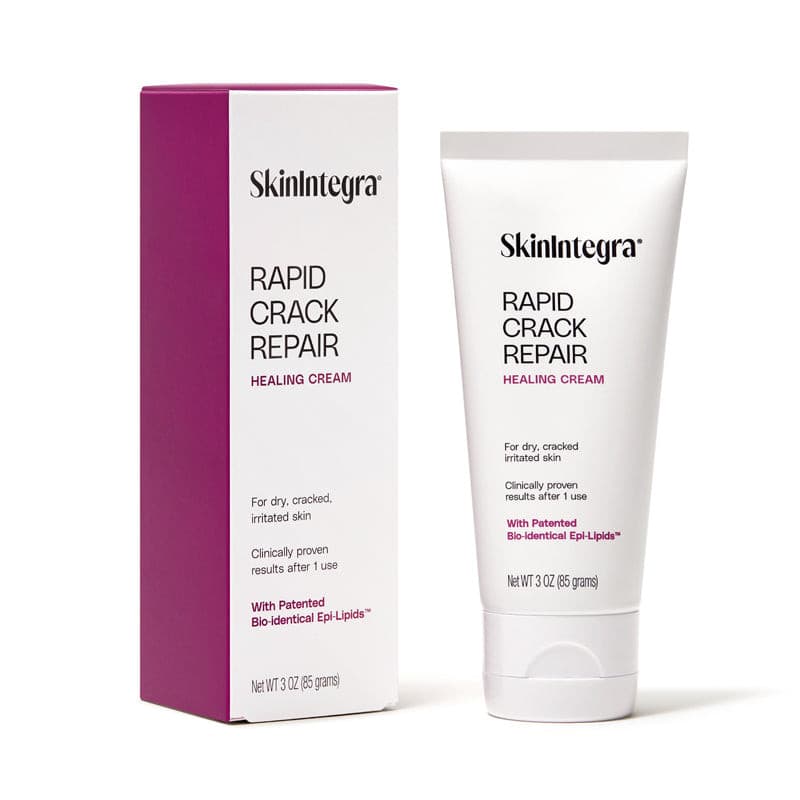
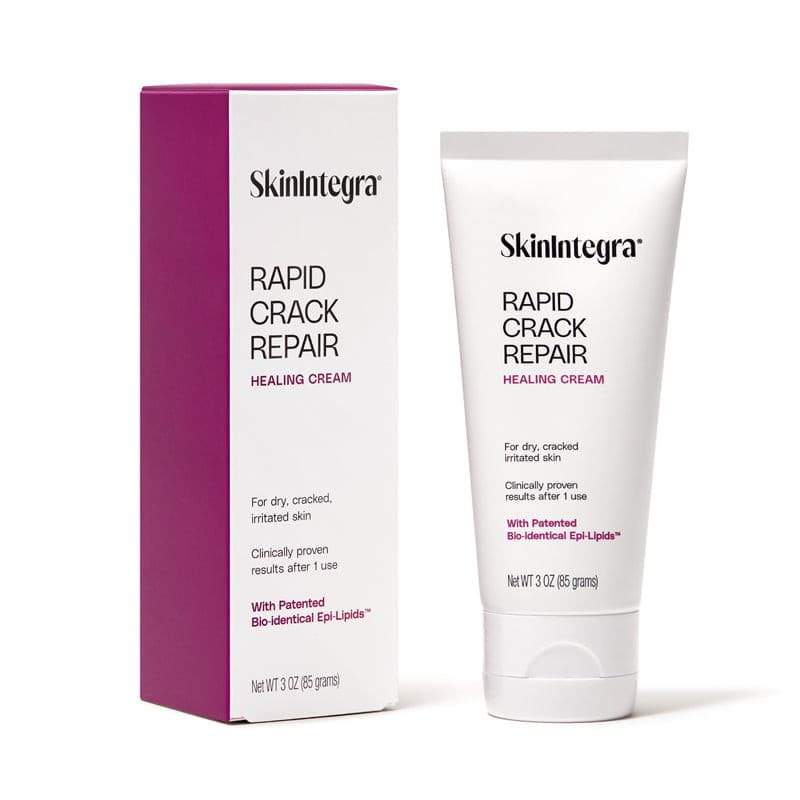
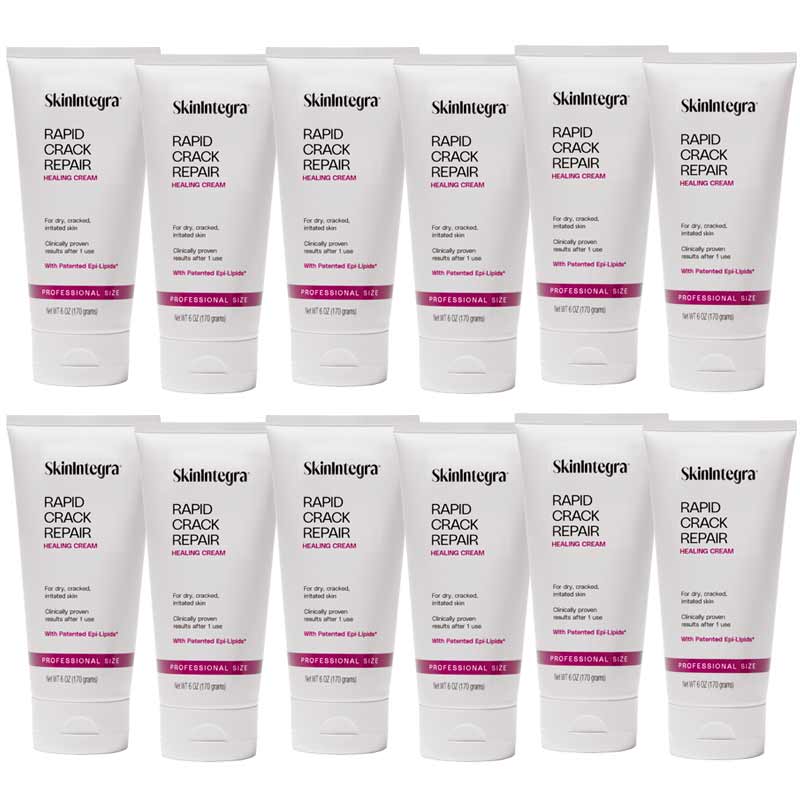
This guide explains what causes peeling feet in people with diabetes, what the warning signs of escalation look like — including the clinically important no-itch presentation — and how to treat it safely. If you already know what you are dealing with and need a solution, SkinIntegra Rapid Crack Repair Cream was developed specifically for diabetic skin barrier repair and is clinically proven to relieve dry, peeling skin within 24 hours.
What Causes Peeling Skin on Feet?

Peeling skin on the soles of the feet has several distinct causes, and treatment depends on identifying the right one. For people with diabetes, the causes below are listed in order of clinical priority — the ones that carry the most consequence if missed come first.
-
Autonomic neuropathy and chronic dryness: Diabetes damages the autonomic nerves controlling sweat glands in the feet. When those nerves fail, the feet lose natural moisture production — not because of low fluid intake or dry weather, but because the neurological mechanism is impaired. The result is chronically dry skin that cannot be fully corrected by standard surface moisturisers.
-
Fungal infection (athlete's foot) — with or without itch: Elevated blood sugar creates an environment where dermatophytes thrive, making people with diabetes significantly more susceptible to athlete's foot. Crucially, peripheral neuropathy can reduce the itch sensation that normally identifies a fungal infection — meaning diabetic patients may have active athlete's foot presenting only as peeling, with no itch at all. This is one reason the no-itch presentation of peeling feet in a diabetic patient deserves clinical assessment rather than assumption that it is simply dry skin. For guidance on managing fungal infections safely, see our guide on treating athlete's foot with urea and antifungal cream.
-
Impaired skin barrier and slow healing: High blood sugar impairs the skin's ability to synthesize ceramides and natural moisturizing factors. Any break in the skin, including peeling, takes longer to repair — the same barrier compromise that causes the peeling also slows the healing response.
-
Calluses and thick skin: Thick skin builds up on pressure points — the heels, balls of feet, and big toes — as a protective response to friction. Over time this thickened skin can crack and peel, especially if it becomes dry. In people with diabetes, cracked callus creates a direct bacterial entry point in tissue with poor circulation and impaired immune response. The hyperkeratotic layer also generates mechanical tension at its edges that produces fissures — which in diabetic skin with poor circulation are documented precursors to serious infection.
-
Dry skin from external factors: Low humidity, hot showers, harsh soaps, and cold weather all strip moisture from the skin and contribute to peeling in the general population. For people with diabetes, these factors compound the neurological dryness caused by autonomic neuropathy — making environmental triggers more significant than they would be in healthy skin.
-
Vitamin and mineral deficiencies: Vitamin B3 (niacin), vitamin C, and zinc deficiencies are linked to peeling skin on the feet. Omega-3 fatty acid deficiency leads to dry, flaky skin that peels easily. If peeling persists despite good hydration and moisturizing, a nutritional cause is worth discussing with your doctor. See our guide on vitamin deficiencies linked to cracked heels.
-
Eczema or psoriasis: Chronic inflammatory skin conditions can cause recurring peeling, scaling, and sensitivity on the soles. Psoriasis on the feet produces thick, red patches with silvery scales that peel. Eczema causes dry, itchy patches that flake and crack. Both conditions require medical management for long-term control.
-
Footwear and hyperhidrosis: Shoes that trap moisture or cause friction can lead to blisters, peeling, and skin breakdown. Excessive sweating (hyperhidrosis) creates a chronically damp environment that weakens the skin barrier and encourages fungal growth. Note that autonomic neuropathy in diabetes can cause paradoxical hyperhidrosis in some patients — excessive sweating in one area alongside dryness in another — which is worth mentioning to your podiatrist if you notice this pattern.
Is Peeling Skin on Feet an Early Warning Sign of Diabetes?
Peeling feet alone do not diagnose diabetes, but persistent or recurring peeling — especially with no obvious external cause — can be an early sign of diabetes-related skin changes that deserve attention. The skin is often one of the first places diabetes becomes visible, before other symptoms are noticed.
-
Autonomic neuropathy reduces sweat gland activity, leaving feet chronically dry regardless of environmental conditions
-
Reduced circulation limits moisture and nutrients reaching skin cells, impairing the barrier's self-maintenance
-
Impaired immune function makes fungal infections more likely, harder to clear, and less symptomatic — neuropathy masks the itch that normally signals infection
-
Slow wound healing means any skin break, including peeling, takes longer to repair and carries higher infection risk
If you have unexplained recurring peeling on your feet and have not been tested for diabetes, it is worth raising with your doctor — particularly if the peeling is painless or you have noticed other symptoms like increased thirst, fatigue, or slow-healing cuts. See our full guide on understanding dry diabetic feet for how diabetes affects foot skin in detail.
See a podiatrist promptly if you have diabetes and notice:
-
Peeling that reveals raw, red, or broken skin underneath
-
Any sign of infection — warmth, swelling, pus, or odor
-
Peeling that is not improving after 7–10 days of consistent treatment
-
Numbness, tingling, or loss of sensation in the feet alongside peeling
Peeling Skin on the Bottom of Feet With No Itch: What It Means
For people with diabetes, no-itch peeling is not reassuring — it may be a neuropathy warning sign. Peripheral neuropathy can reduce or eliminate the itch sensation that normally identifies a fungal infection or inflammatory condition. This means a diabetic patient may have active athlete's foot, eczema, or early skin breakdown presenting only as peeling — with no itch to signal the problem. The absence of itch in diabetic peeling feet should prompt clinical assessment, not reassurance.
For the general population, no-itch peeling on the bottom of the feet is most commonly explained by:
-
Dry skin or dehydration: the most common cause of non-itchy peeling, especially in winter or dry climates.
-
Vitamin deficiency: nutritional causes rarely produce itching but cause persistent peeling.
-
Diabetes-related skin changes: as above — neuropathy reduces sensation, meaning peeling may occur without any feeling of itch or irritation, even when an underlying infection is present.
-
Thick skin peeling painfully: when callus on the sole or heel becomes severely thickened, the edges generate mechanical fissures that peel in sheets. This presentation — thick, peeling skin that is painful rather than itchy — is distinct from dry skin peeling and from athlete's foot. It requires keratolytic treatment (urea) to soften the hyperkeratotic layer, and in diabetic patients warrants podiatric assessment to manage the underlying callus safely.
-
Psoriasis: plaques on the sole peel in thick sheets and are typically more sore than itchy.
-
Contact dermatitis: a reaction to shoe materials or socks that causes peeling without obvious itch.
If your feet are peeling on the bottom with no itch and no obvious skin condition — particularly if the peeling is persistent, recurring, or accompanied by any numbness — diabetes or a nutritional deficiency are worth investigating.
How to Tell If It's Athlete's Foot or Dry Skin
This distinction matters particularly for people with diabetes, because the treatment is completely different and using the wrong approach delays healing.
-
Athlete's foot: typically starts between the toes; may involve redness, blistering, and scaling; usually itchy — though neuropathy can mask this in diabetic patients; contagious and requires antifungal treatment.
-
Dry skin / barrier failure: tends to appear on the soles and heels; no redness or blistering; peeling is diffuse rather than localised between toes; responds to barrier repair moisturizing.
-
Fungal infection without itch (diabetic presentation): may appear identical to dry skin — diffuse, non-red, no obvious inflammation. If standard moisturizing does not improve peeling within 7–10 days, a podiatric assessment to rule out fungal infection is warranted.
If you have diabetes and are unsure whether your peeling is fungal or not, see a podiatrist before self-treating. See our full guide on treating athlete's foot safely with urea and antifungal cream.
How to Treat Peeling Skin on Diabetic Feet
Urea-based barrier repair — the first-line treatment
Urea is the most clinically supported ingredient for peeling, dry, and thickened foot skin. It acts as both a humectant (drawing moisture into the skin) and a gentle keratolytic (breaking down dead skin cells). For diabetic feet, concentrations of 10–25% are recommended — strong enough to soften peeling skin without over-stripping the barrier. To understand why concentration matters, see our guide on choosing between urea and ammonium lactate for cracked heels.
Best cream for peeling skin on diabetic feet
For peeling diabetic feet, a standard moisturizer is not enough. Standard lotions create a temporary surface barrier without replenishing what diabetic skin specifically lacks: the ceramides, essential fatty acids, and natural moisturizing factors that autonomic neuropathy and poor circulation deplete. Applying surface moisture to a structurally depleted barrier addresses the symptom without touching the underlying deficit — which is why peeling returns quickly regardless of how often standard lotion is applied.

SkinIntegra Rapid Crack Repair Cream was built from the ground up to address the specific deficiencies diabetes creates — not adapted from a general skincare base. Its patented skin-mimicking composition replenishes the ceramides, essential fatty acids, and natural moisturizing factors that diabetic skin is missing, in ratios engineered to mirror healthy skin. This is what distinguishes it from standard urea creams: it does not simply hydrate the surface — it actively rebuilds the barrier structure.
The formula combines:
-
25% urea and lactic acid: gently exfoliates and softens peeling skin while replenishing the natural moisturizing factors diabetes depletes — at a concentration proven more effective and better tolerated than 40% urea products in clinical testing.
-
Ceramides, essential fatty acids, and plant-based oils: replenish the structural lipid matrix that diabetes depletes, actively rebuilding barrier integrity rather than sitting on the surface.
-
Antioxidants and vitamins: protect against oxidative damage and support the skin's natural repair process.
-
Fragrance-free, dye-free, paraben-free, petroleum-free: no common irritants that worsen compromised diabetic skin.
In an independent double-blind clinical trial, SkinIntegra outperformed a leading 40% urea cream in both speed of improvement and tolerability. In another study, 100% of diabetic participants showed measurable improvement in dryness and cracking within 24 hours. It carries the APMA Seal of Approval and is used post-debridement by podiatrists across the U.S. Apply twice daily after washing and drying feet; for severe peeling, apply at night under cotton socks.
Antifungal Creams
If athlete's foot is confirmed or suspected, use an OTC antifungal cream (clotrimazole, terbinafine, or miconazole) consistently for at least 2–4 weeks — even after symptoms clear. Pair with a urea moisturizer to address the dry, peeling skin left behind by the infection. See our full guide on treating athlete's foot with urea and antifungal cream.
Foot Soaks — Proceed with Caution
For most people, a brief warm water foot soak can soften skin before moisturizing. However, for people with diabetes, prolonged soaking weakens the skin barrier and increases infection risk. Epsom salt foot soaks in particular are not recommended for diabetic feet — they can draw moisture out of skin rather than replenishing it.
Safe Exfoliation
Avoid cheese-grater foot files, metal scrapers, or Ped Eggs — these cause micro-cuts that create infection entry points, and in diabetic feet physical exfoliation tools carry serious risks. Use chemical exfoliants like urea or lactic acid instead, which dissolve dead skin cells without physical abrasion.
If you have diabetes: never use salicylic acid products (including medicated foot pads or callus removers) on peeling or cracked feet. Salicylic acid is contraindicated for diabetic skin and can cause serious skin damage.
Learn why: why salicylic acid is unsafe for diabetic skin
When to See a Doctor About Peeling Feet
Most cases of peeling feet can be managed at home. However, see a podiatrist or healthcare provider if:
-
Peeling is deep, painful, or has exposed raw skin
-
There are signs of infection — redness spreading from the area, warmth, swelling, or discharge
-
You have diabetes and peeling has not improved after 7–10 days of consistent treatment
-
Peeling is recurring despite regular moisturizing
-
You notice numbness, tingling, or discoloration alongside the peeling
-
You suspect a systemic cause — thyroid disorder, kidney disease, or liver disease
Frequently Asked Questions
What causes peeling skin on feet?
The most common causes are dry skin, athlete's foot (fungal infection), vitamin deficiencies (especially B3, C, and zinc), eczema or psoriasis, callus buildup, and diabetes-related skin changes. For people with diabetes, autonomic neuropathy — which reduces sweat gland function — is a primary cause of chronic dryness and peeling that does not respond to standard moisturisers. Treatment depends on identifying the correct cause.
Is peeling skin on feet an early sign of diabetes?
It can be. Persistent or recurring peeling — particularly with no obvious external cause and no itch — is a recognized early manifestation of diabetic skin changes. Autonomic neuropathy reduces the feet's natural moisture production and poor circulation slows skin repair. If you have unexplained recurring peeling and have not been tested for diabetes, raise it with your doctor — especially if accompanied by increased thirst, fatigue, or slow-healing cuts.
What does it mean when feet peel with no itch?
No-itch peeling is commonly caused by dry skin, vitamin deficiency, psoriasis, or contact dermatitis. For people with diabetes, no-itch peeling carries additional clinical significance: peripheral neuropathy can reduce the itch sensation that normally identifies a fungal infection, meaning active athlete's foot may present only as peeling in diabetic patients. If you have diabetes and your feet are peeling without itching, a podiatric assessment is appropriate before concluding it is simple dry skin.
What causes thick skin peeling off the bottom of feet?
Thick, peeling skin on the sole or heel is typically caused by callus buildup that has become dry and begun to separate. The hyperkeratotic (thickened) skin layer builds up under pressure points and, when chronically dry, peels in sheets. Psoriasis can also produce this presentation. In diabetic patients, thickened peeling skin at the heel or ball of foot warrants podiatric assessment — the edges of the callus generate fissures that are direct bacterial entry points in skin with poor circulation and impaired healing.
What deficiency causes skin to peel off the bottom of feet?
Vitamin B3 (niacin), vitamin C, and zinc are the deficiencies most commonly linked to peeling skin on the feet. Omega-3 fatty acid deficiency also leads to dry, flaking skin. If you have persistent peeling with no obvious external cause, ask your doctor about a nutritional panel. Our article on vitamin deficiencies and cracked heels covers this in detail.
What is the best cream for peeling skin on feet?
A urea-based cream at 10–25% concentration is the most effective treatment for peeling feet. For diabetic or sensitive skin, look for a formula that combines urea with barrier-repair ingredients — ceramides, essential fatty acids, and natural moisturising factors — and avoids salicylic acid, fragrances, and petroleum. SkinIntegra Rapid Crack Repair Cream is specifically formulated for diabetic skin barrier repair and has the APMA Seal of Approval.
Is it safe to soak peeling feet?
For most people, a brief warm water soak is fine. For people with diabetes, prolonged foot soaking is not recommended — it softens and weakens the skin barrier, increasing the risk of skin breakdown and infection. Epsom salt soaks are particularly discouraged for diabetic feet. See our full guide: Epsom salt foot soaks and diabetes — friend or foe?.
Related Articles
How to treat athlete's foot safely with urea and antifungal cream
Understanding dry diabetic feet — causes and solutions
Vitamin deficiencies linked to cracked heels
Why salicylic acid is unsafe for diabetic skin
Epsom salt foot soaks and diabetes — friend or foe?
Avoid cheese-grater foot files: safe callus care for diabetic feet


