


Your doctor said no. The packet says “consult a physician.” But the wellness article you just read says Epsom salt soaks can help with circulation and inflammation — and people in your support group swear by them. If you have diabetes and you’re trying to figure out whether Epsom salt foot soaks are safe, the conflicting advice is real and the confusion is understandable. General wellness sources and medical guidance for diabetic feet are answering a different question — and for good reason.
For people with diabetes, Epsom salt foot soaks are not recommended — and the reason goes deeper than the standard caution about neuropathy. Even people with diabetes who have full sensation are at elevated risk from foot soaking because of how prolonged water exposure affects the skin barrier, combined with the impaired healing and infection response that diabetes causes at every stage. This guide explains the clinical mechanism behind that risk, addresses the contradictions you’ve encountered, and offers safer alternatives that protect rather than temporarily soothe.

Why the Advice Feels Contradictory
Epsom salt soaks are genuinely safe for most people without diabetes — which is why general wellness sources, beauty publications, and product packaging promote them freely. The confusion arises because the same sources rarely distinguish between diabetic and non-diabetic feet. People with diabetes face a fundamentally different risk profile: neuropathy, reduced circulation, and impaired immune function mean that what resolves without consequence in healthy skin can escalate quickly in diabetic skin. The contradiction patients encounter online is real, but it reflects general-population advice being applied to a situation where it does not belong.
Why Foot Care Is Critical in Diabetes
Three interconnected mechanisms make diabetic feet uniquely vulnerable — and all three are directly relevant to why foot soaking carries risk:
-
Skin barrier breakdown: High blood sugar impairs the skin's ability to synthesize ceramides and natural moisturizing factors — the structural components that keep moisture in and pathogens out. Diabetic skin is already operating with a compromised barrier before any soak occurs.
-
Peripheral neuropathy: Nerve damage reduces or eliminates sensation in the feet, making it impossible to detect water that is too hot, to feel early signs of skin damage, or to notice a developing wound. According to the American Diabetes Association, between one-third and one-half of all people with diabetes develop peripheral neuropathy over time — meaning this is not an edge-case risk.
-
Impaired healing and infection risk: Reduced circulation slows the delivery of oxygen and immune cells to damaged tissue. Diabetic skin also has impaired neutrophil function and glycosylated immune proteins, meaning the body's response to bacterial entry is slower and less effective at every stage — regardless of whether neuropathy is present. If you have already cut or injured your foot, soaking is particularly dangerous at that moment — an open wound in contact with standing water significantly raises infection risk. For immediate steps to take after a diabetic foot injury, see our guide on what to do when you cut your diabetic foot.
These three mechanisms compound each other. A soak-induced crack in diabetic skin is not the same as a soak-induced crack in healthy skin. The entry point exists, the ability to detect it is reduced, and the capacity to fight the resulting infection is compromised.
What Epsom Salt Soaking Actually Does to Diabetic Skin
-
Osmotic barrier breakdown: When feet are submerged in water, the skin cells of the stratum corneum absorb water and swell. This temporarily makes skin feel softer — which most people interpret as beneficial. In reality, the lipid matrix holding those skin cells together is disrupted. When the feet dry, the cells contract, moisture is lost faster than before the soak, and the barrier is weaker than when you started. This osmotic cycle is why foot soaking consistently produces the opposite of its intended effect on diabetic skin.
-
Epsom salt adds a secondary drying effect: Magnesium sulfate is a hygroscopic compound — it draws moisture from whatever it contacts, including skin. The Epsom salt does not hydrate the skin; it competes with the skin for moisture in the water, and once the water is removed, leaves the skin drier than plain water alone would.
-
The magnesium absorption claim is not supported: A common reason patients use Epsom salt is the belief that magnesium absorbs through the skin and provides anti-inflammatory or relaxation benefits. The stratum corneum's lipid barrier is specifically designed to block ionic compounds like magnesium sulfate. Transdermal absorption of magnesium at clinically meaningful concentrations does not occur through intact skin — and in diabetic skin with a compromised barrier, what absorbs preferentially is water, not beneficial minerals.
-
Temperature risk: With peripheral neuropathy, the ability to detect dangerous water temperature is reduced or absent. Burns from foot soaking are a documented complication in diabetic patients — and a burn on a foot with poor circulation and impaired healing can escalate to a serious wound rapidly.
The neuropathy-only myth: Soaking is not only risky for patients who already have neuropathy. Impaired neutrophil function and glycosylated immune proteins are present in all diabetic patients, meaning the infection risk from barrier breakdown applies regardless of neuropathic status.
Washing vs. Soaking: The Key Difference
The distinction matters clinically — these are not the same activity with different durations.
-
Daily washing is essential: Use lukewarm (not hot) water and a mild, fragrance-free soap. Wash gently, pat dry thoroughly — especially between the toes — and apply a barrier repair cream while skin is still slightly damp. Brief contact with water followed by immediate drying and moisturizing is protective.
-
Soaking is not the same: Prolonged submersion — typically defined as more than a few minutes — triggers the osmotic swelling cycle described above. The longer the soak, the more significant the barrier disruption. There is no safe duration for diabetic foot soaking that avoids this mechanism.
Important: If you have been soaking your feet without visible problems, this does not mean the risk does not apply. Neuropathy can mask early skin damage, and barrier breakdown is gradual. See our guide on understanding dry diabetic feet for how diabetic skin barrier breakdown progresses.
Safer Alternatives for Foot Comfort and Relief
The comfort people seek from foot soaking — relief from tiredness, tension, and dryness — is achievable through approaches that strengthen rather than weaken the skin barrier:
-
Gentle daily washing and thorough drying: Brief contact with lukewarm water followed by careful drying between the toes removes bacteria and fungi without triggering the osmotic damage cycle. Use this time to inspect the feet — a mirror helps check the soles and heels.
- Choosing the right cleanser: Not all cleansers are safe for compromised diabetic skin. Harsh soaps and alcohol-based sanitisers strip the barrier lipids that diabetic skin is already short of — making the skin more vulnerable, not less. For guidance on which cleansers are safe and how to pair daily cleansing with barrier repair for the best protection, see our guide on how to keep diabetic feet clean and reduce infection risk.
-
Barrier repair cream applied to damp skin: Applying a urea-based barrier repair cream immediately after washing, while skin is still slightly damp, seals in moisture and begins actively rebuilding the lipid matrix. This directly addresses the dryness and discomfort that soaking was intended to relieve — without the barrier damage. For more on what to look for in a diabetic foot cream, see our article on why salicylic acid is unsafe for diabetic skin — many common foot products contain ingredients that are similarly contraindicated.
-
Foot massage: Gentle massage improves circulation and reduces tension. Avoid if deep cracks, open wounds, or active infection are present — consult a podiatrist in those cases.
-
Foot elevation: Elevating the feet for 10–15 minutes reduces swelling and pressure, providing some of the relief patients associate with soaking — without any skin contact risk.
-
Supportive footwear: Well-fitted shoes and seamless moisture-wicking socks prevent pressure points and maintain skin integrity throughout the day, reducing the fatigue and discomfort that drives the impulse to soak.
Medical pedicure for persistent dryness or callus: For patients with significant callus buildup or cracking, a podiatry-supervised medical pedicure using sterile instruments is the safe clinical alternative to DIY soaking. See our guide on safe pedicure options for diabetic feet.
Relief Through Repair: The Right Response to Diabetic Dry Skin
The impulse behind foot soaking — relief from dryness, tightness, and discomfort — is legitimate. The problem is that soaking addresses the surface sensation while actively damaging the barrier underneath. The clinically correct response is the opposite: rebuild the barrier rather than temporarily soften it.

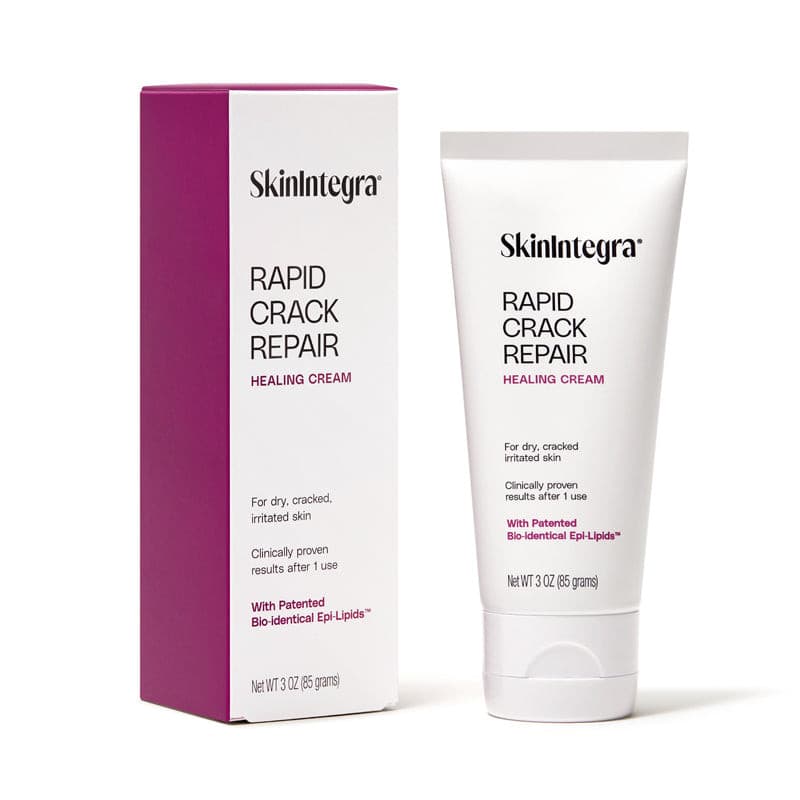
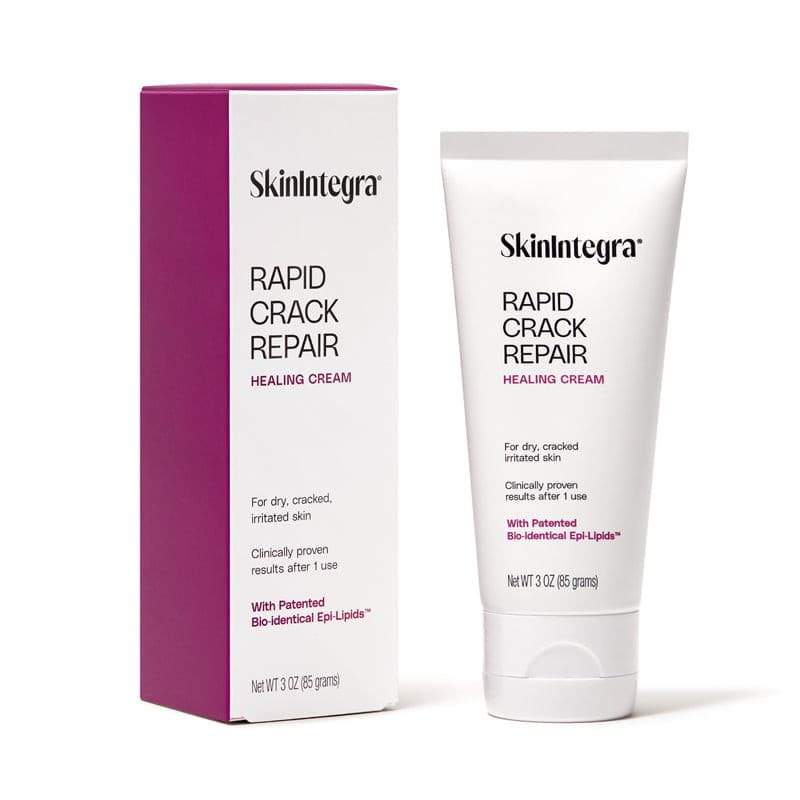
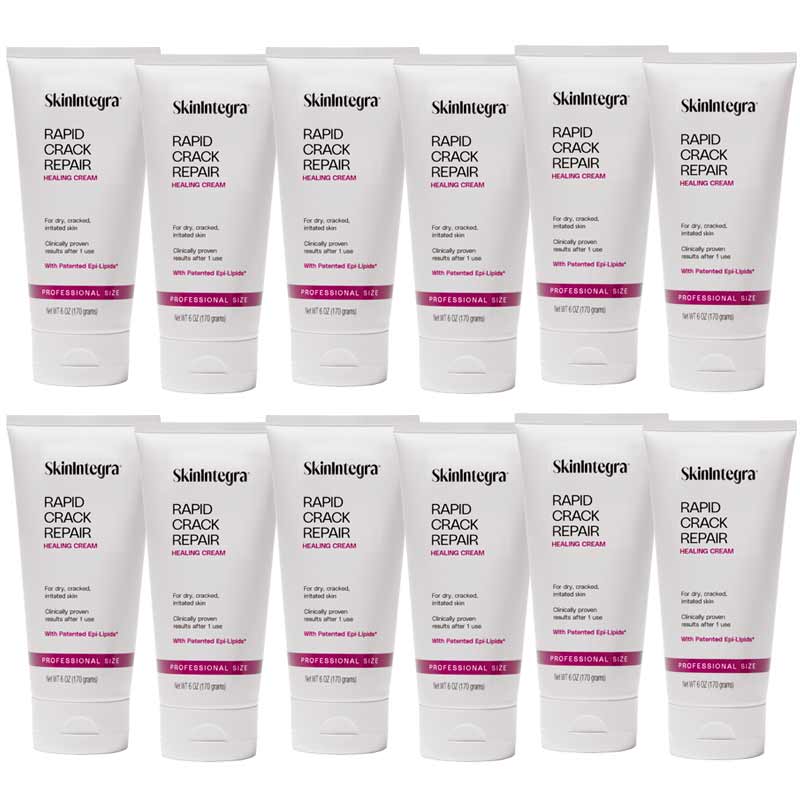
What diabetic skin needs is a barrier-repair formulation built specifically for what diabetes depletes. Diabetes damages the nerves that control the skin’s oil glands, gradually stripping away the natural oils that keep the skin barrier intact. Without those oils, skin loses its ability to stay soft, retain moisture, and protect itself — and soaking makes that deficit worse, not better. The tightness, dryness, and discomfort that make soaking feel appealing are signals that the skin barrier needs repair, not prolonged water exposure. SkinIntegra Rapid Crack Repair Cream was developed to deliver that repair — and with it, the relief. The formula works on two levels:
-
Bio Identical Oils restores the skin barrier’s natural oils — a patented blend of five whole plant oils, including Sacha Inchi and Sea Buckthorn, matched to the composition of healthy skin to replenish what diabetes strips away. A restored skin barrier holds moisture, stays supple, and resists the dryness and tightness that soaking was meant to soothe — without the damage soaking causes.
-
25% urea and lactic acid work at the skin surface — softening the thickened, callused skin on heels and soles that makes walking uncomfortable, replenishing the natural moisture the skin can no longer hold on its own, and calming the dryness and irritation that drive the urge to soak in the first place.
Fragrance-free, paraben-free, alcohol-free, and hypoallergenic — formulated without the common irritants that worsen already-compromised diabetic skin.
The fastest path to the comfort soaking promises is a skin barrier that actually repairs. The clinical evidence:
-
In an independent clinical study, Rapid Crack Repair delivered significantly faster improvement in dryness and cracking than high-strength Urea-40, assessed by blinded podiatrist investigators at two and four weeks, with less irritation.
-
In a separate clinical trial conducted exclusively with people with diabetes, 100% of participants showed measurable skin improvement within 24 hours.
SkinIntegra holds the APMA Seal of Acceptance from the American Podiatric Medical Association and is used post-debridement by podiatrists across the U.S.
Apply after washing and thoroughly drying the feet, while skin is still slightly damp — this seals in moisture at the point when the barrier is most receptive. Apply generously to heels and soles — the areas most vulnerable to barrier breakdown and the zones most people were previously trying to address with soaking. Consistency matters as much as the formula: a depleted skin barrier requires daily care to maintain the protection that prevents dry skin from progressing to cracks and the infection risk they carry.
This is the clinical alternative to soaking — not temporary relief, but the sustained barrier repair that makes lasting comfort possible.
For daily use:
-
Apply after washing and thoroughly drying the feet, while skin is still slightly damp — this seals in moisture at the point when the barrier is most receptive.
-
Apply generously to heels and soles — the areas most vulnerable to barrier breakdown and the zones most people were previously trying to address with soaking.
-
Consistency matters as much as the formula. A depleted barrier cannot be restored in a single application — daily use maintains the structural protection that prevents dry skin from progressing to cracks, fissures, and the infection risk they carry.
This is the clinical alternative to soaking — not temporary relief, but sustained repair. Learn more about how SkinIntegra works.
When to See a Podiatrist
Daily barrier repair and careful washing manage most cases of diabetic dry skin and foot discomfort at home. Seek a podiatry appointment promptly if you notice:
-
Any crack, sore, or wound on the feet that is not improving within a few days
-
Redness, warmth, or swelling spreading beyond a crack or scratch
-
Discharge, odor, or increasing pain around a skin break
-
Numbness, tingling, or burning in the feet — possible early neuropathy
-
Persistent dryness or callus that is not responding to daily barrier cream
-
Any new discoloration, dark spot, or change in skin texture on the feet
For people with diabetes: the threshold for seeking professional advice about foot symptoms should be lower than for the general population. What resolves on its own in healthy skin can progress to serious infection in diabetic feet. Annual podiatry check-ups are recommended for all people with diabetes — and sooner if any of the above symptoms arise. See our article on treating athlete's foot safely in diabetic patients for guidance on managing fungal infections — a common complication of compromised barrier function.
Frequently Asked Questions
Can diabetic patients use Epsom salt?
No. For people with diabetes, Epsom salt foot soaks are not recommended regardless of whether neuropathy is present. Prolonged soaking disrupts the skin barrier through osmotic swelling, Epsom salt adds a secondary drying effect, and the magnesium absorption benefits commonly cited have no clinical evidence behind them. The combination of barrier breakdown, impaired healing, and elevated infection risk in diabetic skin makes foot soaking — with or without Epsom salt — a practice podiatrists consistently advise against.
Why can't diabetic patients soak their feet in Epsom salt?
The core reason is barrier breakdown. When feet are submerged in water, the stratum corneum absorbs water, swells, and then loses moisture faster on drying — leaving the barrier weaker than before the soak. Epsom salt compounds this by drawing additional moisture from the skin. In diabetic patients, this barrier damage creates entry points for bacteria and fungi in skin that already has impaired healing and reduced infection-fighting capacity. The American Diabetes Association specifically flags foot soaking as a risk for patients with diabetes.
What is good for a diabetic patient to soak their feet in?
Nothing — foot soaking of any kind is not recommended for people with diabetes, including plain warm water, baking soda, or vinegar soaks. The risk is prolonged submersion itself, not the additives. The effective alternative is brief daily washing followed by thorough drying and immediate barrier repair cream application — addressing dryness without the barrier damage soaking causes.
Can diabetic patients soak their feet in warm water?
No. The risk from foot soaking is not specific to Epsom salt or other additives — plain warm water soaking triggers the same osmotic barrier breakdown in diabetic skin. Additionally, with peripheral neuropathy, patients may not be able to accurately gauge water temperature, creating a burn risk. Brief washing is safe; prolonged soaking is not, regardless of what is in the water.
What is a good Epsom salt alternative for diabetic patients?
The most effective alternative is a daily barrier repair routine: brief washing with lukewarm water, thorough drying including between the toes, and a urea-based barrier repair cream applied to slightly damp skin. This addresses dryness and discomfort directly — without weakening the barrier. For significant callus or cracking, a podiatry-supervised medical pedicure is the safe clinical alternative to soaking.
Is foot soaking safe for diabetic neuropathy?
No — and neuropathy actually increases the risk rather than being the sole reason soaking is dangerous. With neuropathy, patients cannot reliably detect water that is too hot (burn risk), cannot feel early signs of skin damage during or after soaking, and may not notice a developing wound in the days that follow. The barrier breakdown risk from soaking applies to all diabetic patients, but neuropathy removes the sensory warning system that might otherwise prompt a patient to stop or seek care early.
Related Articles
Understanding Dry Diabetic Feet: Causes and Solutions
Treating Athlete's Foot Safely: Urea + Antifungal Cream
Why Salicylic Acid Is Unsafe for Diabetic Skin


