


Cracked fingertips are painful, persistent, and surprisingly difficult to heal — especially when the underlying cause isn't addressed. For most people, dry skin or cold weather is to blame. But for others, cracked fingertips signal something deeper: a vitamin deficiency, an inflammatory skin condition, or — critically — diabetes-related changes that slow healing and raise the risk of infection. This guide explains every major cause, how to tell them apart, and what actually works to fix them.

What Causes Cracked Fingertips?
1. Dry Skin and Environmental Factors
The most common cause. Cold air, low humidity, hot water, and frequent hand washing all strip moisture from the skin on your fingers. The fingertips are especially vulnerable because the skin is thin, under constant mechanical stress, and exposed to more contact than almost any other part of the body. Once the skin loses enough moisture, it loses flexibility and begins to crack — first as fine surface lines, then as deeper, painful fissures.
2. Vitamin Deficiency
Nutritional deficiencies are a frequently overlooked cause of cracked fingertips that won't heal. The most common culprits are:
-
Vitamin B3 (niacin) — deficiency causes skin to become dry, scaly, and prone to cracking, particularly on areas subject to pressure or friction
-
Vitamin C — essential for collagen synthesis; low levels lead to fragile skin that cracks easily and heals slowly
-
Zinc — plays a central role in skin repair; deficiency causes dry, cracked skin and significantly delayed wound healing
-
Omega-3 fatty acids — deficiency leads to chronically dry skin that is prone to splitting and peeling
If your fingertips crack repeatedly despite consistent moisturizing, a nutritional deficiency is worth investigating — especially zinc and vitamin C, which are both directly involved in skin repair. Ask your doctor about a blood panel.
The same nutritional deficiencies that crack fingertips also affect the heels — see our guide on vitamin deficiencies and cracked heels for more detail on which nutrients to investigate.
3. Diabetes and Slow-Healing Cracks
Diabetes is one of the most significant and under appreciated causes of cracked fingertips that won't heal. Several mechanisms are at work:
-
Reduced circulation limits nutrient and oxygen delivery to skin cells, making the skin drier, thinner, and slower to repair
-
Peripheral neuropathy reduces sensation, so minor cracks and splits go unnoticed and worsen before treatment begins
-
Impaired immune response slows the wound healing process and increases the risk that a crack becomes infected
-
High blood glucose damages collagen, weakening the skin's structural integrity
If you have diabetes and your fingertips are cracking and not healing, do not wait. What looks like a minor crack can become an entry point for bacterial infection. See a healthcare provider if cracks are deep, bleeding, or show any sign of redness spreading from the site.
For a full picture of how diabetes affects skin repair, see our guide on why diabetic skin heals slowly and how to speed recovery.
4. Eczema and Psoriasis
Chronic inflammatory skin conditions are a common cause of recurring cracked fingertips. Eczema (atopic dermatitis) causes dry, itchy patches that crack and weep, particularly around the fingertips and knuckles. Hand eczema is estimated to affect around 10% of the population and is often triggered by contact with irritants or allergens. Psoriasis can also affect the hands, producing thick, scaly patches that split painfully.
5. Overwashing and Harsh Soaps
Frequent hand washing — particularly with antibacterial or foaming soaps — disrupts the skin's natural lipid barrier. Healthcare workers, food service workers, and caregivers are disproportionately affected. Once the barrier is compromised, moisture escapes continuously and the skin begins to crack. Switching to pH-balanced, fragrance-free soap and applying a barrier repair cream after every wash can make a significant difference.
6. Contact Dermatitis
A reaction to chemicals, latex, metals, or other irritants can cause cracking around the fingertips, sometimes localized to specific fingers. Occupational contact dermatitis is common in cleaning, construction, healthcare, and beauty industries. Unlike dry skin, contact dermatitis may also cause redness, blistering, or itching — and will recur as long as contact with the trigger continues.
7. Split Skin Near Nails — What It Usually Means
Cracked or split skin specifically around the fingernails — along the nail fold or cuticle — is often caused by:
-
Cuticle picking or trimming too aggressively
-
Vitamin deficiency, particularly biotin, zinc, or vitamin C
-
Fungal nail infection spreading to surrounding skin
-
Psoriasis affecting the nail bed and surrounding skin
If the splitting is localized near the nails and not responding to moisturizer, a vitamin deficiency or fungal cause is worth considering.
Why Won't My Cracked Fingertips Heal?
This is the question behind many of the top searches on this topic — and it has a specific answer. Cracked fingertips that don't heal despite regular moisturizing usually have one of three underlying causes:
-
The cause hasn't been addressed — moisturizer treats the symptom but not the source (fungal infection, eczema, vitamin deficiency)
-
The skin barrier is too damaged to recover without targeted barrier-repair ingredients — standard lotions don't contain what's needed
-
An underlying condition is slowing healing — most commonly diabetes, but also thyroid disorders, kidney disease, or severe nutritional deficiency
Cracked fingertips that won't heal in people with diabetes deserve particular attention. Diabetic skin heals significantly more slowly than healthy skin, and even a small crack can become a chronic wound if the underlying blood sugar and circulation issues aren't addressed alongside the local skin care.
How to Fix Cracked Fingertips
Step 1: Identify the Cause
Treatment depends entirely on cause. If your fingertips crack only in winter and heal quickly with moisturizer, dry skin is likely the culprit. If they crack repeatedly, won't heal, or are associated with redness, itching, or other symptoms, a medical cause needs to be ruled out before any topical treatment will be fully effective.
Step 2: Repair the Skin Barrier
For most cases of cracked fingertips — including those related to diabetes — the most effective topical approach is a barrier repair cream containing:
-
Urea (10–25%) — hydrates deeply and gently softens thickened or cracked skin without over-stripping the barrier
-
Ceramides and fatty acids — replenish the lipids the skin barrier is missing, which standard moisturizers do not contain
-
Humectants (glycerin, hyaluronic acid) — draw moisture into the skin and hold it there
Avoid petroleum jelly as a primary treatment for deep cracks — it seals the surface but doesn't deliver the barrier-repair ingredients needed for healing. It can be used over a barrier cream to lock in moisture overnight.
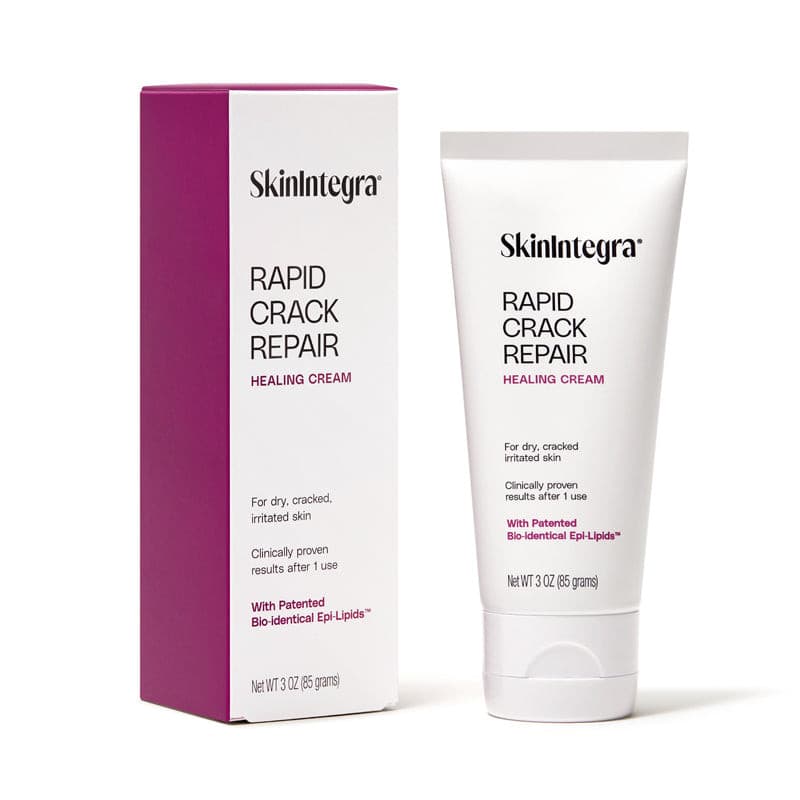
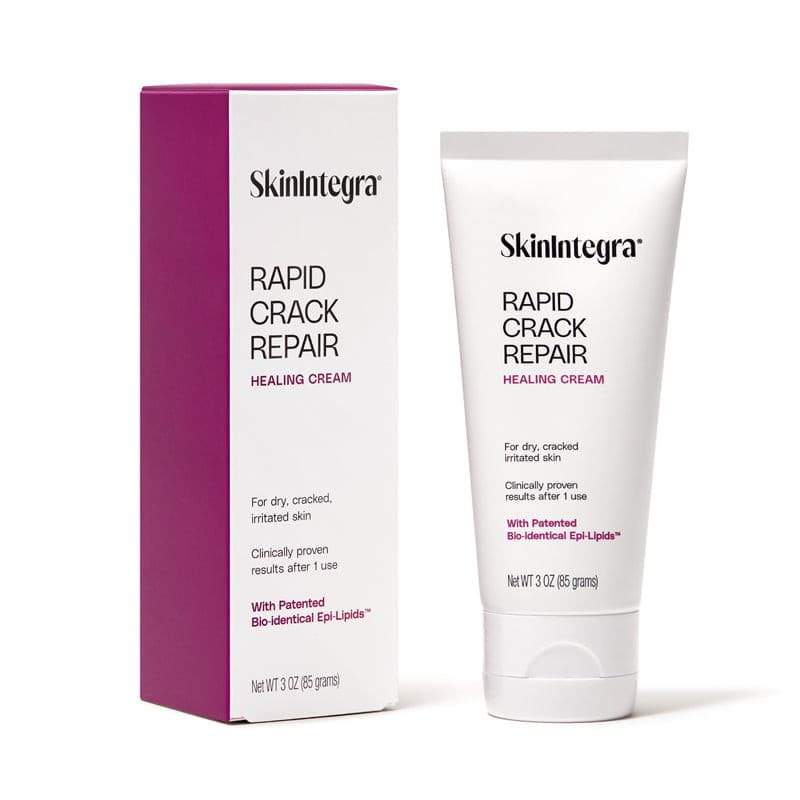
For cracked fingertips that are persistent, painful, or associated with diabetes, SkinIntegra Rapid Crack Repair Cream is formulated specifically for what standard hand creams can't fix. Most hand lotions moisturize the surface — they don't replenish the ceramides, fatty acids, and barrier-repair compounds that cracked fingertip skin is actually depleted of. SkinIntegra was built from the ground up to do exactly that.

The formula targets cracked fingertips on three levels:
-
25% urea and lactic acid — chemically softens thickened, cracked skin and draws deep moisture into the finger pads and nail folds without physical abrasion or over-stripping
-
Ceramides, plant-based lipids, and fatty acids — replenish the structural barrier components that repeated hand washing, cold weather, and diabetes deplete
-
Antioxidants and vitamins — support the skin's repair processes, particularly important when healing is slowed by diabetes or nutritional deficiency
-
Fragrance-free, preservative-free, hypoallergenic — safe for daily use on hands, including sensitive or diabetic skin
Step 3: Protect While Healing
While fingertips are healing, reduce exposure to triggers:
-
Wear nitrile gloves when washing dishes or using cleaning products
-
Switch to a pH-balanced, fragrance-free hand soap
-
Apply cream immediately after hand washing, before skin dries completely
-
Use a humidifier in winter months to add moisture to indoor air
-
Consider a liquid bandage or finger cot over deep cracks to protect the wound and speed healing
Step 4: Address the Underlying Cause
If a vitamin deficiency is suspected, discuss supplementation with your doctor — particularly zinc, vitamin C, and omega-3 fatty acids. If eczema or psoriasis is involved, prescription topical treatments may be needed. If you have diabetes, consistent blood glucose management is foundational — no topical treatment will be fully effective if circulation and healing are systemically impaired.
When to Worry About Cracked Fingertips
Most cracked fingertips can be managed at home. See a doctor or dermatologist if:
-
Cracks are deep, bleeding, or not improving after 1–2 weeks of consistent treatment
-
There are signs of infection — redness spreading from the crack, warmth, swelling, or discharge
-
You have diabetes and any crack is not healing within 7 days
-
Cracking is recurring despite regular moisturizing — suggests an underlying cause not yet identified
-
You notice cracking alongside other symptoms — fatigue, hair loss, or brittle nails — which may indicate a systemic nutritional deficiency or thyroid issue
Frequently Asked Questions
What causes skin on fingertips to split?
The most common causes are dry skin, cold weather, frequent hand washing, and low humidity. Recurring or non-healing splits are more often caused by vitamin deficiency (particularly zinc, vitamin C, or omega-3s), eczema, psoriasis, contact dermatitis, or diabetes-related slow healing. Identifying the correct cause is essential — treatment differs significantly depending on the underlying reason.
What vitamin deficiency causes cracked fingertips?
Zinc and vitamin C are the most directly linked to cracked fingertips — both are essential for skin repair and wound healing. Vitamin B3 (niacin) deficiency can also cause dry, cracking skin. Omega-3 fatty acid deficiency contributes to chronic dryness. If your fingertips crack persistently despite moisturizing, ask your doctor about a nutritional blood panel, particularly checking zinc and vitamin C levels.
How to fix cracked skin on fingertips?
Start with a barrier repair cream containing urea (10–25%), ceramides, and fatty acids — these ingredients address the root cause rather than just coating the surface. Apply twice daily and immediately after hand washing. Protect with gloves during cleaning. If cracks are deep, use a liquid bandage to protect and seal the wound. If they won't heal within 1–2 weeks, investigate an underlying cause such as vitamin deficiency or diabetes.
What causes dry, cracked skin on fingertips specifically?
Dry, cracked fingertips without itching or redness are most commonly caused by low humidity, cold weather, or frequent hand washing depleting the skin's natural moisture. Vitamin and mineral deficiencies — particularly zinc and omega-3 fatty acids — cause the same pattern. In people with diabetes, reduced sweat gland function and poor circulation produce persistent dryness that is difficult to treat with standard moisturizers alone.
Why won't my cracked fingertips heal?
Non-healing cracked fingertips usually indicate one of three things: the underlying cause hasn't been treated, the skin barrier is too damaged to recover without targeted barrier-repair ingredients, or an underlying condition is slowing healing — most commonly diabetes. If standard moisturizers aren't working after 2 weeks, it's time to investigate further. People with diabetes should seek medical advice within 7 days of a crack that isn't improving.
Are cracked fingertips a sign of diabetes?
Not exclusively, but diabetes is a significant cause of cracked fingertips that won't heal. Reduced circulation and nerve damage leave skin chronically dry, and impaired immune function slows healing of any break in the skin. If you have diabetes and notice persistent cracking — especially cracks that won't heal — treat it promptly and monitor closely. See our guide on why diabetic skin heals slowly for more detail.


