


Cracked heels and dry feet can be both painful and unsightly, often leading to discomfort and embarrassment. This comprehensive guide will explore several natural remedies for cracked heels and dry feet, helping you achieve soft, healthy skin. However, it’s important to note that some remedies may not be suitable for people with diabetes, and caution will be advised where necessary.
Understanding Cracked Heels and Dry Feet

Cracked heels occur when the skin on the heel becomes dry and thickened, until it splits under the pressure of walking. Dry feet, on the other hand, lack moisture, making the skin flaky and rough. Factors contributing to these conditions include:
- Prolonged standing or walking
- Wearing open-back shoes
- Exposure to hot and humid conditions
- Poor foot hygiene
- Medical conditions such as diabetes, eczema, and psoriasis
Natural Remedies for Cracked Heels and Dry Feet

Several simple home natural remedies can help relieve the discomfort from cracking heels and dry feet. Regularly applying natural oils such as coconut oil, olive oil, or avocado oil can deeply moisturize and repair dry skin. Mixing honey with lukewarm water creates a soothing foot soak that hydrates and helps soothe cracked heels. A homemade scrub using sugar or oatmeal combined with a few drops of olive oil or honey can gently exfoliate dead skin cells, promoting smoother feet. Additionally, using mashed banana or avocado as a foot mask provides essential vitamins and minerals that nourish and soften the skin. Incorporating these natural home remedies into your routine can help you restore healthy, crack-free heels.
Caution: The American Diabetes Association discourages foot soaks and scrubs. People with diabetes have fragile skin, and soaking and scrubbing can cause the skin to break down.
Coconut Oil
Benefits:
- Deeply moisturizes and softens skin
- Commonly cited for antibacterial and antifungal properties
How to use:
Apply a generous amount of coconut oil to clean feet before bedtime. Cover your feet with socks to lock in moisture overnight. Repeat daily for best results.
Shea Butter
Benefits:
- Rich in vitamins A and E, promoting skin healing
- Deeply hydrating and nourishing
How to use:
Massage a thick layer of shea butter onto your heels and feet. Wear cotton socks and leave it on overnight. Use daily for softer, smoother skin.
Honey
Benefits:
- Natural humectant, drawing moisture into the skin
- Often described as having antibacterial properties
How to Use:
Mix honey with lukewarm water to create a foot soak. Soak your feet for 15-20 minutes. Foot soaks are not recommended for people with diabetes.
Olive Oil
Benefits:
- Absorbs deep into the skin to provide lasting moisture
- Contains antioxidants that promote skin health
How to Use:
Gently warm a small amount of olive oil and massage it into your feet. Cover with socks and leave it on overnight. Repeat daily for the best results.
Oatmeal
Benefits:
- Softens and soothes dry, itchy skin
- Moisturizes and promotes skin healing
How to Use:
Mix ground oatmeal with a few drops of olive oil to form a paste. Apply the paste to your feet and leave it on for 30 minutes. Rinse off with lukewarm water and pat dry. Foot scrubs are not recommended for people with diabetes.
Banana Pulp
Benefits:
- Natural moisturizer, rich in vitamins and minerals
- Helps soften and repair dry, cracked skin
How to Use:
Mash a ripe banana into a smooth paste. Apply the paste to your feet and leave it on for 20 minutes. Rinse off with lukewarm water and pat dry.
Avocado
Benefits:
- Rich in healthy fats and vitamins A, D, and E
- Deeply moisturizes and repairs skin
How to Use:
Mash an avocado and mix with a few drops of olive oil. Apply the mixture to your feet and leave it on for 20-30 minutes. Rinse off with lukewarm water and pat dry.
Why the Oils in Your Kitchen Stop Working After a Day or Two
Look back at the list above and one thing stands out. Almost every remedy on it is an oil or a fat — coconut, olive, avocado, shea. That instinct is a good one, and it is worth saying so plainly: skin that has gone dry and split really is short of oil. The question is which oil, and why the ones in the kitchen cupboard tend to help for a day or two and then stop.
The outer layer of your skin works like a brick wall. The cells are the bricks, each holding water. Between them sits a mortar your skin makes out of lipids. Lose either and the wall goes stiff, and stiff skin splits under pressure.
Water only stays if something holds it, and the mortar is what does that. On skin that is already dry and cracking, added water leaves about as fast as it arrives.
A kitchen oil coats that wall from the outside. It slows the water leaving, which is why your feet feel better in the morning. But it is not the mortar, and the skin has no way of turning it into any.
Moisturizers soften the surface for a while. Urea creams thin the hardened plate. Both help — but neither replenishes the lipids the barrier is short of, and the wall needs water and mortar together, so the skin stiffens again and the crack reopens.
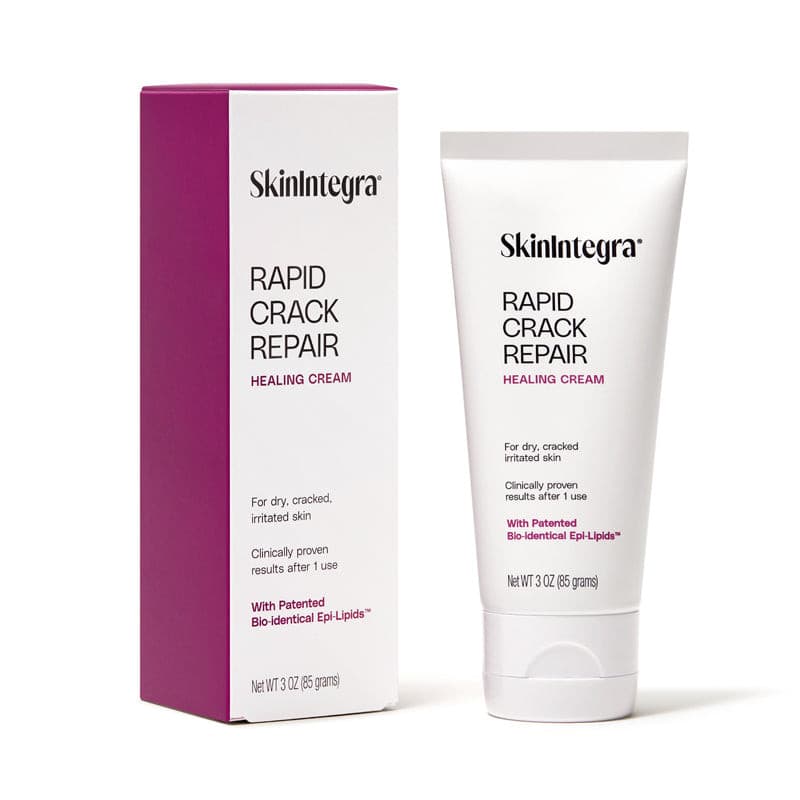
SkinIntegra® Rapid Crack Repair Cream was developed for exactly this gap. It is not a stronger exfoliant. It replenishes what is missing.
At its core is SkinIntegra B.I.O.™ (Bio-Identical Oils) — a patented blend of five plant-derived oils (Sacha Inchi, Sea Buckthorn, Rice Bran, Sesame Seed and Jojoba Seed) matched in balance and composition to the skin’s own lipids. We profiled what a healthy skin barrier is made of, then selected oils to match it. That is what SkinIntegra B.I.O.™ does.

Two of those are worth knowing by name if you have been reaching for the coconut oil. Sacha Inchi is a nut from the Amazon, and roughly half omega-3 by weight — alongside flaxseed, among the richest plant sources there is. Sea buckthorn is a berry that grows in the Himalayas, and one of the richest plant sources of omega-7, a fatty acid most oils carry only in traces. They are plants, like everything else on the list above. The difference is not that they are less natural.
It also contains 25% urea with lactic acid. Both are humectants — they pull water into the outer layer of the skin and hold it there — and at this concentration they also soften and loosen hardened skin, with the lactic acid adding gentle exfoliation. That pairing is widely used on dry, sensitive and diabetic skin. Unlike 40% urea, which works aggressively and can leave skin feeling dry, SkinIntegra absorbs quickly and leaves skin feeling immediately moisturized. If you want the comparison in more detail, our guide to urea, lactic acid and ammonium lactate sets out how they differ.
It is formulated without salicylic acid, and is fragrance-free, paraben-free, alcohol-free, petrolatum-free and dye-free.
What the clinical evidence shows
In a head-to-head trial published in the Journal of the American Podiatric Medical Association, 48 adults with deeply cracked feet used either Rapid Crack Repair or a 40% urea cream, twice a day for four weeks.
Rapid Crack Repair did as well as 40% urea — at a lower strength, and well tolerated throughout. Among the 22 adults who used it, 91% showed some improvement within two weeks. By four weeks, podiatrists were seeing less dryness in 82% and less cracking in 73%, and no one had new or worsening redness, burning, stinging or itching.
SkinIntegra Rapid Crack Repair Cream carries the Seal of Approval from the American Podiatric Medical Association (APMA). Medical professionals at major hospitals across the United States also recommend it.
For skin that stays dry and cracked, or that looks better for a few days and then looks the same again, the missing piece is usually not more exfoliation. It is replenishing what the barrier is short of.
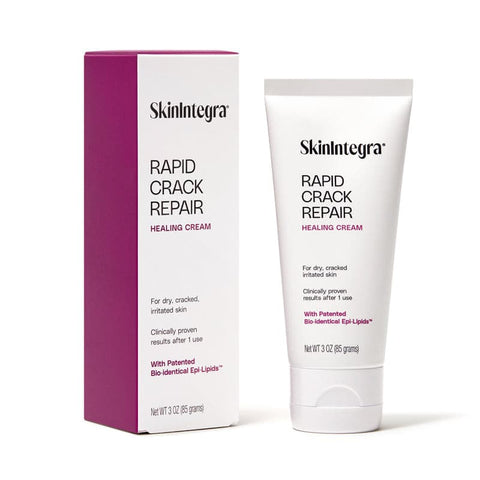
Use it once or twice a day, and work it into the hardened area around the crack — the skin on either side is what has to change.
Shop SkinIntegra Rapid Crack Repair Cream →
Lifestyle Tips for Preventing Cracked Heels and Dry Feet
In addition to natural remedies, incorporating healthy lifestyle habits can help prevent and manage cracked heels and dry feet:
-
Stay Hydrated
Drink plenty of water throughout the day to keep your skin hydrated from within. -
Wear Proper Footwear
Choose shoes that provide adequate support and cushioning. Avoid walking barefoot or wearing open-back shoes for extended periods. -
Moisturize Regularly
Apply a good quality foot cream or natural moisturizer daily, especially after bathing. -
Exfoliate Gently
Use a pumice stone to remove dead skin cells once or twice a week. Be gentle to avoid damaging the skin. Not recommended for people with diabetes. -
Practice Good Foot Hygiene
Wash your feet daily with mild soap and lukewarm water, and dry them thoroughly, especially between the toes.
If your heels crack again a few weeks after they heal, the reason usually sits deeper than dryness — see why cracked heels come back.
When to See a Doctor

While natural remedies can be effective, it's important to seek professional help in certain situations:
-
Severe Pain or Bleeding
If your cracked heels are causing significant pain or bleeding, consult a healthcare provider for appropriate treatment. -
Signs of Infection
Symptoms like redness, swelling, warmth, or pus may indicate an infection. Seek medical attention to avoid complications. -
Underlying Medical Conditions
If you have diabetes or another condition that affects circulation or skin health, consult with your healthcare provider before trying new remedies.
Conclusion
You may be able to relieve cracked heels and dry feet with the right natural remedies and lifestyle habits. From the moisturizing benefits of coconut oil and shea butter to the soothing properties of honey, these natural treatments can help you achieve soft, healthy feet. If the dryness keeps returning once the remedy wears off, that is the mortar rather than the water, and a cream built around the skin’s own lipids works on a different part of the problem. It's crucial to exercise caution if you have diabetes or other underlying health conditions, and always consult with a healthcare provider when in doubt. During and after this time, wear shoes that fit properly and practice proper foot care to help prevent new heel cracks.


