


If your feet itch at night and you have diabetes, this is not a symptom to wait out. Nighttime foot itching is one of the earliest — and most commonly dismissed — signs of peripheral neuropathy: nerve damage that, left unaddressed, progresses to loss of protective sensation, unnoticed skin breaks, and serious infection risk. The itch feels minor. The escalation path is not.
This guide focuses on what nighttime foot itching means for people with diabetes — the mechanism behind it, why it is different from ordinary dry skin, and what safe daily skin care looks like. If you are experiencing foot itching without diabetes, the most common causes are dry skin, athlete's foot, or contact dermatitis, each of which is covered below.

Why Diabetic Feet Itch at Night: The Three Mechanisms
For people with diabetes, nighttime foot itching is driven by three compounding mechanisms — not surface dryness. Understanding which one applies determines the right response.
-
Peripheral neuropathy — nerve damage from sustained high blood sugar produces abnormal sensory signals in the feet, including itching, burning, and tingling. These sensations are typically worse at night because daytime distractions are removed and the brain's attention shifts to sensory input. The critical distinction: neuropathic itch produces no visible rash, redness, or skin change. If your feet itch at night with no visible cause, this is the presentation most strongly associated with peripheral neuropathy — and it warrants a podiatry appointment rather than home treatment.
-
Autonomic neuropathy and anhidrosis — diabetes damages not only the sensory nerves but also the autonomic nerves that control sweat glands in the feet. When those nerves fail, sweat production stops — a condition called anhidrosis. The feet lose their natural moisture source regardless of how much you drink or how humid the environment is. The result is skin that dries from the inside out, becoming increasingly fragile, itchy, and prone to cracking. This is why standard moisturizers often provide only temporary relief: the mechanism is neurological, not environmental. See our article on why diabetic neuropathy makes cracked heels dangerous for a full explanation of this mechanism.
-
Poor circulation and elevated blood sugar — reduced blood flow slows skin cell renewal and healing, leaving skin more fragile and reactive. High blood glucose also depletes the natural moisturizing factors — urea, lactic acid, and fatty acids — that the stratum corneum needs to stay intact. Skin that is structurally depleted itches chronically. For the full picture of how diabetes affects skin, see our guide on diabetes and itchy skin.
For non-diabetic readers: the most common causes of itchy feet at night are dry skin, athlete's foot, eczema, contact dermatitis, or medications. If none of the above mechanisms apply to you, those conditions are covered in the treatment section below.
Is Nighttime Foot Itching a Warning Sign?
For people with diabetes, yes — and it is one of the most under-recognized. According to the Mayo Clinic, diabetic neuropathy symptoms are often worse at night and include tingling, burning, and itching in the feet. The reason itching is an early warning sign rather than just a nuisance is the escalation path it represents: neuropathic itch → loss of protective sensation → unnoticed skin breaks → bacterial entry → infection → ulceration. Acting on the itch early — before sensation is lost — is the clinical window where intervention is most effective.
If you have diabetes and your feet itch at night persistently, contact your podiatrist. Do not wait for a visible wound or rash. Neuropathy can be present and progressing without obvious symptoms.
Itchy Feet at Night with No Rash
Feet that itch at night with no visible rash, redness, or skin change are the presentation most strongly associated with peripheral neuropathy. In this pattern, the itch is generated by damaged nerves sending abnormal signals — not by any skin-level irritant. Standard anti-itch remedies do not resolve it because the problem is not in the skin.
If you have diabetes and this describes your experience, this warrants professional evaluation rather than home treatment. A podiatrist can assess for neuropathy using the 10-gram monofilament test — a simple, painless screening tool. If no-rash itching persists beyond two weeks in anyone, see a healthcare provider.
What Diabetic Skin Actually Needs
The dryness and itching caused by anhidrosis and barrier depletion cannot be fully resolved with a standard moisturizer. Standard products are formulated for skin that has lost surface moisture — they coat and temporarily hydrate. Diabetic neuropathic skin has lost something different: the structural components of the stratum corneum itself — the urea, lactic acid, and barrier lipids that the skin can no longer produce normally.
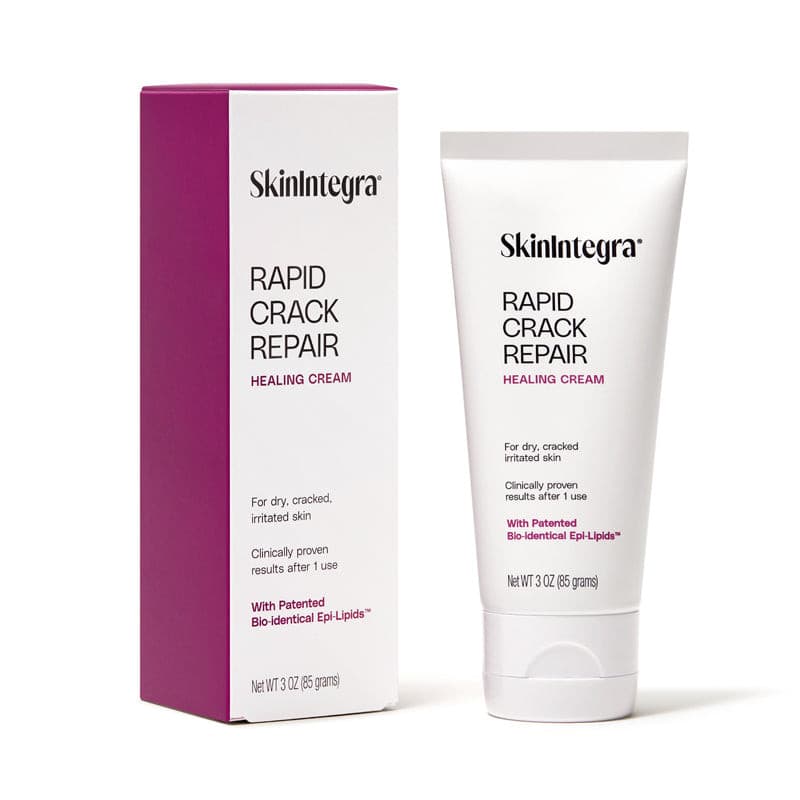
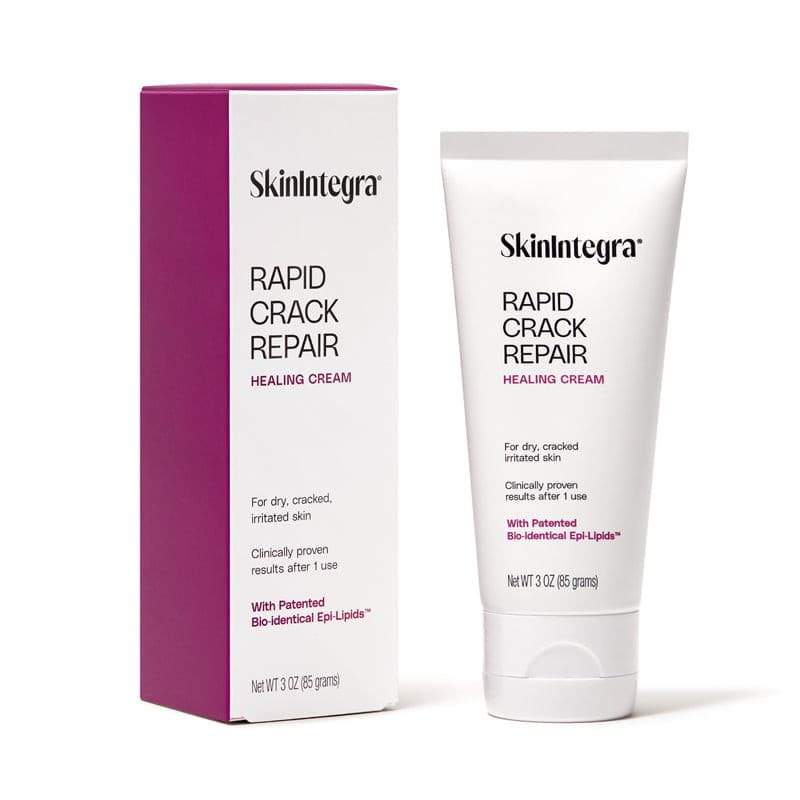
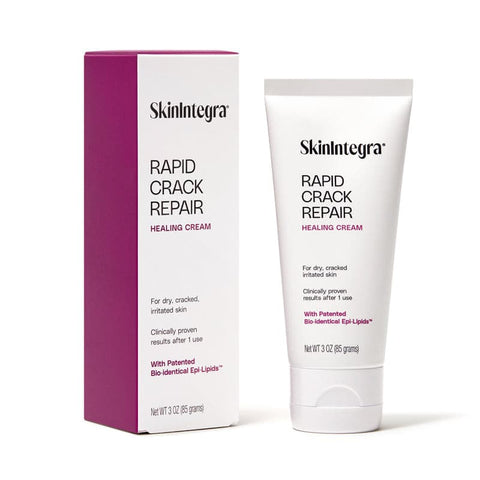
SkinIntegra Rapid Crack Repair Cream was developed from diabetic skin research specifically to address this deficit. Its patented formula replenishes 25% urea and lactic acid — two of the natural moisturising factors most depleted by diabetes — alongside skin-mimicking lipids that restore barrier structural integrity. It is fragrance-free, preservative-free, and hypoallergenic, formulated for daily use on sensitive or compromised diabetic skin.
In an independent double-blind clinical trial, SkinIntegra outperformed a 40% urea cream — the highest-strength standard-of-care product for diabetic skin. In a separate trial conducted exclusively with diabetic patients, 100% of participants showed measurable improvement within 24 hours. SkinIntegra holds the APMA Seal of Acceptance from the American Podiatric Medical Association. Apply after washing and thoroughly drying the feet, while skin is still slightly damp. Consistent daily use is essential to protect and maintain the skin barrier.
Daily Care and Prevention
A consistent daily routine addresses both the immediate itch and the underlying barrier deficit that causes it to recur:
-
Apply barrier repair cream after washing — immediately after washing and drying your feet, to slightly damp skin. For diabetic skin, use a fragrance-free formulation with urea and lactic acid — not a standard lotion, which will not address the neurological moisture deficit. Consistency matters more than any single application.
-
Wash gently with lukewarm water — use a mild fragrance-free soap and dry thoroughly, especially between the toes. Avoid hot water, which strips barrier lipids and worsens dryness.
-
Cool compress for acute relief — a cool, damp cloth applied for 5–10 minutes reduces inflammation and temporarily quiets the itch signal.
-
Avoid soaking — prolonged submersion weakens skin already compromised by neuropathy and increases infection risk. See our article on Epsom salt soaks and diabetes.
-
Wear breathable footwear and moisture-wicking socks — change socks daily, rotate shoe pairs to allow drying. Avoid walking barefoot in shared spaces — locker rooms and pool decks are prime environments for athlete's foot.
-
Manage blood sugar — stable glucose levels slow the progression of peripheral neuropathy and improve the skin's ability to retain moisture and heal. This is the single most impactful step for diabetic foot health.
Over-the-Counter Treatments
-
Antifungal creams — if athlete's foot is suspected (peeling between the toes, redness), use a cream containing clotrimazole or miconazole for 2–4 weeks. For diabetic patients, pairing with a urea-based barrier repair cream produces better outcomes than antifungal alone. See our guide on treating athlete's foot safely with urea and antifungal cream.
-
Hydrocortisone 1% — for itching caused by eczema or contact dermatitis. Avoid broken skin and do not use it for extended periods without medical supervision.
-
Oral antihistamines — useful when itching is allergy-related. A non-drowsy option during the day, or a mildly sedating option at night.
-
Urea creams (10–25%) — urea at this concentration replenishes natural moisturizing factors and softens thickened skin. It penetrates the compromised stratum corneum where standard moisturizers cannot reach. For sensitive or diabetic feet, stay within the 10–25% range — 40% concentrations can irritate fragile skin.
-
Avoid salicylic acid — commonly found in callus removers and foot peels. For people with diabetes, these are not safe — they cause chemical abrasion and can produce unnoticed wounds. See our article on why salicylic acid is unsafe for diabetic skin.
When to See a Doctor
Seek medical advice if you experience:
-
Itching that persists beyond two weeks despite treatment
-
Feet that itch at night with no visible rash — possible neuropathy
-
Open sores, blisters, or any break in the skin
-
Signs of infection: warmth, spreading redness, or discharge
-
You have diabetes — any persistent or unexplained foot itching should be evaluated by a podiatrist. Annual podiatry check-ups are recommended for all people with diabetes.
Frequently Asked Questions
What does it mean when your feet itch only at night?
Strictly nocturnal itching — particularly with no visible rash or skin change — is the presentation most strongly associated with peripheral neuropathy. Daytime distractions reduce the perception of abnormal nerve signals; at night, those signals become more noticeable. For people with diabetes, this pattern warrants a podiatry evaluation. Other causes include dry skin flaring with bedding heat and eczema.
Is itchy feet a symptom of something serious?
In most cases, itchy feet respond to home treatment within 1–2 weeks. However, persistent itching — especially with no visible rash — can signal peripheral neuropathy, poorly controlled diabetes, kidney disease, or liver disease. If itching does not resolve within two weeks, see a healthcare provider.
Are itchy feet a symptom of diabetes?
Yes. Itchy feet are a recognized symptom of diabetes, resulting from peripheral neuropathy, autonomic neuropathy causing anhidrosis, poor circulation, and higher susceptibility to fungal infections. Our full guide on diabetes and itchy skin covers each mechanism in detail. If you have diabetes and persistent foot itching, contact your podiatrist.
What vitamin deficiency causes itching at night?
Vitamin D deficiency causes dry, irritated skin. Vitamin B12 deficiency can trigger nerve-related itching that mimics neuropathy. Iron deficiency is associated with dry skin and poor circulation. Omega-3 deficiency compromises the skin barrier. See our article on vitamin deficiencies linked to cracked heels and skin itching.
How do I stop my feet from itching immediately at night?
Apply a cool compress for 5–10 minutes, then apply a urea-based barrier repair cream. Avoid scratching — it worsens inflammation and can break skin. If athlete's foot is suspected, apply an antifungal cream. For people with diabetes: avoid soaking, avoid salicylic acid products, and contact a podiatrist if itching is severe, unexplained, or accompanied by numbness.
Related Articles
Why Diabetic Neuropathy Makes Cracked Heels Dangerous
Diabetes and Itchy Skin: Understanding the Link and Finding Relief
Understanding Dry Diabetic Feet: Causes and Solutions
Epsom Salt Foot Soaks and Diabetes: Friend or Foe?
Treating Athlete’s Foot Safely: Urea + Antifungal Cream
Why Salicylic Acid Is Unsafe for Diabetic Skin


