


They peel and crack and bleed and dry out — no matter what you put on them. You’ve tried the cuticle oils, the creams, the overnight treatments. It works for a few hours. Then you wash your hands and you’re back where you started. If that cycle sounds familiar, you’re not doing anything wrong. The problem isn’t effort or consistency. It’s that the standard tools for dry cuticles weren’t built for what your skin is actually missing.

Extremely dry, cracked cuticles are one of the most persistent and frustrating skin conditions to manage — precisely because they resist routine care. They affect healthcare workers whose hands are washed dozens of times a day, people with diabetes, eczema, or psoriasis whose skin barrier is chronically depleted, and anyone whose hands take a daily beating from weather, chemicals, or repeated wetting and drying. What these cases share is not a lack of moisture — it’s a deficit in the natural oils the skin barrier needs to hold that moisture in.
This guide covers every cause of severely cracked cuticles, the warning signs that need medical attention, and what treatment actually needs to do to break the cycle for good.
Why Cuticles Become Extremely Dry, Crack, and Bleed
Your cuticles are thin protective seals at the base of your nails that prevent bacteria and fungi from entering the nail fold.
When this seal breaks down from extreme dryness:
-
Deep cracks that bleed and won't close
-
Hangnails that tear and cause more damage
-
Risk of paronychia (nail fold infection)
-
Chronic peeling and inflammation
The severity depends on how compromised your skin barrier has become. Mild dryness becomes extreme cracking when moisture loss accelerates faster than your body can repair.
6 Root Causes of Extremely Dry, Cracked Cuticles
1. Frequent Hand Washing and Sanitizer Use
If you wash your hands 15+ times daily, each wash strips natural oils that protect cuticles. Healthcare workers, food service staff, and parents of young children are especially vulnerable.

The damage compounds: Soap dissolves your skin's lipid barrier → Hot water accelerates moisture loss → Repeated exposure prevents recovery → Extreme dryness and cracks develop.
2. Winter Weather and Dry Indoor Air
Cold air holds less moisture, and indoor heating dries it further. During winter, your hands can lose moisture 25% faster than summer—leading to visible flaking, rough hardened cuticles, and painful splits.
3. Harsh Chemicals and Nail Products
Acetone nail polish remover literally dissolves skin oils. Add household cleaners, dish soap, and gardening chemicals—even brief exposure can trigger extreme dryness that persists for days.
4. Nail Biting, Picking, and Aggressive Manicures
Biting hangnails creates more tears. Pushing cuticles too hard damages living tissue. Cutting the eponychium (living seal) creates infection entry points.
⚠️ Never cut living cuticle tissue—only gently remove dead skin buildup.
5. Nutritional Deficiencies
Low biotin, vitamin E, omega-3s, zinc, or iron can cause chronic cuticle dryness that won't respond to topical treatments alone. If you have persistent extremely dry cuticles despite good care, ask your doctor about testing. Learn more: Vitamin Deficiencies and Cracked Skin
6. Medical Conditions
Diabetes, eczema, psoriasis, hypothyroidism, and Raynaud's disease all compromise skin barrier function. High blood sugar, chronic inflammation, and poor circulation make cuticles prone to extreme dryness, severe cracking, and slow healing.
Warning Signs That Need Immediate Attention
Seek medical care if you notice:
-
Warmth, pus, or spreading redness (signs of infection)
-
Deep bleeding cracks that won't close
-
Swelling around multiple nails (possible paronychia)
-
Fever or systemic symptoms (infection spreading)
-
No improvement after 2 weeks of proper treatment
For people with diabetes or compromised immunity, see a doctor at the first sign of infection. Delays can lead to serious complications.
5 Proven Treatments for Extremely Dry, Cracked Cuticles
1. Barrier-Repair Moisturizers (Most Important)
Not all moisturizers work for extremely dry, cracked cuticles. You need formulations that rebuild the protective barrier, not just add surface moisture.
Essential ingredients:
-
Urea (10-25%): Draws moisture in while gently exfoliating rough skin
-
Ceramides: Restore the skin's natural barrier
-
Essential fatty acids: Rebuild the lipid matrix
-
Hyaluronic acid: Holds 1000x its weight in water
Application: Massage into cuticles 2-3 times daily, especially after hand washing and before bed.
2. Overnight Intensive Treatment
For extremely dry, cracked cuticles: Apply thick layer of barrier cream → Cover with cotton gloves → Sleep overnight → Repeat nightly.
Most people see visible improvement within 2-3 nights.
3. Cuticle Oils for Deep Nourishment
Jojoba, vitamin E, sweet almond, or coconut oil provide concentrated nourishment. Apply before bed for best results.
4. Gentle Chemical Exfoliation
Once bleeding stops, urea or lactic acid products can gently remove dead skin buildup. Never use physical scrubs on cracked cuticles.
5. Professional Medical Manicures
For chronic extremely dry cuticles, seek trained professionals who use sterile tools and understand medical considerations. Learn more: Safe Pedicure for Diabetic Feet
Why SkinIntegra Works for Extremely Dry, Cracked Cuticles

The reason standard cuticle creams provide only temporary relief is specific: they moisturize the surface but don’t replace the natural oils the skin barrier needs to hold that moisture in. Whether it’s diabetes depleting sebum, eczema or psoriasis compromising the lipid matrix, or repeated hand washing stripping the stratum corneum faster than it can recover — the deficit is the same. Standard products weren’t formulated to address it.
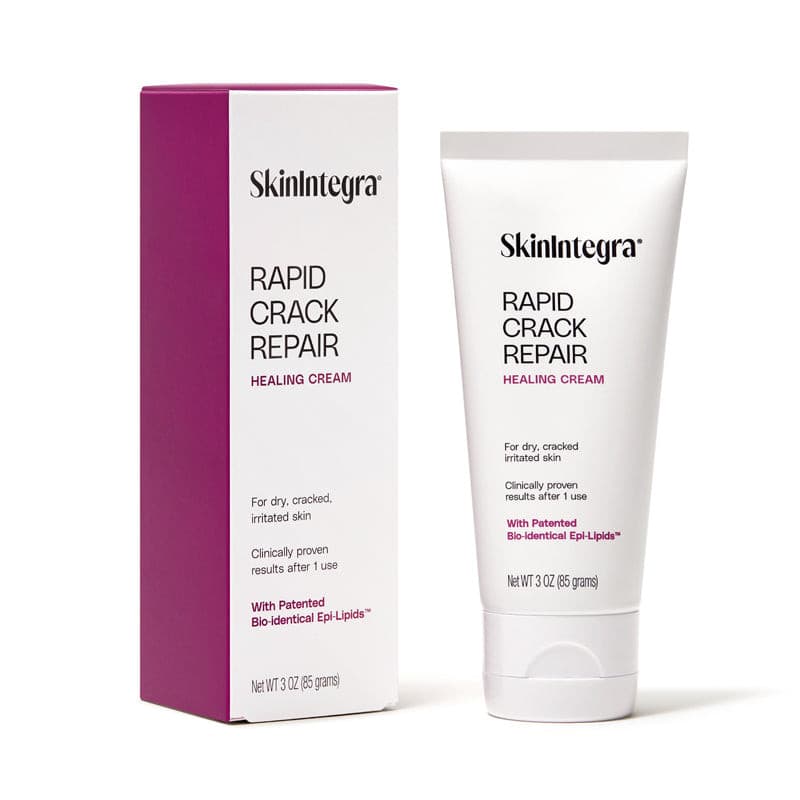
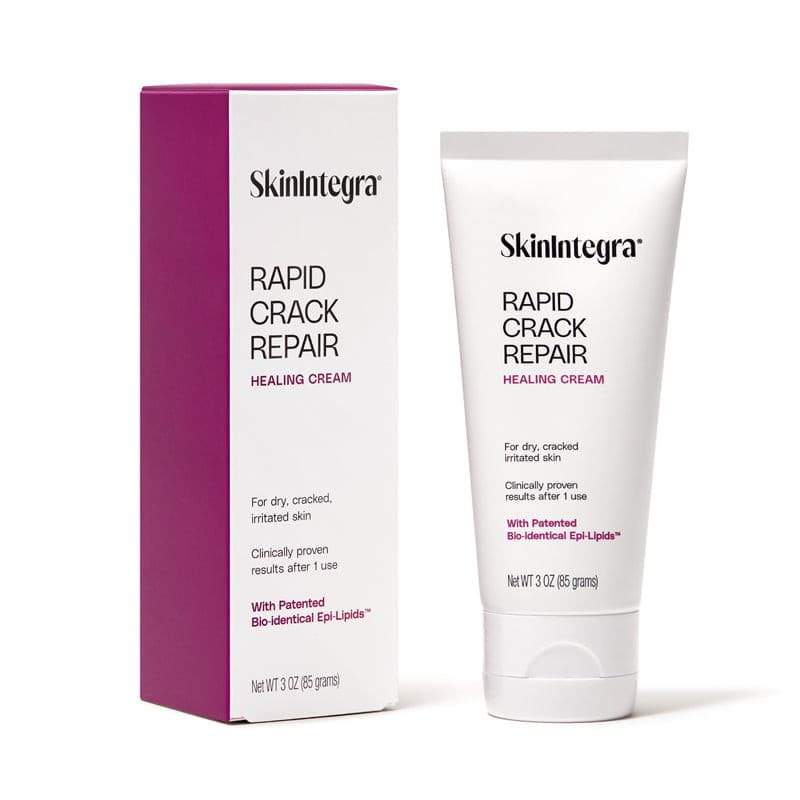
SkinIntegra Rapid Crack Repair Cream was developed to address that deficit at the barrier level. The formula works on two levels:
-
Bio Identical Oils restores the skin barrier’s lipid structure — a patented blend of five whole plant oils, including Sacha Inchi and Sea Buckthorn, selected to match the composition of healthy sebum and replenish the stratum corneum lipids that diabetes, eczema, psoriasis, and repeated hand washing progressively deplete. Where standard creams coat the surface, Bio Identical Oils replenishes the skin barrier so relief lasts beyond the next hand wash.
-
25% urea and lactic acid work at the skin surface — gently softening cracked, thickened cuticle skin, replenishing the natural moisturizing factors that daily hand washing strips away, and drawing deep moisture into the nail fold and surrounding tissue without irritation.
Fragrance-free, paraben-free, alcohol-free, and hypoallergenic — safe for daily use on hands, including sensitive, diabetic, or compromised skin.
The clinical evidence:
-
In an independent clinical study, Rapid Crack Repair delivered significantly faster improvement in dryness and cracking than high-strength Urea-40, assessed by blinded podiatrist investigators at two and four weeks, with less irritation.
-
In a separate clinical trial conducted exclusively with people with diabetes, 100% of participants showed measurable skin improvement within 24 hours.
SkinIntegra holds the APMA Seal of Acceptance from the American Podiatric Medical Association. Apply 2–3 times daily, especially after hand washing. For severely cracked cuticles, apply a generous layer at night and cover with cotton gloves to maximize overnight absorption.
Prevention: Stop Extremely Dry Cuticles from Coming Back
Daily habits:
-
Moisturize after every hand wash (keep cream at every sink)
-
Use lukewarm water only (hot water strips oils)
-
Wear gloves for wet work (dishes, cleaning, gardening)
-
Choose gentle, fragrance-free soaps
-
Use a humidifier in winter
-
Never cut cuticles—only push back gently
-
Eat foods rich in biotin, omega-3s, vitamin E, and zinc
Consistency is key. These small changes prevent mild dryness from becoming extremely dry, cracked cuticles.
Frequently Asked Questions
Q: What vitamin deficiency causes extremely dry, cracked cuticles?
A: Biotin (B7), vitamin E, omega-3 fatty acids, zinc, and iron deficiencies all contribute. If topical treatments don't help, ask your doctor about nutritional testing.
Q: Can diabetes cause extremely dry, cracked cuticles?
A: Yes. High blood sugar impairs the skin's natural moisturizing factor, reduces barrier lipids, and slows healing. People with diabetes need daily barrier-repair moisturizing, blood sugar control, and should inspect hands/feet daily. Never cut cuticles if diabetic—always push back gently. See a doctor immediately for warmth, pus, spreading redness, or fever.
Q: How long does it take to heal extremely dry, cracked cuticles?
A: With proper barrier-repair treatment, you may see improvement in 1-3 days and significant healing in 1-2 weeks. Deep bleeding cracks may take longer. SkinIntegra users often report visible improvement within 24 hours.
Q: Is Vaseline good for extremely dry, cracked cuticles?
A: Vaseline seals moisture but doesn't provide hydration or repair. It works best OVER a hydrating product. For extremely dry cuticles, use a barrier-repair cream first (like SkinIntegra), then seal with Vaseline if desired—though modern formulations absorb well without needing an occlusive layer.
Q: Should I cut my cuticles if they're extremely dry and cracked?
A: Never cut living cuticle tissue. You can gently remove dead skin buildup, but cutting the living eponychium creates infection entry points. Gently push back cuticles after softening in warm water. This is especially critical for people with diabetes or compromised immunity.
Q: When should I see a doctor for extremely dry, cracked cuticles?
A: Seek medical care if you notice: warmth/pus/spreading redness (infection signs), deep bleeding cracks that won't close, swelling around multiple nails, fever or systemic symptoms, or no improvement after 2 weeks of treatment. People with diabetes should see a doctor at the first sign of infection.
Q: Why do my cuticles get so extremely dry and split?
A: Cuticles become extremely dry when moisture loss exceeds replenishment—usually from frequent hand washing, cold weather, harsh chemicals, or underlying conditions. The dry skin becomes brittle and splits under normal stress. Bleeding occurs when cracks extend deep into living tissue.
Q: Can healthcare workers prevent extremely dry, cracked cuticles?
A: Yes, but it requires aggressive barrier protection: Apply barrier-repair cream after every hand wash (keep at work), use gentle cleansers when possible, wear nitrile gloves for procedures, apply thick cream before bed with cotton gloves, and address any nutritional deficiencies. Consistent care prevents progression to extreme dryness and cracking.
Take Action: Your Extremely Dry Cuticles Can Heal
Extremely dry, cracked, bleeding cuticles aren't a life sentence. With targeted barrier repair, you can see improvement in days—not weeks.
The key: Stop using basic lotions that only moisturize. Start using barrier-repair formulations that rebuild your protective seal.
Experience fast relief with SkinIntegra Rapid Crack Repair Cream—clinically proven to work in 24 hours. Safe for everyone, essential for those with diabetes or compromised immunity.


