


If you have diabetes and your toenails have become brittle, thickened, slow-growing, or discolored, these are not cosmetic changes — they are clinical signals that diabetes is affecting your circulation, skin barrier, or both. Left unaddressed, diabetic nail changes create entry points for bacterial and fungal infections in tissue that already heals slowly and has a reduced capacity to fight infection. This guide explains what is causing the changes, what the warning signs of escalation look like, and what safe daily nail care involves — including when home care is not enough and a podiatrist is the right next step.

What Does Diabetes Do to Your Nails?
Nail changes in diabetes follow from the same core mechanisms that affect the rest of diabetic skin and circulation. Understanding the mechanism helps explain why general nail-strengthening advice often fails for diabetic patients.
-
Poor circulation reduces nail growth and strength: Peripheral arterial disease and microvascular damage in diabetes restrict the oxygen and nutrient delivery that drives keratin synthesis in the nail matrix. The result is nails that grow more slowly, become brittle, and split or crack at the free edge — not because of a nutritional deficiency, but because the vascular supply to the nail bed is compromised. This is why standard nail-strengthening treatments designed for healthy nails often produce limited results in diabetic patients.
-
High blood sugar creates conditions for fungal infection: Elevated glucose levels in the tissue surrounding the nail create an environment where dermatophytes — the fungi responsible for onychomycosis (nail fungus) — thrive. Diabetic patients are significantly more susceptible to onychomycosis than the general population, and the infection progresses faster because reduced immune function limits the body's ability to contain it. Thickened, yellowed, or crumbling nails in a diabetic patient should be assessed for fungal infection before assuming the changes are purely vascular.
-
Neuropathy masks nail trauma: Peripheral neuropathy reduces or eliminates sensation in the toes, meaning pressure damage, bruising, or an early ingrown nail may go completely unnoticed. In diabetic feet, these injuries can progress silently for days before becoming visible — by which point infection may already be establishing.
-
Impaired healing prolongs every complication: A split nail or cracked cuticle that would resolve in days for a non-diabetic patient can persist for weeks in diabetic skin. Poor circulation slows repair, and glycosylated immune proteins reduce infection-fighting efficiency at the wound site — which is why minor-appearing nail and cuticle injuries carry disproportionate risk in diabetic patients.
What Do Diabetic Toenails Look Like?
Nail changes in diabetes exist on a spectrum. Recognizing where you are on that spectrum determines the urgency of your response.
-
Early changes: Nails that are slightly more brittle than usual, growing slowly, or developing faint ridging along the nail plate. The nail color remains normal. This stage is often dismissed as normal aging but in diabetic patients it warrants consistent moisturizing and monitoring.
-
Moderate changes: Thickening of the nail plate, beginning discoloration (yellow or brownish tinge), or nails that are difficult to trim because they have hardened. This presentation often indicates early onychomycosis or significant circulation compromise — a podiatry assessment is appropriate.
-
Advanced changes: Significant thickening, yellow or black discoloration, crumbling nail edges, nail plate separation from the nail bed (onycholysis), or foul odor. These are signs of established fungal infection or serious vascular compromise and require clinical treatment, not home management alone.
-
Periungual changes (skin around the nail): Dry, cracked, or peeling skin around the nail fold; bleeding cuticles; or redness and swelling around the nail edge. These are skin barrier failures that create direct bacterial entry points. For diabetic patients with neuropathy, these changes may be painless despite being clinically serious.
Important: If you have diabetes and notice any moderate or advanced nail changes, do not wait to see if they resolve. Slow healing, impaired immune response, and possible neuropathy mean nail problems can escalate faster than visible symptoms suggest. Contact your podiatrist if any nail change is new, worsening, or accompanied by redness or swelling. See our guide on understanding dry diabetic feet for how diabetes affects lower extremity skin.
The Role of Barrier Repair in Diabetic Nail Care
The nail fold, cuticle, and periungual skin are part of the same compromised skin barrier that affects the rest of diabetic feet. Standard moisturizers address surface dryness but do not replenish what diabetes specifically depletes — ceramides, essential fatty acids, and natural moisturizing factors. Without those structural components, periungual skin remains fragile and vulnerable to infection regardless of how often it is moisturized.
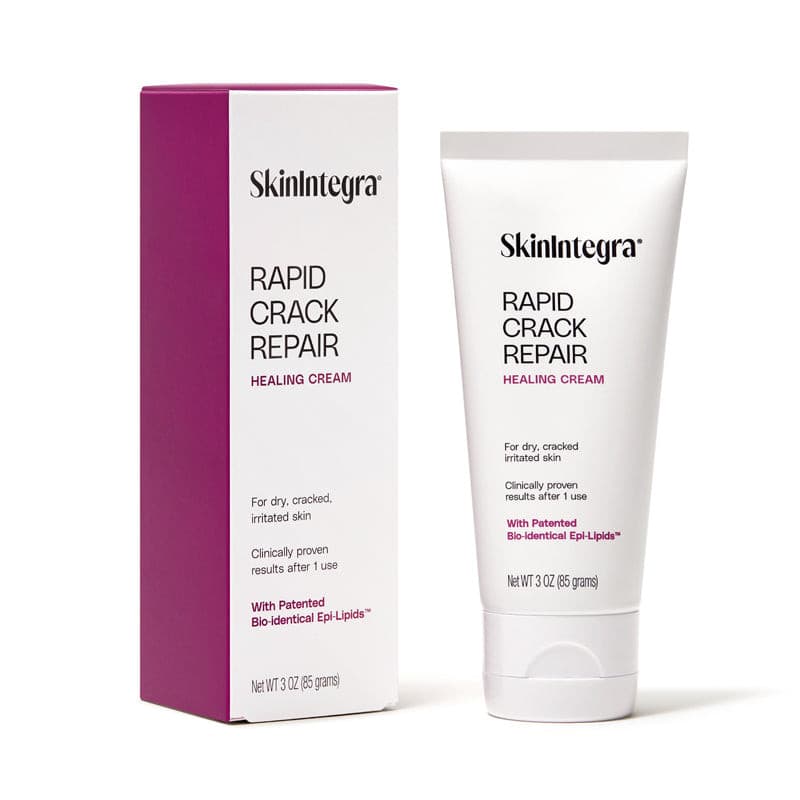
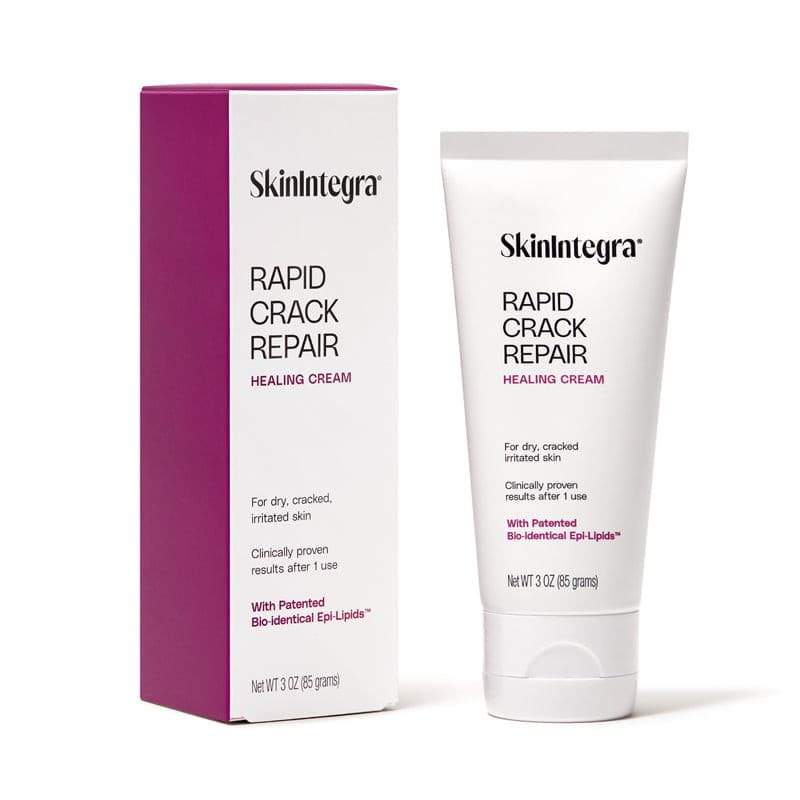
This is why the choice of moisturizer matters clinically. SkinIntegra Rapid Crack Repair Cream was developed specifically to address the barrier deficiencies diabetes creates — not adapted from a general skincare base. Its patented skin-mimicking composition replenishes what diabetic skin is missing, making it clinically relevant not just for cracked heels but for the nail folds, cuticles, and periungual skin that are equally at risk.

The formula addresses diabetic nail and cuticle care through four mechanisms:
-
25% urea and lactic acid: replenish the natural moisturizing factors diabetes depletes, while the keratolytic action of urea at 25% softens thickened nail plates — improving anti-fungal cream penetration in patients managing onychomycosis alongside skin barrier repair.
-
Ceramides and essential fatty acids: rebuild the structural lipid matrix of the nail fold and periungual skin — the barrier components that prevent bacterial and fungal entry at the skin-nail junction.
-
Hyaluronic acid: draws and retains moisture in chronically dehydrated diabetic tissue, reducing the brittleness and cracking that makes periungual skin a repeated infection risk.
-
Fragrance-free, dye-free, paraben-free, petroleum-free: no common irritants that worsen compromised nail fold skin or interfere with antifungal treatments applied to the same area.
In an independent double-blind clinical trial, SkinIntegra outperformed a leading 40% urea cream in both speed of improvement and tolerability. 100% of diabetic participants showed measurable improvement in dryness and cracking within 24 hours. It carries the APMA Seal of Approval and is recommended by podiatrists for daily diabetic skin and nail care.
For nail and cuticle care specifically:
-
Apply to nail folds, cuticles, and periungual skin twice daily — morning and before bed.
-
Apply to slightly damp skin after washing for maximum absorption.
-
Do not apply between the toes — moisture retention in interdigital spaces raises fungal risk.
-
If using an antifungal cream for onychomycosis, apply SkinIntegra to the nail plate and surrounding skin first. Wait 10–15 minutes, then apply the antifungal cream. This allows urea's keratolytic action to soften the nail plate and improve antifungal penetration. Do not apply SkinIntegra on top of the antifungal — this dilutes the active ingredient.
- Consistent daily use is essential to protect and maintain the skin barrier.
Step-by-step application for nail and cuticle care:
-
Step 1: Wash and dry feet thoroughly, paying particular attention to between the toes and around the nail folds.
-
Step 2: Apply a small amount to each toenail, massaging into the nail plate, cuticle, and surrounding skin while still slightly damp.
-
Step 3: Use twice daily — morning and before bed. Cotton socks worn overnight after evening application improve absorption for severely brittle nails.
-
Step 4: Continue daily use even after nails improve — a maintained barrier is significantly more resistant to the brittleness and infection risk that diabetes continuously creates.
Safe Nail Care for Diabetic Patients
The principles of safe nail care for diabetic patients are straightforward but non-negotiable — the consequences of getting them wrong are disproportionate to the apparent simplicity of the task.
-
Inspect nails and periungual skin daily: Check for new cracks, discoloration, swelling, redness, or changes in nail texture. Because neuropathy can eliminate pain as an early warning signal, visual inspection is the primary detection mechanism. Use a mirror to check the soles and under the free nail edge if needed.
-
Trim nails straight across: Cut straight across — never curved at the corners — to prevent ingrown nails. Use sanitized clippers. Trim after washing when nails are slightly softer. For patients with thickened nails, reduced sensation, or poor eyesight, nail trimming should be performed by a podiatrist rather than attempted at home.
-
Never cut cuticles: Cutting cuticles removes the seal between the nail plate and the nail fold. In patients with neuropathy, a cuticle cut can go unnoticed for days while providing a bacterial entry point in low-circulation tissue. Push cuticles back gently after washing — never cut them.
-
Avoid acetone-based nail polish removers: Acetone dehydrates the nail plate and surrounding skin. For diabetic patients already managing barrier compromise, this accelerates the cracking and brittleness that creates infection risk. Use acetone-free alternatives or avoid nail polish entirely.
-
Choose footwear carefully: Tight or narrow shoes press against the toenails, causing bruising, thickening, and ingrown nails — without pain in patients with neuropathy. Well-fitted, breathable shoes with adequate toe box width and seamless moisture-wicking socks protect nails from trauma.
-
Do not use salicylic acid nail or callus products: Many over-the-counter nail treatments, callus removers, and corn plasters contain salicylic acid. For diabetic patients, these are contraindicated — salicylic acid can cause chemical damage to fragile periungual skin that heals slowly and unpredictably. See our article on why salicylic acid is unsafe for diabetic skin.
When to See a Podiatrist for Nail Care
For many diabetic patients, professional nail care is not optional — it is the safest approach. A podiatrist or trained medical nail technician manages thickened nails, onychomycosis, ingrown nails, and callus in a sterile, waterless environment that eliminates the infection risk of standard salon soaks. See our full guide on safe pedicure options for diabetic patients for what to look for in a provider.
Seek a podiatry appointment rather than continuing home management if you notice:
-
Nails that are significantly thickened, discolored, or crumbling
-
Suspected ingrown toenail — redness, swelling, or tenderness at the nail edge
-
Any open wound, sore, or area of skin breakdown near a nail
-
Nail changes that are worsening despite consistent home care
-
Difficulty trimming nails safely due to thickness, reduced sensation, or mobility limitations
Nutritional Support for Diabetic Nail Health
Nutrition does not replace barrier repair or blood sugar management — but specific deficiencies can compound the brittleness and slow growth that diabetes already causes through circulatory damage. These are the nutrients most directly relevant to nail health in diabetic patients:
-
Biotin (Vitamin B7): Essential for keratin synthesis — the protein that forms the nail plate. Biotin deficiency contributes to brittle, splitting nails. Food sources include eggs, salmon, almonds, and sweet potatoes. Consult your healthcare provider before supplementing, as biotin at high doses can interfere with certain lab tests.
-
Zinc: Supports cellular repair and immune function. Deficiency is associated with slow nail growth and white spots on the nail plate. Sources include lean meats, beans, seeds, and whole grains.
-
Omega-3 fatty acids: Reduce inflammation and support the lipid matrix of both nail plate and periungual skin. Sources include fatty fish, walnuts, chia seeds, and flaxseed oil.
-
Iron: Low iron impairs oxygen delivery to nail cells, contributing to spoon-shaped or brittle nails. Sources include spinach, lentils, and lean red meat.
Adequate hydration supports nail plate flexibility — chronically dehydrated nails split more readily at the free edge. For more on the link between nutritional deficiencies and diabetic skin and nail changes, see our article on cracked heels and nutritional deficiencies.
Managing Fungal Nail Infections in Diabetic Patients
Onychomycosis is significantly more common and more dangerous in diabetic patients than in the general population. The thickened nail plate and nail bed separation that characterise fungal infection create a protected environment for bacterial co-infection in tissue that already heals slowly. If you suspect nail fungus, a podiatry assessment and clinical treatment plan is the appropriate response — not OTC antifungal products alone. See our guide on treating fungal infections in diabetic patients for how urea-based barrier repair complements antifungal treatment.
Frequently Asked Questions
Does diabetes cause brittle nails?
Yes. Diabetes causes brittle nails primarily through two mechanisms: reduced peripheral circulation that limits the oxygen and nutrient delivery to the nail matrix, and elevated blood sugar that creates conditions for onychomycosis (nail fungus) — which itself causes brittleness, thickening, and crumbling. Both mechanisms can be present simultaneously, which is why brittle nails in a diabetic patient should be assessed rather than assumed to be cosmetic.
What do diabetic toenails look like?
Diabetic toenail changes range from early-stage brittleness and slow growth through to thickening, yellow or brown discoloration, nail ridging, and — in advanced cases — nail plate separation or crumbling edges. The surrounding skin (nail fold and cuticle) is also commonly affected, with dryness, cracking, or peeling that creates bacterial entry points. Any new or worsening nail change in a diabetic patient warrants monitoring and, if progressing, a podiatry assessment.
What are first-stage diabetes toenails?
Early nail changes in diabetes are subtle: slightly slower growth, mild brittleness, faint ridging, or periungual skin that is drier than usual. At this stage changes are manageable with consistent barrier repair and daily inspection. The clinical importance of catching them early is that the escalation — from minor brittleness to fungal infection to bacterial co-infection — progresses faster in diabetic tissue than in healthy skin.
Can diabetic patients get pedicures?
Yes — but only with appropriate precautions. Standard salon pedicures carry infection risk for diabetic patients through shared soaking basins, non-sterile instruments, and operators who may not understand diabetic foot care requirements. A medical pedicure performed by a trained podiatrist or medical nail technician in a waterless, sterile environment is the safe alternative. See our full guide on safe pedicure options for diabetic patients.
What does urea do for diabetic nails?
Urea at 25% concentration has two clinically relevant effects for diabetic nail care. As a humectant, it draws moisture into the nail plate and surrounding skin, reducing brittleness and cracking. As a keratolytic, it softens thickened nail plates — which improves the penetration of antifungal treatments applied to the nail in patients managing onychomycosis. At 40% concentration, urea can cause irritation in fragile diabetic periungual skin; 25% is the concentration that delivers keratolytic benefit without that risk.
Does diabetes affect fingernails as well as toenails?
Yes. The same mechanisms — poor circulation, elevated blood sugar, and neuropathy — affect fingernails as well as toenails, though toenails are more severely affected because peripheral circulation is most compromised furthest from the heart. Brittle fingernails and cracked cuticles warrant the same care approach as toenail changes.
Protect Your Nails, Protect Your Health
Brittle toenails are not a cosmetic inconvenience for people with diabetes — they are a clinical warning sign that deserves a clinical response. The combination of poor circulation, elevated glucose, and compromised barrier function will continue to drive nail changes unless they are addressed at the structural level, with a formulation built for diabetic skin — not adapted from a general base.
Start with the daily barrier repair routine and book a podiatry appointment if nails are thickening, discoloring, or not improving with consistent home care. Early intervention prevents the escalation from brittle nail to crack to wound to infection — each step of which is harder to manage than the one before it.
Related Articles
Understanding Dry Diabetic Feet: Causes and Solutions
Treating Athlete's Foot and Fungal Infections in Diabetic Patients
Safe Pedicure for Diabetic Feet
Why Salicylic Acid Is Unsafe for Diabetic Skin
Cracked Heels and Nutritional Deficiencies


